Friday’s Top 10 Tips to Escape a Sales Slump

Is your Pipeline Drier Than a Stack of Old Paper Receipts? Let’s Fix That. Tired of hearing “I’m happy with my current processor” or getting ghosted after you send a proposal? Let’s turn those frustrating moments into fuel. Building rock-solid relationships with merchants is the only way to build a real, long-term book of business and get that keep our residual income flowing.

In this business, it’s not just about all that we offer; it’s about selling trust. Here are ten proven strategies to break out of any slump, cultivate connections that last, and get you back to closing deals.

From the Home Office in Monkey’s Eyebrow, Kentucky, Here are the Top 10 Ways to Get Out of a Sales Slump:

10. Farm Your Own Backyard (Leverage Existing Merchants) Your current book of business is a gold mine. These merchants already know you and trust you. Are they using a clunky old terminal? It’s time to talk about a modern POS system. Do they need a gift card program for the holidays? You’re their go-to. Deepen these relationships to protect your residuals and uncover new revenue.

9. Give to Get (Share Referrals) We all love getting a hot lead dropped in our lap, but are you giving them out? When you refer a great CPA or web designer to one of your merchants, you become more than a processor—you become a valuable partner. It energizes your network and makes it a whole lot easier to ask for referrals in return.

8. Re-engage the Ghosts of Merchants Past Remember that restaurant that left you a year ago for a “smokin’ deal”? It’s time for a friendly check-in. That deal probably came with hidden fees and non-existent customer service. Reach out, see how they’re doing. A simple call can expose their new provider’s weaknesses and open the door to win them back.

7. Practice Active Gratitude Your merchants get pitched by competitors every single day. Show them you appreciate their business. Instead of another sales email, pick up the phone and say, “Hey, just calling to say thanks for being a great client. How did that busy weekend go?” A little gratitude goes a long way in preventing attrition. Start your day by naming five merchants you’re thankful for—it will change your entire perspective.

6. Set Goals You Can Actually Crush Aiming to add $5 million in processing volume is great, but it’s a marathon. Focus on the daily sprint. Set smaller, achievable goals like: “Get 3 new statements to analyze today” or “Make 10 more cold calls than yesterday.” Success builds on success; small wins create momentum.

5. Build Your Own Board of Directors (A Mastermind Group) Connect with a few other sharp B2B salespeople (think payroll, insurance, linen services). Meet regularly to trade leads, share what’s working, and hold each other accountable. You’ll get fresh perspectives and a support system that understands the grind.

4. Solve Their Problems, Not Yours Stop selling processing and start selling solutions. Zig Ziglar was right: “You will get all you want in life if you help enough other people get what they want.” Does your retail client want to compete with online giants? Talk e-commerce gateways. Does the auto shop need to reduce chargebacks? Teach them best practices. Help them win, and you will win.

3. Own Your Morning If you don’t control your day, your day will control you. The top reps in this industry don’t just roll into the day. They’re up early, planning their route, prepping their pitches, and getting their mindset right before the chaos of emails and service calls begins.

2. Celebrate Every Single Win Just closed a small deli that will only process $15k a month? Awesome! Celebrate it. Don’t fall into the trap of comparing your small win to the monster deal you see someone else post on LinkedIn. Comparison is the thief of joy. Focus on your progress and give yourself credit for every signed merchant agreement.

And the #1 Way to Get Out of a Sales Slump is…

1. Build a Bulletproof Mindset A sales slump can be caused by the economy, a new competitor, or just a bad week. But the only thing that can keep you in a slump is your mindset. By actively working on these ten strategies, you aren’t just changing your actions; you’re forging a success-oriented mindset that sees opportunity where others see obstacles.

Remember: Motivation isn’t a one-time event; it’s a daily commitment to the process. Now go make it happen.

Have a Great Weekend,

David
How “Energy” Closed My Last Deal

We’ve all been there. You walk into a business, clutching your business cards like they’re a winning lottery ticket. You’ve rehearsed your opener, you got the pitch down, you energy level is at a 10, and you’re ready for battle. But let’s be honest, half the time, the owner’s eyes glaze over before you even get to the part about next-day funding.

My last deal, a liquor store, started just like that. But it ended in a way that reminded me of a crucial lesson in this business: People don’t buy your product; they buy your energy.

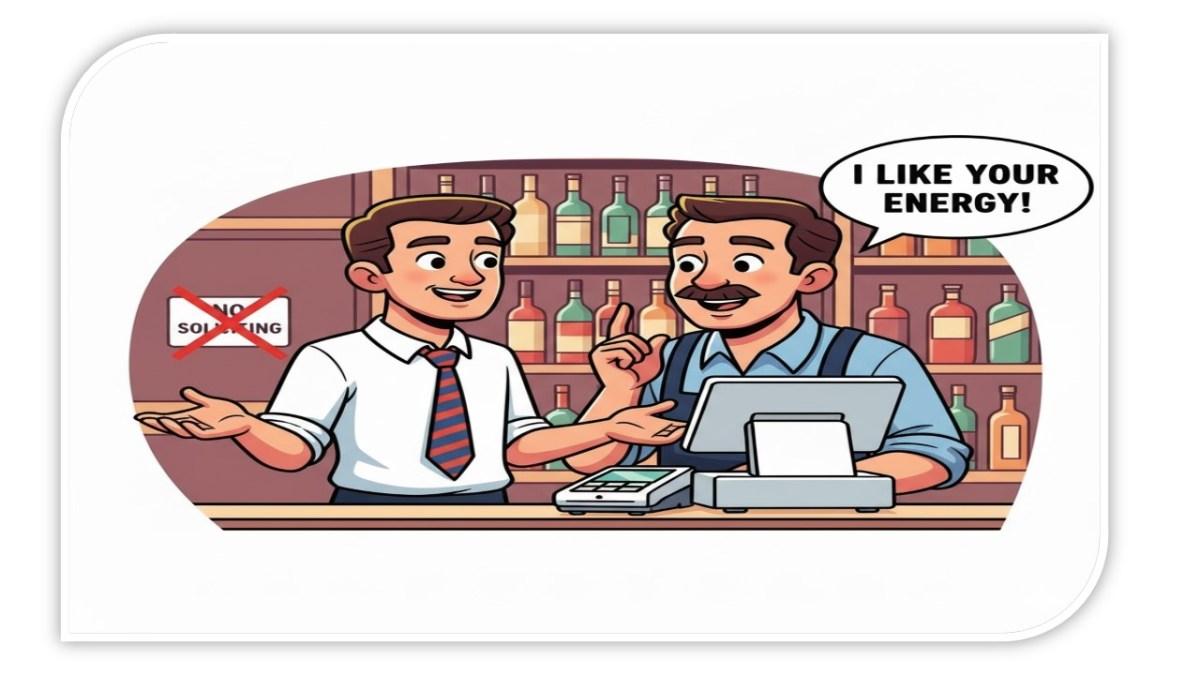
I walked into “The Spirited Shipper” (we’ll call it that) on a Tuesday afternoon. The owner was behind the counter, looking like he’d already heard a dozen pitches that day. The usual wall of “No Soliciting” was up, both literally on the door and figuratively on his face.

This is the moment of truth. Do you lead with the tired, “Hi, I’m here to save you money on your credit card processing?”

Heck no.

I walked up to the counter, gave a quick scan of the top-shelf whiskey, and said, “I’ve got a theory. Selling merchant services is a lot like being a great distiller. You have to filter out all the impurities to get a smooth result that won’t give business owner s like you a headache tomorrow.”

He stopped wiping the counter and actually looked at me. A small smirk. “Is that so? And I suppose you’re the top-shelf stuff?”

The door was open. The banter began. We didn’t talk about rates so much he was already on a dual pricing. We talked about his business. We joked about the complexities of his inventory his Clover system that he wished was as simple as a gin and tonic. I wasn’t just another sales rep; I was a human being having a real conversation. I was genuinely interested.

After just a few minutes of this, before I even had a chance to ask for a statement, he cut me off.

He leaned forward and said, “You know what? I’m interested in moving forward. Let’s see what you’ve got. I like your energy.

That was it. That was the closing line. Not “your fees are lower” or “I love the features on the POS.” It was, “I like your energy.”

The Takeaway: Your Vibe is Your Value Proposition

In a sea of salespeople who sound the same, act the same, and sell the same thing, your personality is your ultimate differentiator. That owner wasn’t buying a POS system from me in that moment. He was buying my confidence. He was buying my positive attitude. He was buying the feeling that working with me wouldn’t be a chore.

So, what does “selling your energy” actually mean?

  1. Lead with Personality, Not just a Pitch: Break the ice with something genuine, witty, or observant. Show them you’re a person before you show them you’re a salesperson. Your intro is your trailer; make them want to see the movie.
  2. Confidence is Contagious: When you walk in with positive, confident energy, you’re not just showing faith in yourself, you’re projecting faith in your solution. It makes the merchant feel more secure. They believe you can solve their problems because you clearly believe it.
  3. Listen More Than You Talk: Good energy isn’t about being a loud, fast-talking sales machine. It’s about being present. By engaging in banter, I was able to listen and connect with the owner’s pain points in a low-pressure way.
  4. Make it Fun: Let’s face it, payment processing isn’t the most exciting topic. If you can be the person who makes a dreaded conversation feel easy, or even enjoyable, you’ve already won half the battle.

Next time you walk into a new prospect’s business, I challenge you to leave your rate sheet in the car for the first five minutes. Don’t focus on what you’re going to say. Focus on how you’re going to be.

Master your product, know your numbers, but never, ever forget to sell YOU. Because when the rates are all a wash, your energy is the one thing the competition can’t beat.

Happy Selling,

David

WWYD? The Merchant’s “DIY” Cash Discount Plan

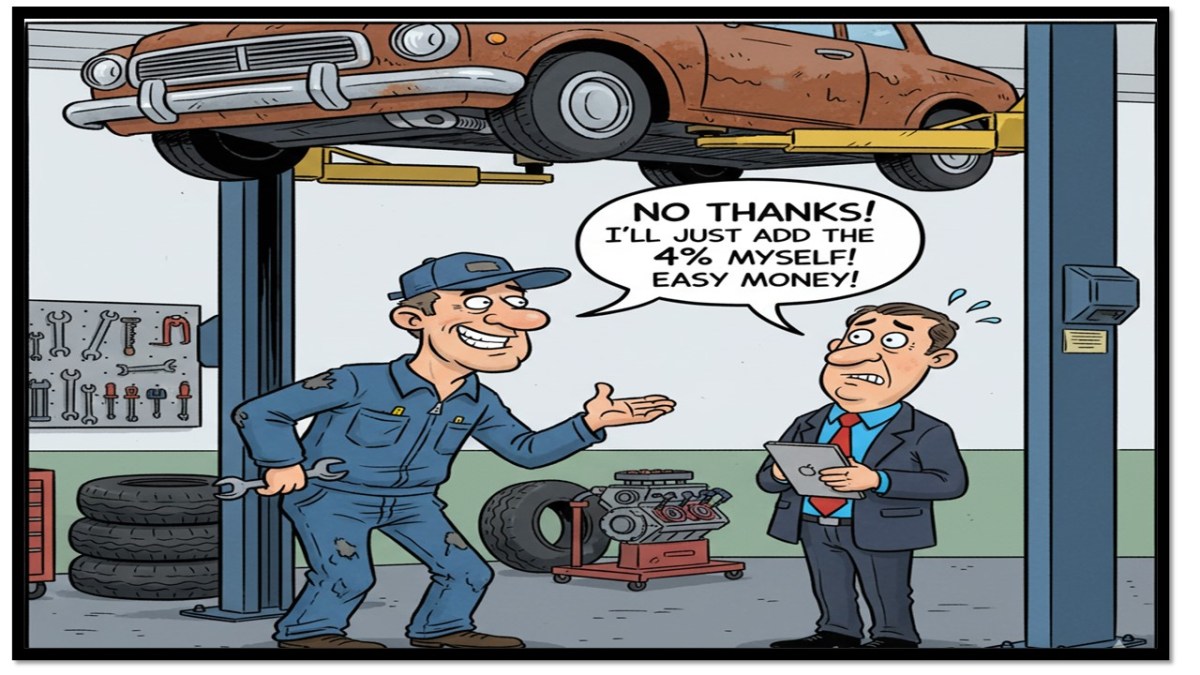
Here we are again with another Wednesday What Would You do? scenario. As merchant services salespeople, we walk into businesses every day. But some scenarios stick with you more than others. Picture this: you’re in a local auto repair shop. You can smell the faint scent of motor oil and tire rubber, and you’re talking to the owner, a skilled mechanic who’s rightfully proud of the business they’ve built.

You start talking about processing costs and how dual pricing can help put money back in their pocket and that’s when you hear the line we’ve all come to dread, especially in a high-ticket environment like auto repair.

The Scenario: “I Just Add 4% to the Repair Bill!”

You’re talking to the shop owner, and he leans in, thinking he’s sharing a brilliant trade secret.

“Look,” he says, “I’ve got this all figured out. When a customer has a $1,500 bill for a transmission job, I just tell my guy at the counter to add 4% on the terminal if they’re paying with a card. Saves me sixty bucks! If they have cash, I just run it for the original amount. Simple.”

He genuinely believes he’s cracked the code. But we know better. We know this “simple” solution is a ticking time bomb of non-compliance, lost revenue, and major headaches, especially when dealing with large repair orders.

The Flawed Logic: Why He Thinks It Works

From the owner’s point of view, standing there next to a car up on a lift, the math seems not just simple, but profitable. His thought process goes something like this:

  • “My actual processing cost is around 2.5%. On this $1,500 repair, that’s $37.50.”
  • “But I’ll add a flat 4% ($60) to be safe and cover all the different card types. It’s just easier.”
  • “So, I’ll collect $1,560. I pay the processor their $37.50, and I just made an extra $22.50 ($60 – $37.50). This is great!”

He sees it as a smart business move—not just covering his costs, but turning a processing fee into a small profit center. The critical piece he’s missing, however, is that the processor doesn’t care about his math. They see one single transaction, and they take their percentage from the total amount.

This simple misunderstanding is what opens the door to three major problems he can’t see.

Why Their DIY “Solution” is a Problem (And How to Explain It)

Why Their DIY “Solution” is Actually a Problem

  1. It’s Not a Cash Discount; It’s an Improper Surcharge: After a customer has already agreed to a $1,500 repair, tacking on an extra $60 at the counter feels like a bait-and-switch. A compliant cash discount program is about transparency—displaying the card price so the customer knows what to expect. Manually adding a fee at the last second, especially one that exceeds the actual cost of acceptance, is a non-compliant surcharge that can lead to angry customers, chargebacks, and heavy fines from Visa and Mastercard.
    • Analogy: “It’s like giving a customer an estimate for a repair and then adding a ‘shop supplies’ fee at the very end that was never discussed. The process and disclosure are everything.”
  2. They’re Paying Fees on the Fee! This is the financial gut-punch, and it eats directly into his perceived “profit.”
    • Let’s use his $1,500 transmission job.
    • Owner’s DIY Method: He adds 4% ($60), charging the customer’s card a total of $1,560. His processing fees (2.5%) are then calculated on the full $1,560. He’s paying $1.50 in fees just on the $60 he collected to cover his costs and generate profit! ($60 x 2.5% = $1.50). That $1.50 comes directly out of the “extra” $22.50 he thought he made.
    • Our Solution: With a properly configured cash discount program, the terminal does the math correctly. It ensures the higher card price covers the actual processing cost on the original $1,500 repair, so he keeps his full profit without paying fees on the fee.
  3. Possible Accounting & Invoicing Nightmares: This is a huge issue for repair shops.
    • His invoice may say the job was $1,500.
    • His credit card terminal batch report says the transaction was $1,560.
    • How does his bookkeeper reconcile that discrepancy every single day? It turns a simple process into a major headache and can even cause issues with how he calculates sales tax on parts and labor.

So, What Would YOU Do?

You’re standing there in the shop, listening to the buzz of an impact wrench in the background. You’ve just listened to the owner proudly explain his system, and you understand his flawed logic perfectly.

This isn’t just a merchant trying to save a few bucks. This is a business owner who believes he’s cleverly created a new, hidden revenue stream by charging 4% on a 2.5% cost. He thinks he’s winning.

How do you pivot him from this mindset? How do you show him that his “smart” business move is actually costing him money and putting his entire ability to accept credit cards at risk, all without making him feel foolish?

Share your best tactics in the comments below!

  • How do you open the conversation when you know the merchant thinks they are profiting from this manual fee?
  • What’s your best analogy for explaining that the “fee on the fee” is eating directly into the very profit he’s trying to create?
  • How do you introduce the serious compliance risks of profiting on a surcharge, especially when he just sees it as “building in a little cushion”?
  • What’s your strategy for proving that a compliant program, which only covers his actual costs, is ultimately more profitable and secure than his DIY method?

Let’s learn from each other and help our merchants protect their hard-earned profits the right way!

Happy Selling,

David

Losing Deals and Winning Anyway

I can still remember the knot in my stomach. I was new in the business, and I’d spent weeks working with a local restaurant I loved. I built a great relationship with the owner, showed him a clear $200 a month in savings, and laid out a plan to upgrade his old, clunky terminal.

He shook my hand and said, “Let’s do it. Get me the paperwork.”

I was ecstatic. I went back to my home office, drew up the agreement, and when I called to schedule a time to sign, he went cold. He told me another rep had come in and offered him a “free terminal” and a rate that was somehow even lower than mine. I knew it was a deceptive lease and a misleading tiered rate structure, but it was too late. I had lost.

I was furious, heartbroken, I remember thinking, “This isn’t fair. I did all the work. I was honest. I deserved that deal.”

If you’re reading this, I bet you know that feeling intimately. You’ve felt the sting of being ghosted, the frustration of being undercut by a shady competitor, the disappointment of a deal falling through for reasons that had nothing to do with you. You’ve probably said those same words to yourself: “This isn’t fair.”

You’re right. It isn’t. And one of the most important lesson I ever learned in this business was to accept that and move on.

For years, I let those “unfair” moments eat at me. I’d blame the merchant, my leads, or the dishonesty of my competitors. But all that complaining did was keep me stuck. It stole my power and my motivation.

The shift for me happened when I decided to stop asking, “Why did this happen to me?” and started asking, “What is this trying to teach me?”

I’ll give you a perfect example. Years ago, in my local market, we had a company that would always write a merchant high and lease a terminal to everyone—yes, a basic terminal! Was this fair to the merchants? Absolutely not, and it was infuriating to see. But for me, it was like finding gold. Because they wrote every account so high, I could walk in, run an analysis, and usually save the merchant what they were paying on the lease and still make good money on the account.

That unethical company, by being so unfair to its clients, made it incredibly easy for ethical reps like me to do right by the merchant and clearly demonstrate our value. The “unfairness” in the market created one of my biggest opportunities.

Every painful loss or frustrating situation became my personal sales coach once I started looking for the angle.

  • That big retail account that ghosted me? I realized I never confirmed the final buying process. It taught me to become a master of discovery.
  • Losing to the business owner’s deep loyalty to their bank taught me how to create a more compelling and urgent case for change.

I’m telling you this not to dismiss your frustration, but to free you from it. You can’t control the market, but you have absolute control over how you respond. You can let the unfairness of this industry or whatever’s out there to defeat you, or you can decide to let it forge you into a smarter, tougher, and more strategic salesperson.

The choice is yours, every single day.

Oh, and that restaurant I mentioned at the beginning? The one that ghosted me and went with the other guy? About a year or so later, after the hidden fees and terrible lease, the owner called me. He asked if I was still in the business. and wanted to work with me. I signed him up that week, and he’s been a loyal client of mine for several years now.

So, take that tough loss from last week. Let it sting for a minute. Then, pull the lesson from it and nail it to the wall. Let it be the fuel that helps you win the next one. You’re in a tough business, but I know you have what it takes. Now go prove it.

Happy Selling,

David

Set Sail for Success This Columbus Day!

Ahoy, Today’s is Columbus Day! Beyond the parades and historical reflections, this day offers a unique opportunity to channel the spirit of exploration and discovery into our sales strategies.

Just as Christopher Columbus set out to find new routes and lands, we too can use this time to discover new avenues for growth and success in our merchant services endeavors. Let’s cast off the lines of routine and embark on a voyage to uncharted business territories!

Fun Facts to Fuel Your Exploration:

Did you know these interesting tidbits about Columbus Day?

  • Columbus Day officially became a federal holiday in the United States in 1937, though celebrations date back to the late 18th century.
  • The actual landing of Columbus in the Americas was on October 12, 1492, but the holiday is observed on the second Monday of October.
  • While often associated with Columbus’s journey, the holiday’s interpretation has evolved over time, becoming a day for many to celebrate Italian-American heritage and culture.
  • Columbus made four voyages across the Atlantic Ocean, never realizing he had discovered a “New World,” believing he had reached the East Indies! Imagine that kind of sustained effort and belief in your mission, even when the outcome is different than expected!
Charting Your Course for Business Growth:

Now, how can we, as merchant services professionals, apply this spirit of exploration to our sales?

1. Discover New Leads:

Just as Columbus sought new lands, we should be actively seeking new leads. Don’t just rely on your existing network. This Columbus Day, dedicate some time to exploring new industries, new business types, or even new geographic areas that you haven’t extensively targeted before.

  • Action: Research local business directories, attend virtual networking events, or even just take a drive through an unfamiliar commercial district. You might be surprised at the hidden gems you uncover!
2. Unearth Unmet Needs:

Columbus’s journey was driven by a need for a new trade route. In the same vein, your sales efforts should be driven by identifying and addressing unmet needs within businesses. Instead of just pitching your standard services, truly listen to your prospects. What are their pain points? What challenges are they facing with their current payment processing?

  • Action: Practice active listening. Ask open-ended questions. Dig deeper than surface-level responses to truly understand their operational bottlenecks and financial goals.
3. Explore New Solutions & Services:

The world of merchant services is constantly evolving, with new technologies and solutions emerging regularly. Are you fully aware of all the innovative tools and services your company offers? Are there new POS systems, e-commerce solutions, or loyalty programs that could benefit your clients?

  • Action: Use this time to refresh your knowledge. Explore your company’s product catalog. Understand the latest features and benefits so you can confidently present new, value-added options to your clients.
4. Navigate Your Sales Process:

Take a critical look at your own sales process. Are there inefficiencies? Areas where you’re getting stuck? Perhaps your follow-up is inconsistent, or your initial outreach could be more engaging.

  • Action: Map out your typical sales journey from initial contact to close. Identify bottlenecks and brainstorm ways to streamline and optimize each step. Think about what’s working and what could be improved for a smoother voyage to success.
5. Build Stronger Alliances:

Columbus relied on his crew and patrons. In sales, building strong relationships is paramount. This isn’t just about closing deals, but about fostering long-term partnerships with your clients and colleagues.

  • Action: Reach out to past clients for a friendly check-in. Connect with colleagues to share best practices. A strong network can be your most valuable asset when navigating challenging waters.
Your Ship Awaits!

This Columbus Day, let the spirit of discovery inspire you. Don’t just rest on your laurels; instead, explore the vast ocean of opportunities that lie before you in the merchant services industry. By proactively seeking new leads, understanding unmet needs, exploring new solutions, refining your process, and building strong alliances, you’ll be well on your way to a truly prosperous voyage.

Happy Selling & Columbus Day,

David

Friday’s Top 10 Reasons a Career in Merchant Services Sales is Unbeatable

Let’s be honest: the word “sales” can leave a bad taste in some people’s mouths. It often conjures images of slick talkers, high-pressure tactics, and people driven by nothing more than the next commission check.

For those of us on the front lines of merchant services, we know the reality is the complete opposite.

The top performers in this industry aren’t just salespeople; they are consultants, problem-solvers, and trusted partners. They thrive on helping business owners navigate the complex world of payments to save money, improve efficiency, and grow their companies.

If you have an entrepreneurial drive, a passion for building genuine relationships, and the ambition to control your own success, then you’re not just in a job—you’re in the best career possible.

From The Home Office in Cash Texas,

Here are this Friday’s top 10 reasons why a career in merchant services sales is one of the most rewarding paths you can take.

10. You’re the CEO of Your Business

In this field, your portfolio is your business. You manage your client base, you dictate your daily activities, and every action you take directly impacts your bottom line. You are responsible for prospecting, building relationships, closing deals, and creating a pipeline that generates new opportunities month after month. Want to earn more? Sell more. Need more leads? Hit the streets or the phones. You have the autonomy of an entrepreneur with the backing of an established company.

9. You Forge Unshakeable Confidence

Success in merchant services means stepping out of your comfort zone. One day you’re walking into a business cold, and the next you’re presenting a detailed cost analysis to a skeptical owner. You learn to build trust quickly, handle complex objections, and ask for a commitment. This career demands confidence, and if you don’t have it when you start, you will earn it with every signed contract and satisfied client.

8. No Two Days Are Ever the Same

Forget monotonous routines. One day might be dedicated to cold calling from your desk, while the next is spent driving around town meeting with restaurant owners, retail managers, and e-commerce startups. Every merchant has a unique story, a different set of challenges, and a distinct personality. The constant variety keeps the work engaging and exciting.

7. You Become a True Business Partner

There’s nothing more satisfying than knowing you’ve made a tangible difference for a client. In merchant services, you do exactly that. You’re not just selling a terminal or a lower rate; you’re implementing solutions. You help a local boutique save thousands of dollars a year, you equip a new restaurant with a POS system that streamlines its entire operation, or you protect a business from costly fraud. It’s a powerful feeling to know your work directly contributes to another person’s success.

6. Your Income Has No Ceiling

Most jobs come with a fixed salary, putting a cap on your earning potential. Sales, and especially merchant services, shatters that ceiling. With uncapped residuals and the power of building a residual portfolio, your income potential is limited only by your work ethic and skill. The more you sell, the more you earn—it’s that simple and that powerful.

5. You Experience the Ultimate Professional Thrill

The feeling of closing a deal you’ve worked on for weeks—or even months—is an unmatched professional high. Like a fisherman landing a prize catch after a long day on the water, the reward for your persistence is immense. Furthermore, as your business grows, you get to experience the fulfillment of building a team and helping other sales professionals achieve their own goals and dreams.

4. You Thrive in a Competitive Arena

Whether you’re competing against your teammates for the top spot on the leaderboard or simply striving to beat your own performance from last month, competition is a powerful motivator. If you have a competitive spirit and enjoy being measured by your results, this career will constantly push you to be your best.

3. You Enjoy Unmatched Job Security

Every business in the world needs a way to accept payments. This fundamental truth means that skilled merchant services professionals will always be in demand. In a fluctuating economy, the ability to help businesses manage their revenue is a recession-resistant skill, offering a level of job security that is hard to find elsewhere.

2. You Develop Universally Valuable Skills

The skills you master in this career—negotiation, strategic planning, relationship management, financial acumen, and closing—are the bedrock of any successful business endeavor. These abilities are transferable to any industry, anywhere in the world.

And the # 1 Top 10 Reason a Career in Merchant Services Sales is Unbeatable is

1. You Build a Lifelong Asset with Unlimited Residual Growth

We mentioned this in #6 but I feel it also needs to take the top spot. This is the ultimate game-changer and what truly separates this career from all others. A sale doesn’t just result in a one-time commission; it generates a stream of residual income that pays you month after month, for the entire life of that account. Each new client adds to your monthly base, creating a compounding effect that can provide a level of financial freedom and stability that other jobs simply can’t match. You aren’t just earning a paycheck—you are building a personal financial asset that grows over time.

What’s the #1 reason you love this career? Drop your thoughts in the comments below!

Have a great weekend,

David

Why Taking Your Anniversary Off is a Power Move

The phone buzzes. It’s a hot lead you’ve been chasing, finally ready to see a proposal. Your CRM is screaming at you with follow-up tasks. Your mind races to get out and see a couple people.

But on the kitchen counter, there’s a card and some flowers. A reminder of a promise made many years ago. Today is my wedding anniversary.

The eternal question for any salesperson hits you like a cold call on a Monday morning: Do I work today? What do I do?

The grinder in us, the one that lives by “Always Be Closing,” says we can’t afford to stop. A quick call, just an email, maybe a short meeting. The competition doesn’t sleep.

Let me stop you right there. As a professional in this demanding industry, here’s the only piece of advice we need today:

Take the day off. And don’t just take it off—unplug completely.

This isn’t about being soft or losing our edge. This is a strategic business decision, and here’s why.

1. You’re Investing in Your Most Important “Business Partner”

Forget your ISO, your processing bank, or your top referral source. Your most critical partner in this career is the person who supports you at home.

They’re the one who listens when you vent about a deal falling through. They’re the one who celebrates with you when you land that massive restaurant group. They provide the stability and support that allows you to handle the rollercoaster of sales.

Neglecting that partnership for one more potential deal is like draining your business’s primary bank account to buy a lottery ticket. It’s a bad trade. A happy, supportive home life is the foundation for long-term success, not a distraction from it.

2. The Pipeline Can Wait. Burnout Can’t.

Merchant services is a marathon of prospecting, follow-ups, and problem-solving. It’s a high-rejection, high-reward field. The pressure is constant. Pushing through a day that should be dedicated to your personal life doesn’t make you a hero; it makes you a candidate for burnout.

A single day to recharge, connect with your “why,” and remember what you’re working for will make you infinitely more effective tomorrow. You’ll come back with a clearer head, a better attitude, and more energy to attack your goals. One day of missed calls is easily fixed. Recovering from total burnout is not.

3. The “How-To”: A Game Plan for the Sales Pro

Okay, so you’re convinced. But how do you actually disconnect without feeling like you’re letting everything fall apart?

  • Set a Professional Out-of-Office: This is non-negotiable. Your email auto-reply and voicemail should be clear and firm. “Thank you for your message. I am out of the office for a personal commitment today, Wednesday, September 17th, with no access to email or phone. I will respond promptly upon my return on Thursday, September 18th.” It shows you’re planned, not flaky.
  • The 24-Hour Digital Detox: This is the hard part. Turn off the work phone. Don’t just silence it. Power it down and put it in a drawer. Log out of your email on your personal phone. Resist the “quick check.” Your only job today is to be present. A half-hearted day off where you’re constantly checking notifications is more insulting than just working.
  • Verbally Commit to Your Partner: Start the day by looking your spouse in the eye and saying, “Today, you are my only appointment. Nothing else matters.” This sets the tone and reinforces your commitment to them and to yourself.

No deal you could possibly close today will be worth more than the memory you can create. Your legacy isn’t built on the one extra terminal you placed on your anniversary; it’s built on the foundation of a life well-lived with the person you chose to build it with.

Alright, that’s enough shop talk for one day. It’s time for me to practice what I preach.

My only quota for the rest of the day is to close the most important deal I have: making my wife feel like the most valued person in the world. The pipeline, the proposals, and the prospects can all wait.

On that note, I’m officially logging off. I’ll talk to ya’ll tomorrow… assuming the celebration goes as planned. No promises.

Happy Selling,

David

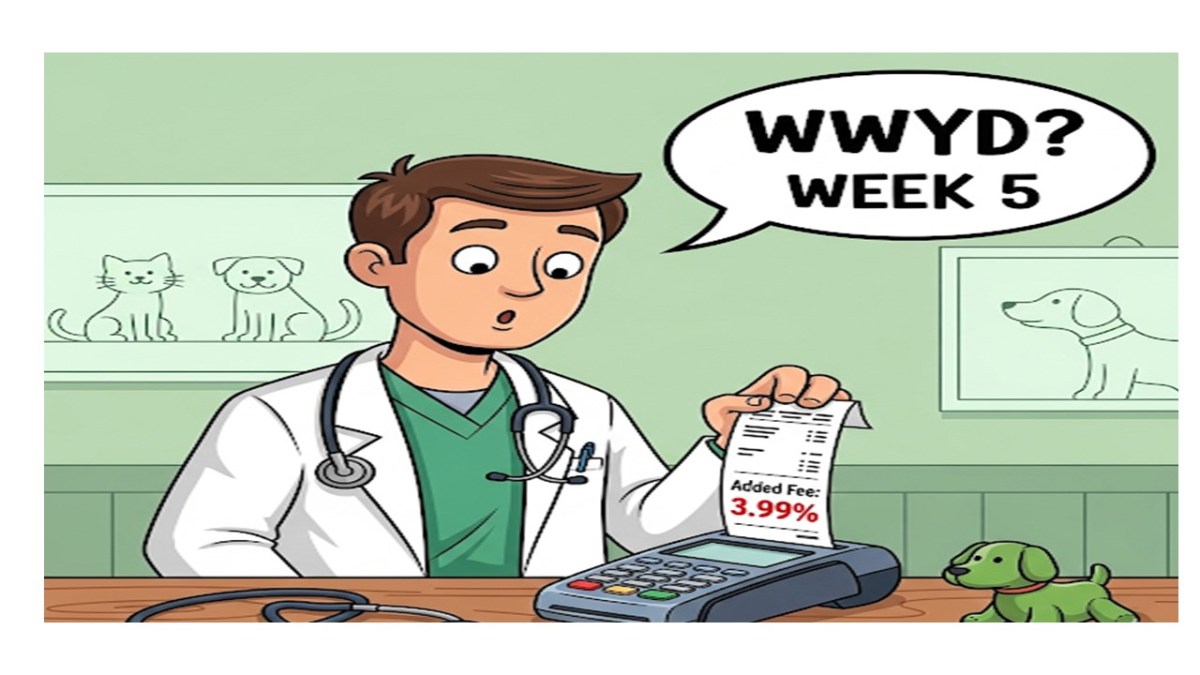
WWYD? Overcoming the Dual Pricing Objection

Let’s set the stage of this weeks scenario. You’re talking to a veterinary office, and they love the idea of dual pricing. They see the potential savings, they understand the mechanics, but then the inevitable objection surfaces: “I’m scared of losing customers by adding a fee.”

It’s a valid concern, and one you’ll hear frequently in the veterinary space. Pet owners are often emotionally invested in their animal’s well-being, and the thought of anything jeopardizing that relationship, even a small processing fee, can be daunting for the vet. So, how do we, as merchant services sales professionals, gently guide them past this hurdle?

Here’s a scenario and some actionable strategies to help you overcome this common objection:

The Scenario: Dr. Miller runs a successful veterinary practice. She’s interested in cash discounting, as the savings are significant. However, she’s hesitant, expressing genuine fear that her loyal clientele will walk away if they suddenly see a processing fee on their bill.

My Thoughts.

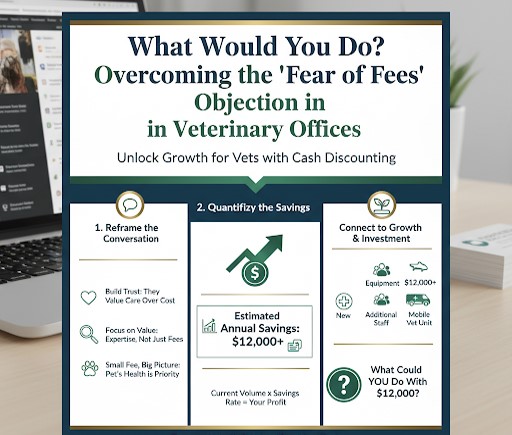
1. Reframe the Conversation: Trust and Value, Not Just Fees

Instead of focusing solely on the fee, shift the narrative to the existing relationship and the value Dr. Miller provides.

  • Point out the inherent trust: “Dr. Miller, your customers bring their beloved pets to you because they trust you implicitly with their care. They value your expertise, your compassion, and the well-being of their animals. That trust is paramount, and it’s far more significant than a small processing fee.”
  • Emphasize their priorities: “Think about what truly concerns your customers when they bring in their pet. Are they primarily focused on the cost of the office visit, or are they more concerned about getting the right diagnosis, the best treatment, and ensuring their pet is healthy and happy? Most often, it’s the latter.”
  • A small fee in the grand scheme: “While a processing fee is new, it’s a very small component in the overall value proposition you offer. Your customers are already invested in their pet’s health, and that investment far outweighs the minor impact of this fee.”

2. Quantify the Savings and Connect to Growth

Numbers speak volumes. Once you’ve reframed the conversation, bring it back to the concrete financial benefits for Dr. Miller’s practice.

  • Show the tangible impact: “Dr. Miller, based on your current processing volume, implementing a cash discount program would save your practice approximately [X a per year. This isn’t just a number; it’s money that directly impacts your bottom line.”
  • Ask empowering questions: “Now, Dr. Miller, let’s think about what an extra [X amount] on your bottom line could do for your business. Imagine that money was yours to invest back into the practice. What kind of impact could that have?”
    • “Could it mean a new, state-of-the-art piece of diagnostic equipment that allows you to offer even better care to your patients?”
    • “Would it allow you to hire an additional veterinary technician, improving wait times and freeing up your time for more complex cases?”
    • “Perhaps a new vehicle to offer mobile home visits, expanding your reach and convenience for your clients?”
  • Build the value in the “WHAT IF”: By connecting the savings to tangible improvements and growth opportunities, you’re building significant value beyond just “saving money.” You’re showing her how this seemingly small change can directly benefit her business and, ultimately, her patients.

3. Address the Implementation & Communication

While not directly about overcoming the initial fear, preemptively addressing how to communicate the change can further alleviate concerns.

  • Suggest clear signage: “We can provide clear and professional signage for your reception area and at the point of sale, clearly explaining the cash discount program to your customers.”
  • Discuss staff training: “We’ll also work with your staff to ensure they are comfortable and confident in explaining the program to customers, making the transition seamless.”

The “fear of fees” is a natural human reaction, especially when it comes to health care. Your role as a merchant services professional isn’t to dismiss that fear, but to acknowledge it and then skillfully reframe the conversation. By emphasizing the existing trust and value, quantifying the substantial savings, and then connecting those savings to meaningful business growth, you can empower veterinary professionals like Dr. Miller to make a decision that benefits their practice without sacrificing the loyalty of their valued customers. Go out there and build that value!

How would YOU handle this? What would you do? Let me know in the comments below!

Happy Selling,

David

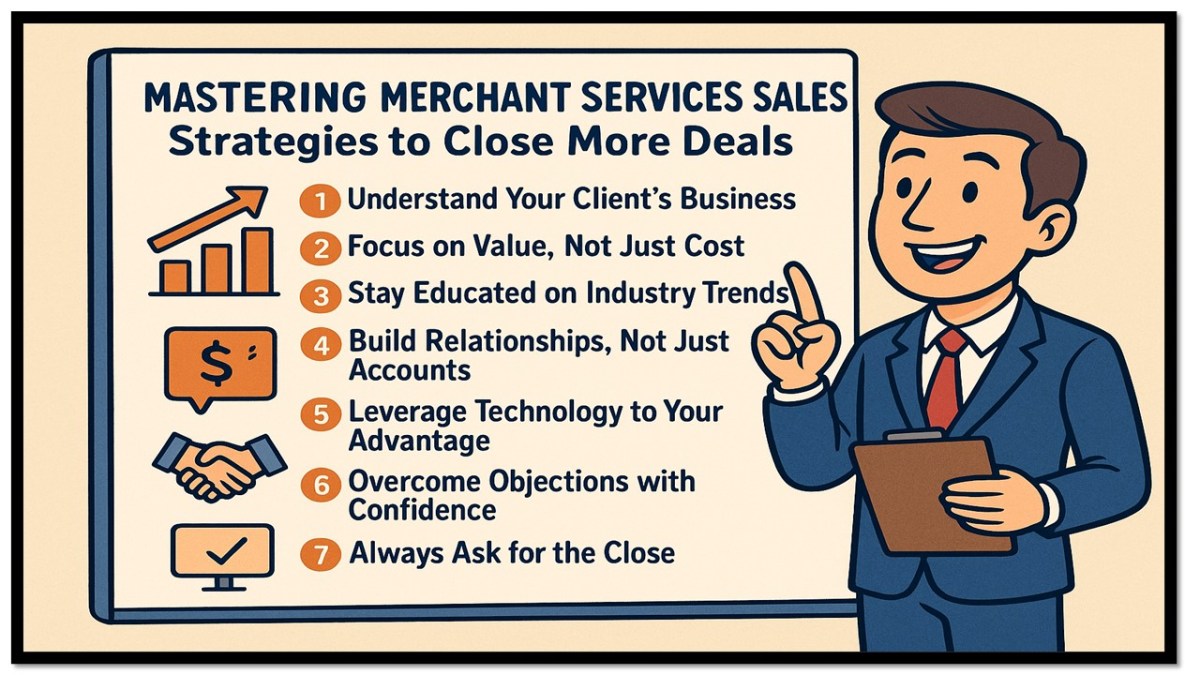
7 Strategies to Close More Deals

If you’re in the merchant services industry, you already know that selling isn’t just about products—it’s about solving problems. Every business you approach has unique payment processing needs, and the more you understand those needs, the more successful you’ll be. Here’s how top merchant services salespeople consistently close deals and build long-term client relationships.

1. Understand Your Client’s Business
It’s tempting to pitch the latest technology or dual pricing right away, but the most successful salespeople start by listening. Learn about your prospect’s industry, customer base, and pain points. Are they struggling with high processing fees? Complicated POS systems? When you understand the challenges your client faces, you can tailor your solution to directly meet their needs.

2. Focus on Value, Not Just Cost
Many businesses compare payment processors solely on fees, but value goes far beyond the bottom line. Can your solution simplify reporting, provide next-day or same-day funding, or improve customer experience? Demonstrating how your services save time, reduce headaches, and increase revenue will position you as a trusted advisor rather than just another salesperson.

3. Stay Educated on Industry Trends
The payments industry moves fast. From working with ISVs to contactless payments and cash discount programs, staying informed will make your conversations with clients more credible and compelling. Attend webinars, read industry blogs, and follow thought leaders—knowledge is a competitive advantage.

4. Build Relationships, Not Just Accounts
Merchant services is a long-term game. The businesses you work with today could refer others tomorrow if you provide excellent service. Check in regularly, offer tips, and be available when they have questions. A strong relationship today can lead to repeat business and referrals down the line.

5. Leverage Technology to Your Advantage
Sales tools, CRM systems, and automated marketing platforms can streamline your workflow and help you follow up more effectively. Track your interactions, schedule reminders, and maintain a pipeline that ensures no prospect falls through the cracks. Technology can free you to focus on what really matters: connecting with clients and closing deals.

6. Overcome Objections with Confidence
Objections are opportunities in disguise. Whether it’s concerns about cost, agreements, or switching providers, the key is to listen, empathize, and respond with solutions. Anticipate common objections and prepare answers that highlight the benefits of your services while addressing their concerns.

7. Always Ask for the Close
Many salespeople hesitate to ask for the sale, but confidence is crucial. After presenting the benefits and addressing objections, ask for the client’s business clearly and confidently. If they’re ready, make the onboarding process simple and seamless.


Selling merchant services is more than just moving agreements—it’s about providing value, building trust, and creating long-term partnerships. By understanding your client, staying informed, and using the right tools, you can not only hit your sales goals but exceed them.

Remember: the businesses you serve rely on you to make payments simple, fast, and efficient. When you focus on helping them succeed, your own success will follow.

Happy Selling,

David

Your Most Important Sale is the One You Make to Yourself

Ever have one of those mornings? Ten calls, ten “NO’s.” A promising deal goes silent. You start thinking, “This market is saturated,” or “I can’t compete with these low-ball offers.”

That’s the moment the real battle begins—not with the prospect, but in your own mind. You can literally talk yourself out of a deal, a new client, and a bigger residual check before you even pick up the phone again.

The truth is, your pipeline is a direct reflection of your mindset.

  • A negative mindset fixates on the rejection, the lost deal, the “rate-only” shopper. It tells you the merchant won’t switch, the appointment will cancel, and your quota is out of reach. That mindset creates its own reality of empty calendars and missed goals.
  • A winning mindset sees every “no” as one step closer to the “yes.” It focuses on the value you bring beyond price. It sees a saturated market not as a barrier, but as an opportunity to find merchants who are being underserved.

This isn’t just motivational fluff; it’s a sales strategy. What you focus on, you create. Focus on problems, you’ll get more problems. Focus on opportunities, and you’ll find them.

So, how do you lock in this winning mindset?

  1. Kill Negative Self-Talk. The moment you hear yourself say “I can’t,” or “This is impossible,” stop. Reframe it: “How can I?” Never put yourself down, even as a joke. You’re a consultant and a problem-solver. Own it.
  2. Shift to Gratitude. Stressed about a tough prospect? Be grateful you have an appointment on the books when others don’t. Frustrated with a low-margin deal? Be grateful for a new logo and the potential for referrals. It’s impossible to stay negative when you’re genuinely grateful.
  3. Visualize the Win. Before a big meeting, don’t just prep your pitch—visualize the outcome. See the signed contract. Picture the merchant thanking you for solving their problem. Imagine opening your commission statement and seeing that deal on it.

Your past month does not equal your future portfolio. It all starts today with the thoughts you choose to allow. Control your thoughts, control your day, and control your results.

Now, let’s go hunt.

Happy Selling,

David