Friday’s Frights: The Top 10 Scariest Things in Merchant Services

Happy Halloween! On this day of ghosts, goblins, and ghouls, we’re swapping campfire stories for tales from the sales crypt. These are the things that truly haunt the nightmares of every merchant services professional. So, bolt your doors, check your residuals, and count down the top 10 scariest things in our industry.

From the Home office in the basement of Bates Motel in Fairvale, California

Here are this weeks Top 10 Friday Scariest Things in Merchant Services

10. The Fortress Gatekeeper More terrifying than any haunted house guardian, this gatekeeper protects the decision-maker with supernatural devotion. They rise from their desk like a spirit from a grave, whispering the soul-crushing incantation: “They’re in a meeting… indefinitely.”

9. The Phantom Statement A merchant hands you a processing statement shimmering with promise—a ghostly image of incredible volume and juicy rates. You spend hours brewing the perfect proposal potion, only to discover the statement was a phantom from a busier time, or worse, a cursed relic from a competitor’s grimoire.

8. The POS-session The deal is signed in blood (well, ink). You arrive with the shiny new terminal, but the moment you plug it in, it becomes possessed. The Wi-Fi password is a lost spell, the POS system hisses and rejects the integration, and your new client watches as your soul slowly leaves your body.

7. “I Need to Consult the Spirits…” …”…of my partner/spouse/accountant.” The deal was alive, and now it’s trapped in the spirit world, its fate dependent on a mysterious entity you’ll never see. This isn’t a “no”—it’s a haunting, leaving a ghostly apparition in your pipeline for months.

6. The Cancellation Hex You open your email, and a curse leaps from the screen. The subject line glows like a bad omen: “Cancellation of Services.” It’s from one of your top accounts, a chilling digital hex that drains the lifeblood from your residuals with no warning.

5. The Mark of the Beast (on the Door) You approach a prime prospecting location, your hopes high, only to see it—the fresh, gleaming mark of the beast. A Square, Clover, or Toast sticker plastered on the door like a freshly carved jack-o’-lantern, signaling that another soul has already been claimed.

4. The Underwriting Underworld: “DECLINED” You fought the beasts, navigated the labyrinth, and returned with the signed contract. You cast it into the underwriting underworld for approval, only for it to be spat back out with a single, blood-red word: DECLINED. The deal is banished to the shadow realm, its potential forever lost.

3. “Can you just send me a scroll?” This ancient curse, often translated as “email me something,” is a surefire way to banish a sales rep. You know your carefully crafted parchment will disappear into a haunted forest of unread emails, its magic wasted.

2. The Calendar Crypt You dare to gaze into the future (your calendar for next week) and find only a desolate, empty crypt. No appointments, no follow-ups, no signs of life. It’s a terrifying silence, forecasting a famine of commissions and a long, cold winter.

And the #1 Top 10 Scariest Thing in Merchant Services is …

1. The “We Found a Cheaper Alchemist” Call The most bloodcurdling horror of all. It’s the ghostly whisper on the phone from your largest, most loyal account—the one that pays for your castle and feeds your gargoyles. They’ve been lured away by a rival sorcerer who promised the same magic for a few fewer silver coins. Your financial foundation crumbles, and the horror is complete.

Stay safe out there, and don’t let the sales monsters get you.

Oh, one more thing, I want to wish a Happy Birthday to my brother Jack. I hope you have a Spooktacular day!

Happy Halloween!

David

Your Pipeline is a Construction Zone

It’s Thursday morning and it’s already been a rough week. Between a brutal gatekeeper, and “we’re happy with who we have,” and a perfect deal getting shot down in underwriting, you will face problems. The single most important thing to remember is this: Never allow those problems to control your pipeline, your mindset, or your day.

The key to winning in this industry is knowing what you can and cannot control. You can’t control a merchant who is in a non-cancellable lease with a competitor. You can’t control a business owner having a bad day. You can’t control underwriting’s final decision.

Stop wasting energy there. To build a solid book of business and find real success, you must pour every ounce of your focus into what you can control.

From Obstacle to Opportunity: The Salesperson’s Mindset

It starts with an unshakable belief in your ability to solve problems. See every obstacle not as a roadblock, but as a stepping stone.

  • The Gatekeeper shuts you down? That’s a free lesson on refining your opening line for next time.
  • A deal gets lost to a competitor’s confusing, low-ball quote? That’s your cue to master how you break down a statement and clearly demonstrate your value.
  • A merchant ghosts you after a great meeting? That’s an opportunity to perfect your follow-up cadence.

This is how you take control. You stop letting the market happen to you and you start making your success happen. The problems will always be there; what changes is your mindset. Challenge the limiting belief that says, “This merchant will never switch,” and replace it with, “What is one more question I can ask to find their pain point?”

Embrace every challenge as a gift in disguise.

Failure is Just Data

In sales, rejection is constant. You will hear “no” far more than “yes.” But discouragement and failure are not the end of the road; they are simply data points on your path to a closed deal.

  • A lost sale is a chance to review your pitch. What objection did you fail to overcome?
  • A rough cold call is a reminder to sharpen your script.
  • A month that falls short of quota builds the hunger and resilience you need for the next one.

Every struggle you face today builds the strength, skill, and reputation you need to land that huge account tomorrow. You are in control of your destiny. You have the power to take that data, learn from it, and MAKE your next conversation better.

Control Your “AEF”: Attitude, Effort, and Focus

When it comes down to it, success in this business isn’t about the things you can’t control. It’s about mastering the three things you always can:

  1. Attitude: How do you walk into the next business after getting thrown out of the last one? That choice is 100% yours.
  2. Effort: Are you making one more call? Are you walking into one more door? Are you sending that personalized follow-up email instead of a generic template?
  3. Focus: Are you dwelling on the deal you lost this morning, or are you zeroed in on the next prospect in your CRM?

Going forward, when a problem hits—a chargeback dispute, a terminal malfunction, a tough negotiation—welcome it. Use it as an opportunity to prove your value, learn something new, and grow. It’s all part of the process of becoming a top producer.

Happy Selling,

David

Hump Day or Victory Day? Crushing Your Mid-Week Goals

It’s Wednesday. Has the initial adrenaline from Monday’s prospecting leveled out? does the Friday finish line still seems a ways off? Is the end of the month weighing on you? Maybe the coffee doesn’t seem to be hitting quite the same. You’ve heard “I’m happy with my current provider” a few more times than you’d like, and that promising restaurant owner you spoke to on Monday has suddenly gone silent.

Welcome to the Wednesday Wall. This mid-week moment can either define your week or derail it completely. It’s the point where momentum can fade and the pipeline can start to feel a little too quiet.

But let’s reframe that. Wednesday isn’t the wall; it’s the turning point. It’s the day the pros separate themselves from the amateurs. It’s not just “hump day”—it’s the engine room of your entire sales week.

The Grind is Real, But So is the Opportunity

Let’s be honest, this job is a grind. You’re not just selling a service; you’re selling trust. You’re tasked with deciphering cryptic competitor statements, explaining complex pricing structures like interchange-plus vs. tiered pricing (IC+0.25%+$0.10), and convincing a busy business owner that your solution will genuinely make their life easier and more profitable.

By Wednesday, the rejections can feel heavy. But this is precisely where the opportunity lies. The seeds you planted on Monday and Tuesday need watering today. The conversations that stalled need a fresh perspective. Your week isn’t over; it’s just getting strategic.

Ready to turn the tide? Here are three actionable strategies to make this Wednesday your most powerful day of the week.

1. Reconnect With Your Real “Why”

Yes, the commissions are a powerful motivator. But when the grind gets tough, money alone won’t get you through the next “no.” You need to connect with your deeper purpose.

You aren’t just selling payment processing.

  • You’re helping that family-owned pizza shop save enough money to finally upgrade their worn-out oven.
  • You’re giving a local boutique the modern POS technology to manage their inventory seamlessly and finally compete with online giants.
  • You’re providing a busy mechanic with a reliable, cash-discounting program that puts thousands of dollars back into their business each year.

When you face a tough gatekeeper or a difficult price objection, stop thinking about your quota for a second. Instead, picture the business owner you’re trying to help. Your persistence isn’t just about closing a deal; it’s about making a tangible difference for their livelihood. Your “why” is your fuel. It’s time to refill the tank.

2. Master the “Value-First” Follow-Up

Monday was for opening doors. Wednesday is for walking through them. Too many salespeople fall into the trap of the weak follow-up: “Hey, just wanted to check in…”

Don’t be that salesperson.

Your Wednesday follow-up is your chance to prove you were listening. It’s an opportunity to provide value before you ask for the sale. Try this instead:

  • “Hi Sarah, I was thinking about our conversation regarding your high e-commerce fees. I found this article on three ways online retailers are reducing cart abandonment and thought you’d find it useful. Do you have two minutes to discuss how it might apply to your site?”
  • “Hi Joe, you mentioned you were frustrated with your current terminal’s downtime. My company just released a case study on how a similar auto shop increased their uptime by 99% with our new wireless POS. I can send over the one-page summary if you’re interested.”

A value-first follow-up immediately repositions you from a salesperson to a trusted consultant. It shows you’re invested in their success, not just their signature.

3. Sharpen Your Edge (The 30-Minute Challenge)

The payments industry is always changing. New technology, new security protocols (hello, PCI 4.0), and new sales strategies emerge constantly. If you feel like you’re hitting a wall, it might be time to sharpen your saw.

Take just 30 minutes out of your day today.

  • Listen to one episode of a top sales podcast (like “Sell or Die” with Jeffrey Gitomer).
  • Watch a YouTube video on how to dissect a competitor’s merchant statement more effectively.
  • Role-play your pitch or a common objection with a colleague and ask for blunt feedback.
  • Read up on a niche industry you’re targeting. Learn their specific payment pain points—what does a dentist’s office need that a coffee shop doesn’t?

A small investment in your skills today will give you the confidence and the fresh angle you need to break through a tough account tomorrow.

Finish the Week Stronger Than You Started

Wednesday is your launchpad for a winning Friday. It’s the day for strategic moves, renewed purpose, and relentless focus.

The deals you celebrate at the end of the week are almost always the result of the grit and intelligence you applied in the middle of it.

So, grab that coffee, pull up your CRM, and look at your pipeline with fresh eyes. Who needs that value-first follow-up? Which proposal needs one more push? The week is far from over. Go make it happen.

What’s your number one strategy for beating the mid-week sales slump? Share it in the comments below!

Happy Selling,

David

Stop Working IN Your Business and Start Working ON It.

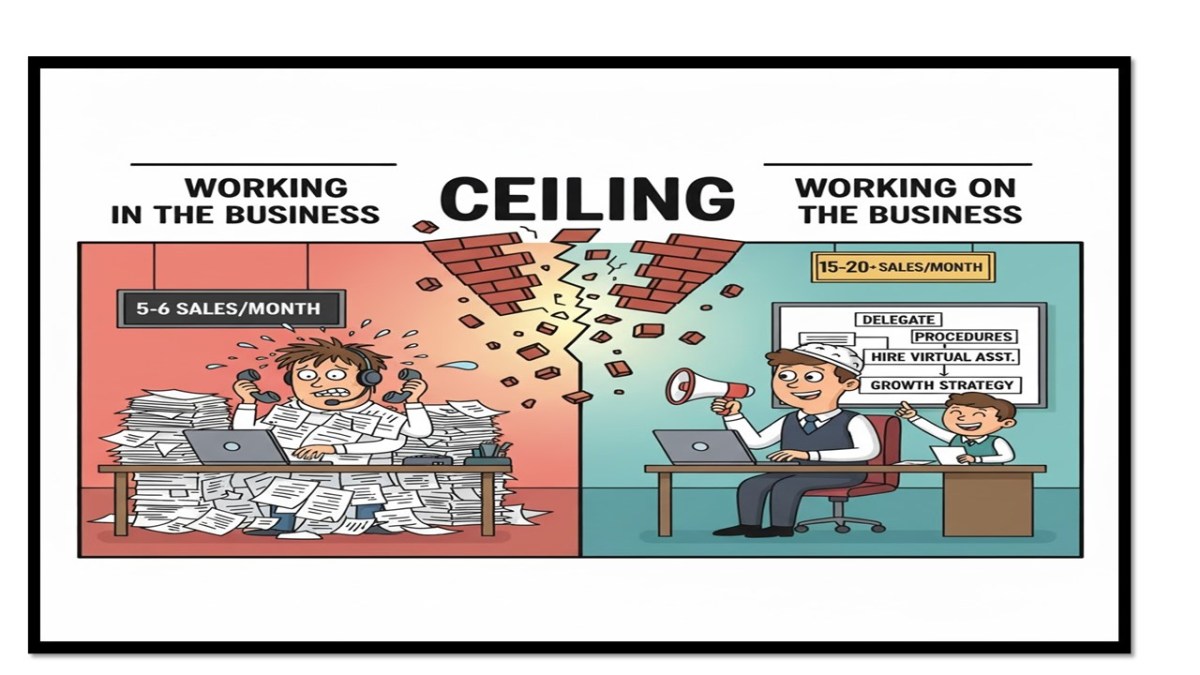
We’ve all been there. You’re in a rhythm. You’re prospecting, running appointments, closing deals, and putting out fires. You’re consistently hitting a number—maybe it’s 10, 16, or 20 deals a month. You’re making good money, but you’ve hit a ceiling. No matter how hard you grind, you can’t seem to break through that plateau.

The problem isn’t your work ethic. The problem is that you’re the most valuable employee in your own business. To scale, you have to start thinking like the CEO.

This requires understanding one crucial concept: the difference between working IN your business and working ON your business.

Working IN Your Business: The Daily Grind

Working IN your business is the core of what you do every day. It’s the “job” part of being an independent sales professional.

  • Prospecting and cold calling
  • Running discovery meetings
  • Analyzing merchant statements
  • Closing deals and getting signatures
  • Submitting paperwork
  • Handling terminal installations and customer service calls

These tasks pay the bills. They are essential. But by themselves, they will only take you so far. There are only so many hours in a day, and you can’t clone yourself… or can you?

Working ON Your Business: The CEO Mindset

Working ON your business is stepping back from the day-to-day grind to build a system—a machine that can operate even when you’re not personally turning every gear. This is where you put on your manager hat and architect your growth. It involves asking strategic questions:

  • How can I streamline my process?
  • What tasks can I delegate?
  • How can I create repeatable procedures for success?
  • What is the long-term structure of my business?

If you’re stuck at that 5-6 deal ceiling, it’s because you’re spending 100% of your time working IN the business. The path to 10, 15, or more deals a month isn’t working harder; it’s working smarter.

Your 30-Minute Growth Strategy

You don’t need to stop selling. Keep closing those those 5-6 deals. But it’s time to reclaim a small piece of your day for CEO-level thinking.

The Challenge: For the next month, block off the first 30-60 minutes of your workday to work ON your business. Do it when your mind is fresh, before the daily chaos begins. The mundane tasks of prospecting and paperwork can be done on autopilot later. Use this golden hour to think.

Ask yourself:

  • What tasks could I pay someone $15/hour to do? (Think list building, data entry, scheduling installations, follow-up “thank you” calls).
  • Can I create a procedure for this? What are the exact steps for onboarding a new client, from signed app to a happy, processing merchant? Write them down.
  • What could I delegate to free up my selling time? Imagine offloading the 5-10 hours a week you spend on paperwork and administrative tasks. What could you do with that extra time?

This is what working ON your business looks like. It’s the foundation for your first hire.

Navigating the Pitfalls of Your First Hire

Hiring your first assistant (virtual or in-person, using services like Upwork or Fiverr) is terrifying and exhilarating. Here’s what to expect and how to handle it.

1. They WILL Make Mistakes. Let’s get this out of the way: your first hire will make every mistake you can imagine, and some you can’t. They will mess up paperwork. They will call the wrong person. It’s going to happen. Embrace it. Mistakes are the price of growth and learning. Don’t let the fear of imperfection keep you trapped doing everything yourself.

2. Delegate Wisely. Your core skill is closing deals. DO NOT delegate closing to a new, inexperienced hire. That’s like a surgeon asking a rookie to perform the main operation. Instead, have them handle the tasks around the sale:

  • Pre-Sale: Building lead lists, scrubbing data, some initial appointment setting (with a script).
  • Post-Sale: Completing application paperwork after you get the signature, scheduling the installation, making the first follow-up call to ensure the merchant is happy.

You want to hire someone you can train and mold. Pay a fair wage ($25k-$35k to start) and increase their compensation as they become more valuable to your operation.

3. The Resentment Trap. You will inevitably feel a flash of resentment. You’ll think, “Why am I spending two hours teaching them how to do something I could do in 15 minutes?” This is a lie your brain tells you to keep you “safe” in your comfort zone.

Reframe your thinking: You are not losing two hours; you are investing two hours to buy back hundreds of hours in the future. Once you train someone to handle that task, you never have to do it again. Create a procedure (a simple document or a quick screen-recording video) during the training, and delegating to the next person becomes even easier.

4. Communication is Oxygen. Lack of communication will kill your growth faster than anything else. Your business cannot rise above your leadership. Without clear, consistent communication, you haven’t hired a team member; you’ve created a new, expensive problem. Set up regular check-ins, provide clear instructions, and create a culture where they feel comfortable asking questions.

Your Path Forward

Leverage your “laziness”—that desire to not do the repetitive, boring tasks anymore. Convert that feeling into fuel. Use 30 minutes each day to build the systems that will free you.

Continue to wear your employee hat and be the best salesperson in your company. But also put on your manager hat and become its best leader. That is how you break the plateau and build a true merchant services business, not just a job.

Happy Selling,

David

Birthdays, Mondays, and Sales

Today, October 27th, has always been a special day for me. It’s my birthday—a personal New Year’s Day. It’s a time to reflect on another year around the sun, a time to take stock of the wins and losses, and a time to reflect on another year of growth. As I was thinking about this annual ritual, I realized how similar it is to the mindset we need not just once a year, but every single week, and even every single day in our profession.

It all comes down to the power of a fresh start.

The Birthday Mindset: Our Annual Review

A birthday is the ultimate reset. You look back at the person you were 365 days ago and measure the distance you’ve traveled. You celebrate the milestones, learn from the missteps, and set intentions for the year ahead. It’s a day of perspective, gratitude, and forward-looking energy. You get to decide what you’re leaving behind and what you’re carrying into your next chapter. This is your personal annual review, and you are the CEO of your life.

The Monday Mentality: Your Weekly Reset

Now, think about Mondays. For many, Monday has a bad reputation. It’s the end of the weekend and the start of the grind. But for a sales professional, that perspective is a recipe for failure. We have to see Monday for what it truly is: a fresh start.

A Monday is a micro-birthday for your career goals. It’s the starting line for the week. It’s your chance to look at last week’s pipeline, analyze what worked and what didn’t, and map out your plan of attack.

Did you hit your call numbers?

Did you close the deals you expected?

Monday is the time to learn from last week’s performance and hit the reset button with renewed focus and energy. A great week doesn’t just happen; it’s launched with intention on a Monday morning.

Selling Merchant Services: The Daily Fresh Start

This brings me to our world: selling merchant services. If there is any profession that requires an endless supply of fresh starts, it’s this one. Our days are filled with rejection. We hear “NO,” “not interested,” and “we’re already happy” more times than we can count. It can be easy to let the weight of one bad call crush the next one.

But this is where the birthday and Monday mindset becomes a superpower.

Every single call we make is a fresh start. Every new business door you open is a fresh start. The last “NO” has absolutely no bearing on the next “YES,” unless you allow it to. Your success in this industry is directly tied to your ability to reset, instantly, and treat every new interaction as the most important one of the day. You have to be able to celebrate the small win of a good conversation and immediately move on to create the next one, without dwelling on the rejection that came before it.

So whether it’s your birthday, a Monday morning, or just the next call on your list, embrace the opportunity to begin again. Reflect on what you’ve learned, set your intention, and execute with passion.

Our success is not defined by singular moments, but by our relentless commitment to starting fresh.

Happy Selling,

David

Friday’s Top 10 Prospecting Hacks to End 2025 Strong…

With Halloween and November just a week away, and taking away Thanksgiving, Christmas eve, Christmas day we only have 44 days left to sell. There’s a thought that creeps into every sales rep’s mind: “Everything is about to slow down. Businesses are too busy for the holidays. I should just build my list and hit it hard in January.”

Let me ask you a question: Can you still prospect and close deals in November and December?

Absolutely! Yes, you can.

Coasting through the end of the year is a rookie mistake. Putting in the effort now not only smashes your Q4 goals and fattens up your residual check for the year, but it also loads your pipeline for a fast start in the new year. While your competition is sipping eggnog, you’ll be signing deals.

Let’s walk through 10 strategies you can use to prospect like a pro during the holiday rush.

From the Home Office in Ding Dong, Texas, Here are The Top 10 Prospecting Hacks to End 2025 Strong…

10. Break Your Routine If you only call restaurants during the lunch rush, you’re going to get shut down. Be strategic. This time of year, schedules are chaotic. Try walking into retail stores mid-morning on a Tuesday. Call that business owner at 8:00 AM before their day goes crazy. A different approach can break through the holiday noise.

9. Circle Back to Lost Merchants Remember that client who left you six months ago for a rate that seemed “too good to be true”? Now is the perfect time to call them. The end of the year is when owners review their expenses. That “great deal” has likely has some junk fees and non-existent service. A friendly check-in call might be all it takes to hear, “You’re right, we made a mistake. Let’s talk.”

8. Revisit That ‘NO’ from Q1 You quoted a big deal back in March that went to a competitor. Don’t write it off. Call them up and say, “Hey, just wanted to check in and see how that new system is handling your holiday rush. We’re here to help if you run into any issues.” You’d be amazed how often the new provider has dropped the ball, opening the door for you to come in and save the day.

7. Farm Your Existing Book for New Opportunities You have merchants who love you but are only using your basic services. Are they still running that old, slow terminal? The holiday rush is the perfect reason to upgrade them to a faster POS system. Do they want to sell online? Talk to them about an e-commerce gateway. Prospecting isn’t just about finding new clients; it’s about expanding the ones you have.

6. Master the “Speed Meeting” Forget asking, “What does your calendar look like in two weeks?” In Q4, you need to be thinking in minutes, not weeks. Your pitch should be, “Do you have 15 minutes tomorrow morning for a quick look at your last statement? I think I can save you some money before your busiest season.” Get in, get to the point, and get the deal before they say the dreaded words, “Call me in January.”

5. Target the “Other” Businesses While everyone else is trying to pitch busy restaurants and retail shops, you should focus on businesses that aren’t as slammed. Think auto repair shops, dentists, B2B suppliers, and storage facilities. Their owners have more time and are often in a year-end planning mindset, making them perfect prospects.

4. Use the Personal Touch The holiday season brings a shift in mindset. People are generally more open and receptive. When you see a client post on LinkedIn about a successful charity drive, don’t just “like” it. Leave a genuine, personal comment. This builds a relationship that goes beyond interchange rates and makes you the person they trust.

3. Make “Thank You” Calls This is the single best way to protect your residuals. While your competitors are bombarding your clients with cold calls, you can stand out by simply calling your existing merchants to say, “Hey, I know this is a crazy busy time for you, and I just wanted to say thank you for your business. Let me know if you need anything at all.” It reinforces your value and builds a wall around your portfolio.

2. Ask About Their Holiday Hours Here’s an easy door-opener: Call your prospects and current clients with a simple, service-oriented question. “Hi, this is Lee. I’m just calling around to my local business partners to see if you’ll be running extended hours for the holidays. I want to make sure you’re all set for the rush.” It’s a non-salesy call that starts a real conversation.

And the #1 Prospecting Hack to End 2025 Strong is…

1. Go All-In During Thanksgiving Week This is a prospecting gold mine. Why? Most of the gatekeepers are on vacation. Decision-makers are often in the office trying to catch up, and they are more likely to answer their own phones. You can have conversations with high-level owners this week that you couldn’t get near the rest of the year. While your competition is checked out, you can be scheduling meetings that will close in December and January.

Ultimately, prospecting during the holidays is less about aggressive selling and more about strategic connecting. Every “thank you” call, every personal touch, and every problem you solve deepens your relationships and insulates your portfolio from competitors.

Think of November and December as the time to plant the seeds you’ll harvest all next year. The work you do now is the foundation for your success in 2026.

Have a great weekend,

David

6 Myths of Handling Sales NO’s

You’ve analyzed the statement, built the proposal, and you know you can save them money and upgrade their tech. You’ve got the deal locked down. Then you hear it: the dreaded “NO.”

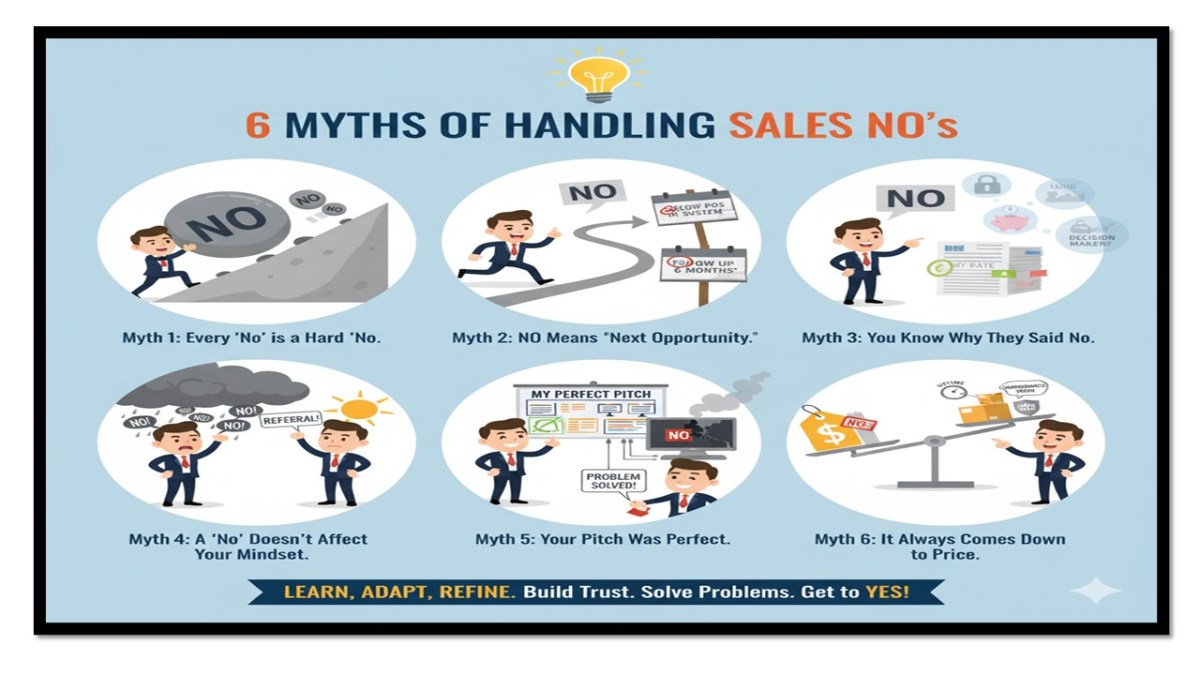
Suddenly, your perfect proposal is dead in the water, and you start questioning your pitch. What do you do? Chalk it up as a loss and walk away, or do you dig in? Here are six common myths about hearing “NO” in merchant services—and how to bust them to close more accounts.

Myth #1: Every “No” is a Hard “No.”

Too many reps treat every “NO” the same. They aren’t. A “NO” from a small coffee shop that does $10,000 a month in volume is different from a “NO” from a multi-location restaurant group. Know which deals are worth fighting for.

More importantly, a “NO” often isn’t about you or your competitor. It’s the merchant choosing to do nothing. Inertia is your biggest competitor. They’re busy, their current system kind of works, and switching sounds like a hassle. Understanding whether you lost to a competitor or lost to inaction is the first step to crafting your next move.

Myth #2: NO Means “Next Opportunity.”

While you can’t waste time on lost causes, moving on too quickly is costing you deals. When a merchant tells you NO, you owe it to yourself—and your pipeline—to ask clarifying questions.

A “NO” is often just a “not right now.” Maybe their current processing contract isn’t up for six months, or they just bought a new POS system. By asking, “Could you tell me a bit more about what led to that decision?” you can uncover the real timeline. Stay engaged, set a follow-up, and turn a delayed decision into a future signed agreement.

Myth #3: You Know Why They Said No.

The biggest trap in this business is assuming you lost on price. Reps default to, “My rate must have been too high,” and move on. Stop assuming.

Did you ever consider:

  • They’re locked into a lease on their terminal/POS?
  • They have a business loan with the bank that provides their processing?
  • The person you spoke to isn’t the real decision-maker?
  • They’re worried the transition will disrupt business?

Always verify the “WHY” behind the “NO.” Multiple contacts within the business can give you the real story. Uncovering the true objection is the only way to overcome it.

Myth #4: A “No” Doesn’t Affect Your Mindset.

It absolutely does. Merchant services is a game of numbers and rejection. A string of “NO’s” can crush your confidence, and that energy carries into your next walk-in or call.

When you get a tough rejection, don’t just stew on it. Take immediate action. Call a happy client you recently set up and ask for a referral. Review a signed agreement from a big win. Remind yourself that you provide real value. Reset your mindset before you pitch the next merchant.

Myth #5: Your Pitch Was Perfect.

If you have an ideal merchant profile and they still say NO, don’t blame the merchant. Blame the process. Often, a “NO” comes from a mismatch between your sales cycle and their readiness to buy.

Did you rush to the rate comparison before understanding their operational challenges? Did you talk about saving them $50 a month when their real pain is inventory management or server performance on their outdated POS? Just because they’re a perfect fit doesn’t mean they’re ready for a signature. Create value and solve a business problem first; the rate becomes the easy part.

Myth #6: It Always Comes Down to Price.

This is the biggest myth in payment processing. If a merchant says “NO” because of price, it’s almost never about the rate itself. It’s because you failed to establish value that outweighs the cost.

Shift the conversation from price to cost. What is the cost of their current system’s downtime during a dinner rush? What is the cost of the hours they waste manually entering sales into QuickBooks? What is the cost of a single chargeback they could have won with better tools? When you connect your solution to solving expensive problems, the price becomes an investment, not an expense.

Hearing “NO” is part of the job, but it doesn’t have to be the end of the conversation. Every “no” is an opportunity to learn, adapt, and refine your approach.

  • Understand the real objection.
  • Ask the right questions.
  • Build trust beyond a rate sheet.
  • Solve problems, don’t just sell products.

Listen to your merchants, adapt your process to their needs, and you’ll find more of them saying “YES.”

Happy Selling,

David

WWYD: The Deal Was Done… Until It Wasn’t

Has this ever happened to you? You have the perfect solution for a client. You’ve put in the hours, listened to their pain points, and built a genuine rapport. The presentation was a home run, the verbal confirmations are in, and you’re already mentally chalking it up as a win.

This exact scenario just happened to one of my sales partners, and he called me to vent and ask for advice. It’s a story that ends with a question he’s been asking himself ever since, and now I’m asking you: What would you do?

The Client and The Problem

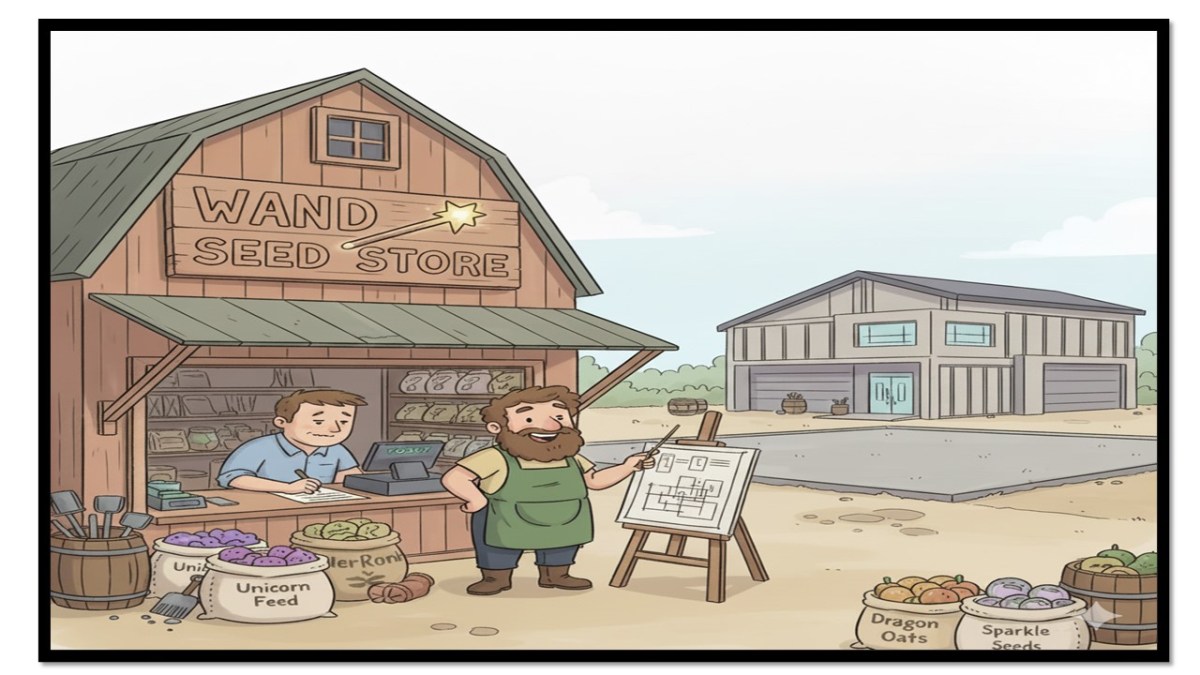
My partner’s client was the kind of local business you root for: a community feed store. The new owner had recently bought it, inheriting not just the inventory and the loyal customers, but also a tangled mess of a problem. Chief among them was a nightmare Point of Sale (POS) lease that the previous owner had locked them into. It was restrictive, expensive, and a daily operational headache.

The new owner was ambitious and smart. They weren’t just running the old store; they were building a brand new, bigger, better location just down the road. This move was their chance to shed the old baggage and start fresh. That fresh start included a new POS system—specifically, three systems to handle their growing business.

They were trapped by the old POS lease for now, but the move was their light at the end of the tunnel. It was my partner’s job to make sure that light wasn’t another oncoming train.

Building the Perfect Solution

He spent weeks with them. They talked about inventory for everything from specialty horse feed to garden supplies. They discussed how their current system failed them daily. My partner walked the dusty floors of the old building and stood on the concrete slab of the new one, listening to the owner’s vision.

He put together a comprehensive presentation tailored specifically for them. It wasn’t just a sales pitch; it was a roadmap out of their current predicament and into a more efficient, profitable future. He would get them set up with three modern terminals, intuitive software, and most importantly, a contract that worked for them, not against them.

The presentation went perfectly. The owner was excited. His brother, also a partner, had been part of some of their conversations, and my colleague thought he was on board as well. It felt less like a possibility and more like a plan they were finalizing. The deal was all but signed.

The Phone Call

Then, the phone rang. It was the owner. My partner said he could hear the hesitation in their voice before they even said anything.

“I am so sorry,” they started. “My brother… he went ahead and signed a contract with Toast.”

He was floored. The brother, who he’d had dealings with and thought understood the plan, had been wooed by a competitor and signed on the dotted line. To be blindsided by his decision, after all their conversations, was the real gut punch. Just like that, weeks of work, planning, and relationship-building evaporated. The future they had mapped out together was gone.

He told me he felt a rush of frustration and disappointment. He had invested time and energy into providing a solution for their specific problems, only to have the deal torpedoed by a partner he thought was on his side.

After he hung up the phone, he sat there staring at his proposal. And now he’s at a crossroads.

So, What Would You Do?

This is where I turn it over to you. In my partner’s shoes, what is the next move?

Option A: Walk Away. Does he just cut his losses? Send a polite, “Sorry it didn’t work out, best of luck,” email and move on. It’s a clean break, but it feels like a waste.

Option B: The Post-Mortem. Should he try to get more information? He could politely ask the owner he worked with what swayed the brother at the last minute. Was it price? A specific feature he missed? Knowing “why” he lost might provide valuable insight for the next deal.

Option C: Play the Long Game. Does he congratulate them and maintain the relationship? He could be the gracious professional, wish them success with their new system, and check in occasionally. POS contracts, especially ones signed hastily, often lead to buyer’s remorse. Being the person who was there to help, without any bitterness, could put him first in line if (or when) things go south with the new system.

Option D: Express His Disappointment. Should he have an honest, professional conversation with his contact about how this went down? He could explain that the time and customized work he invested was based on their conversations—including those with the brother—and the direction things were heading. It wouldn’t change the outcome, but it might make them think twice in the future.

Every salesperson has a “one that got away” story. This one is my partner’s. He’s genuinely torn on the right way to proceed to salvage something—whether it’s a lesson, a future opportunity, or just his own professional pride.

Leave a comment below. I want to hear your take. What would you do?

Happy Selling,

David

The Biggest Risk in This Business? Playing It Safe.

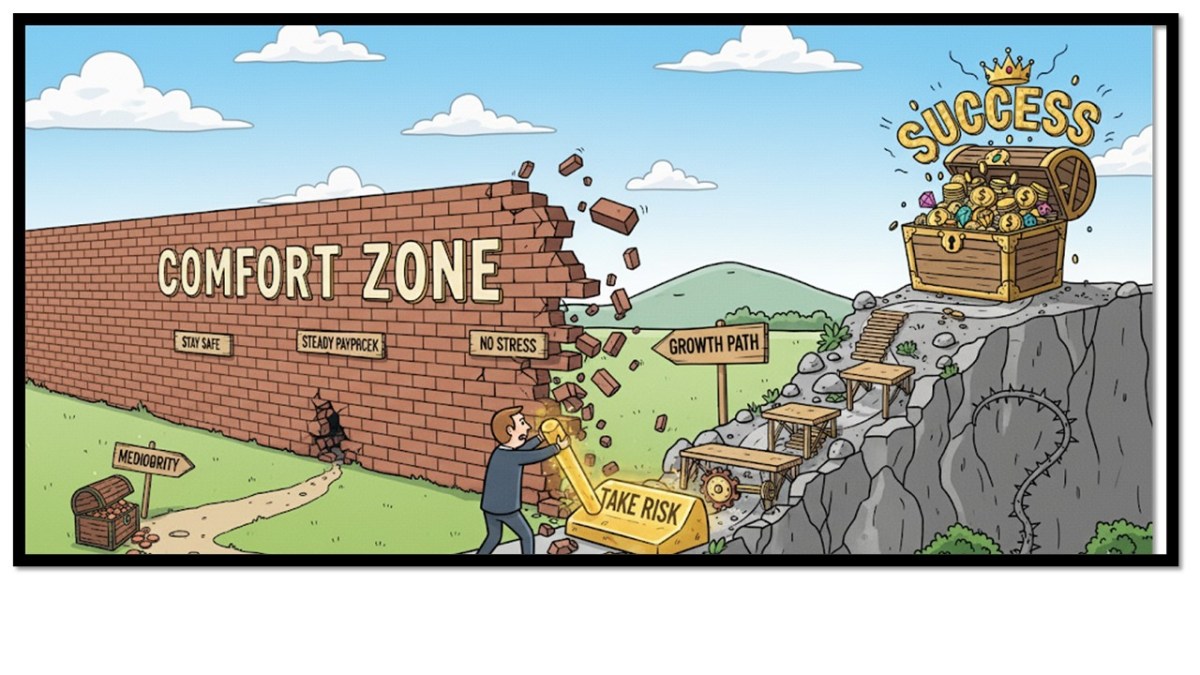
We all hear the cliché, “No risk, no reward.” But for us who sell merchant services, that’s not a cliché—it’s the entire business model. Your residuals aren’t built on safety; they’re built on courage. The problem is, most of us were trained from day one to seek security, to find the “safe” path. That advice, while well-intentioned, is the blueprint for a mediocre portfolio.

If you genuinely want the freedom, income, and lifestyle this industry promises, you have to get comfortable with being uncomfortable. I learned this the hard way.

I remember a pivotal moment early in my sales career. I was working in wholesale seafood and the owner gave me a choice: a safe salary with a small commission, or 100% commission with a much higher earning potential. My brain screamed, “Take the salary! You have bills to pay!” And this time, the fear won. I took the safe bet. I took the salary.

It was fine for a few years. The pay was steady. But then, I got the ultimate lesson in “job security”—the business closed down. My ‘safe’ job vanished overnight.

I found myself back in retail management, working 60+ hours a week. The salary was good, but I was a slave to it. I was constantly at work, missing time with my family, and heading straight for burnout. As I’ve told this story before, I knew if I kept on doing what I’d been doing, I was gonna burn out or die working for someone else.

All this time, a friend of mine—who was and still is selling merchant services—was trying to get me to take a risk and give it a try. He was building a real business with residual income while I was just trading my time for a paycheck. I was terrified to leave the security of that salary, even if the lifestyle was killing me.

Finally, after talking it over with my wife, we decided I had to make a change. We agreed to give this merchant services thing a real try for a few months. Taking that leap of faith—leaving a “secure” salary to finally bet on myself—was the best decision I ever made. That risk gave me back my time, my freedom, and control over my future.

My story shows that “safety” is often an illusion. The real risk is staying in a situation that is slowly draining the life out of you.

You are either growing your portfolio, or you’re shrinking. Where are you playing it safe right now?

  • Are you avoiding certain businesses because they look intimidating? That C-store with 10 locations is a risk. Walking in there is a risk. But the reward could be a foundation for your entire portfolio.
  • Are you sticking to the same old pitch? The risk is learning a new vertical, like B2B or e-commerce, where the deals are more complex. The reward is higher margins and stickier merchants.
  • Are you afraid to ask for referrals? The risk is feeling pushy. The reward is a warm lead, the single most valuable asset in our business.

You were not designed to build a small book of business that just covers the bills. You were made to build an empire. Every top producer in this industry will tell you about the risks they took—the big client they were scared to call, the money they invested in leads, or the leap of faith they took to bet on themselves.

Make a commitment to yourself right now. Be courageous.

  • Set a Clear Residual Goal: Don’t just “try to sell more.” Pick a number. Is it $5,000/month in residuals? $15,000? Write it down and look at it every single day. That’s the target. Now, what risks do you need to take to get there?
  • Surround Yourself with Killers: Get away from the agents who complain about the industry being saturated. Talk to top performers, ask them what they’re doing differently. Pay for their lunch. Absorb their mindset. Your environment dictates your success.
  • Become a Student of the Game: Don’t just memorize your script. Learn about interchange optimization, Level 3 data, and the FinTech that’s changing our industry. The more you know, the more confident you become, and the smaller the risks feel.

Embrace the challenges. The brutal days of door-knocking build resilience. The complex statement analysis builds expertise. The “NO’s” you get build the strength to keep going until you get that massive “YES.”

This is your time. Quit playing it safe. If you aren’t willing to risk the unusual, you will have to settle for the ordinary.

Your future self, living off the residuals you built, will thank you for the risks you take today.

Happy Selling,

David

The Unfair Advantage in Sales?

What time did your alarm go off this morning?

For most in sales, the morning is a frantic rush. It’s a blur of hitting snooze, grabbing coffee, and mentally jumping into the day’s first appointment before you’ve even left the house. We’re all looking for an edge, that one thing that will help us close more deals, build a bigger pipeline, and crush our quotas. We invest in CRM software, attend seminars, and read sales books. But what if the single biggest competitive advantage isn’t found in a new technique, but in a new habit?

I heard a sales trainer say once, “Start your day early. Get up at 6 or even 5 AM and see how much more productive you can be.”

Honestly, it sounded simple, maybe too simple. But in a profession where discipline and initiative are everything, I decided to give it a try. I started with 6 AM, then pushed it to 5 AM. And I can tell you, it was a game-changer.

That quiet, pre-dawn hour is now my time. It’s the time I use to arm myself for the battles of the day. It’s when I get my mind right, my body moving, and my strategy set before the rest of the world is even awake.

From Chaos to Control: What an Extra Hour Gives You

Think about it. How many times have you felt like you’re playing catch-up all day? Responding to yesterday’s emails while trying to prep for today’s meetings. That feeling of being reactive instead of proactive is a progress killer in sales.

Starting your day just one hour earlier flips that script entirely.

  1. Time for Mental Clarity: Instead of waking up and immediately thinking about your first pitch, that extra hour allows you to ease into the day. For me, it’s time to read something unrelated to sales, meditate for a few minutes, or simply enjoy a quiet cup of coffee. This allows me to start the day with a clear head, focused and strategic, rather than panicked and rushed. You can map out your top three priorities for the day, visualize your meetings going successfully, and mentally prepare for any objections.
  2. Time for Physical Energy: I started hitting the gym in the morning. A workout doesn’t just build muscle; it builds mental fortitude. It floods your body with endorphins, boosts your energy levels, and reduces stress. When you walk into a prospect’s business at 9 AM, you’re not sluggish and half-awake. You are alert, confident, and radiating an energy that clients can feel. That’s a powerful first impression.
  3. Time to Get Ahead: This is the most tactical advantage. While your competition is still asleep, you can be the first one in their inbox. You can review your portfolio, research new leads, or prep a proposal without constant interruptions. By the time 8 AM rolls around, you’ve already accomplished more than many will by lunchtime. You’re not starting your day; you’re continuing a day that began with a victory.
The Challenge: Find One More Hour

I’m not saying you need to start waking up at 4:30 AM tomorrow. But I am challenging you to try an experiment.

Whatever time you get up now, set your alarm for one hour earlier for the next two weeks.

If you wake up at 7:30 AM, try 6:30 AM. If you’re already up at 6:00 AM, dare yourself to try 5:00 AM. Don’t just use that time to scroll through your phone. Use it with intention.

  • Read a chapter of a book.
  • Go for a walk or a run.
  • Write down your goals for the day, the week, the month.
  • Learn about a new feature in the POS system you sell.
  • Do absolutely nothing but sit in the quiet and think.

See how it changes the tone of your day. See how it impacts your confidence on calls, your focus in meetings, and your numbers at the end of the week.

Success in sales and merchant services isn’t just about what you do between 9 and 5. It’s about the discipline, the preparation, and the hunger you bring to the table. That all starts with how you choose to begin your day.

So, what time will you be waking up tomorrow? Let me know, I maybe up as well.

Happy Selling,

David