Friday’s Top 10 Things a Merchant Services Pro is Thankful For

With Thanksgiving only a couple of weeks away, it’s that time of year when gratitude is top of mind—and not just for family, friends, and health. We in the sales world have our own unique set of things to be thankful for.

Personally, I’m unbelievably thankful for that first drink of Dr. pepper Zero in the morning that has just enough caffeine to get me through my first cold call of the day. It’s the little things, right?

But whether you’re prospecting in Turkey, Texas, or closing deals in Sandwich, Illinois, our industry gives us plenty of reasons to give thanks. So, I put together a list of the top 10 things every merchant services pro can be thankful for this season.

From The Home Office in Cranberry, Pennsylvania, Here are the

Top 10 Things a Merchant Services Pro is Thankful For

10. The “Easy-to-Read” Competitive Statement That glorious moment when you get a statement that isn’t 40 pages long, encrypted, or missing the effective rate. It’s clean, simple, and makes your savings analysis a breeze.

9. A Smooth Installation & Activation When the terminal arrives on time, the new POS system integrates flawlessly, and the batch settles perfectly the first time. No panicked “it’s not working!” calls from the merchant.

8. Quick Underwriting Approvals Submitting an application and getting that “Approved” email back in hours, not days. No extra stipulations, no “we need six more documents” requests. Just a clean approval that lets you keep the momentum going.

7. A Solid Referral Partner That banker, accountant, or B2B peer who understands your value and consistently sends you warm, qualified leads. They are an extension of your sales team, and they’re worth their weight in gold.

6. The “Yes” After Five “No’s” Sales is a numbers game. That “yes” feels good, but the “yes” that comes right after a string of rejections—the one that breaks the slump and proves your persistence—feels incredible.

5. A Strong Support Team Knowing you have a dedicated relationship manager, a savvy technical support agent, or an accessible sales director you can call when things get complicated. You aren’t alone, and that support helps you save deals.

4. The Client Who Actually Reads Their Emails The merchant who sees your update about a new product, a compliance change, or a software update and doesn’t call you six months later complaining they never knew.

3. Technology That Just Works A reliable gateway with no downtime. A smart terminal that’s intuitive. A virtual terminal that’s fast. When the tech you sell is stable, your portfolio is stable.

2. The Long-Term, Loyal Client The business owner you signed 10 years ago. They’ve weathered recessions, they trust your advice, they send you referrals, and they never, ever pick up the phone when a competitor cold-calls them. They are the bedrock of your portfolio.

And the # 1 Thing a Merchant Services Pro is Thankful For is …

1. That Beautiful, Compounding, Lifetime Residual Stream This is it. The holy grail of merchant services. The direct reward for all the “no’s,” the bad statements, and the tough installations. It’s the “mailbox money” that builds every single month, representing the trust you’ve earned and the foundation of your entire business.

That’s the list! It’s a tough, grinding business, but the rewards—both personal and financial—are absolutely worth it. Take a moment this month to reflect on what you’re thankful for in your own sales journey.

Have a great weekend everyone.

David

Sales Lessons from the 6-7 Craze

Okay, so who else has noticed this “6-7 craze” that’s been going around the last few months? Maybe your kids or even your grandkids are doing it! It’s been everywhere, right?

If you’ve been on TikTok or Instagram Reels, you couldn’t escape the bizarre scenarios all ending with a cryptic “6-7.” It’s one of those fleeting internet things that’s here today, gone tomorrow.

It’s ironic, though. Because while “6-7” is just a random punchline on the internet, that exact number is the secret sauce for closing deals in the world of merchant services. For us, “6-7” isn’t a meme; it’s a methodology. It represents the number of follow-ups it often takes to turn a prospect into a partner.

My “1-2” Failure in a “6-7” World

I remember vividly back in my early days. I was a “1-2” salesperson. I’d make a great initial call (Touch #1). I’d send a thoughtful email right after (Touch #2). And then… I’d wait. If I didn’t hear back in a few days, I’d assume they weren’t interested and move on. My pipeline was a graveyard of “great first calls” that never went anywhere.

I was treating sales like a viral moment. I expected that one great interaction to be enough to spark a deal. I never got close to the 6th or 7th touchpoint, which, as I learned the hard way, is where the real trust is built and the deals are actually made.

The Revelation: The Real Power of 6-7

It took a mentor looking at my dismal closing rate to spell it out for me. “You’re giving up at the starting line,” he said. “The pros don’t even get warmed up until the fourth or fifth touch. The deals are won on follow-ups 6 and 7.”

He challenged me to stop chasing one-call closes and start building a real follow-up system designed to hit that magic number and beyond. Here’s what that system looks like in practice:

  • Touch #1: The Initial Call/Meeting. This is your foot in the door. The discovery phase.
  • Touch #2: The Immediate “Thank You” Text, Email. (Within an hour). Reiterate a key point and thank them for their time. Professionalism matters.
  • Touch #3: The “Value Add” Follow-up. (24-48 hours later). Send them a relevant article, a case study, or an idea specific to their business. You’re a resource, not just a salesperson.
  • Touch #4: The “Quick Check-in” Call. (3-5 days later). A low-pressure call. “Just circling back to see if any questions came up from our chat.”
  • Touch #5: The “Problem Solver” Email/text (1 week later). Offer a deeper dive. “I was thinking about your concern with batch fees. I could run a specific analysis for you if you’d like.”
  • Touch #6: The “Second Attempt” Call. (Week 2). You’re showing polite, professional persistence. You are not a pest; you are a partner trying to connect.
  • Touch #7: The “Final Value” or “Breakup” text/Email. (Week 3). A final offer of help or a polite “closing the file for now” email. You’d be amazed how often this one gets a response.

Right there, that’s seven distinct, valuable touchpoints. That’s the zone where “maybe” turns into “let’s do this.”

Why the “6-7” Rule is Unbeatable

This isn’t just about being persistent; it’s about strategy. Merchant services is a major business decision, not an impulse buy.

  • It Cuts Through the Noise: Your prospect is busy. The first call gets lost. The second email gets buried. By the 6th or 7th time they hear from you, you’ve proven you’re serious and have earned their attention.
  • It Builds Familiarity and Trust: Each touchpoint is a chance to build rapport and demonstrate your expertise. By the time you hit that 7th follow-up, you’re not a cold caller anymore; you’re a familiar, credible professional.
  • It Aligns With Their Timeline, Not Yours: You might have caught them at the wrong time initially. Your steady follow-up ensures you’re top-of-mind when their need becomes urgent.

So, while the “6-7” meme will fade away by next season, the principle behind it in our industry is timeless. Don’t be a one-hit-wonder salesperson. Embrace the real power of the 6-7 follow-up. It’s not a joke; it’s your roadmap to a closed deal.

What’s your go-to follow-up that helps you get to that magic number? Let me know in the comments.

Happy Selling,

David

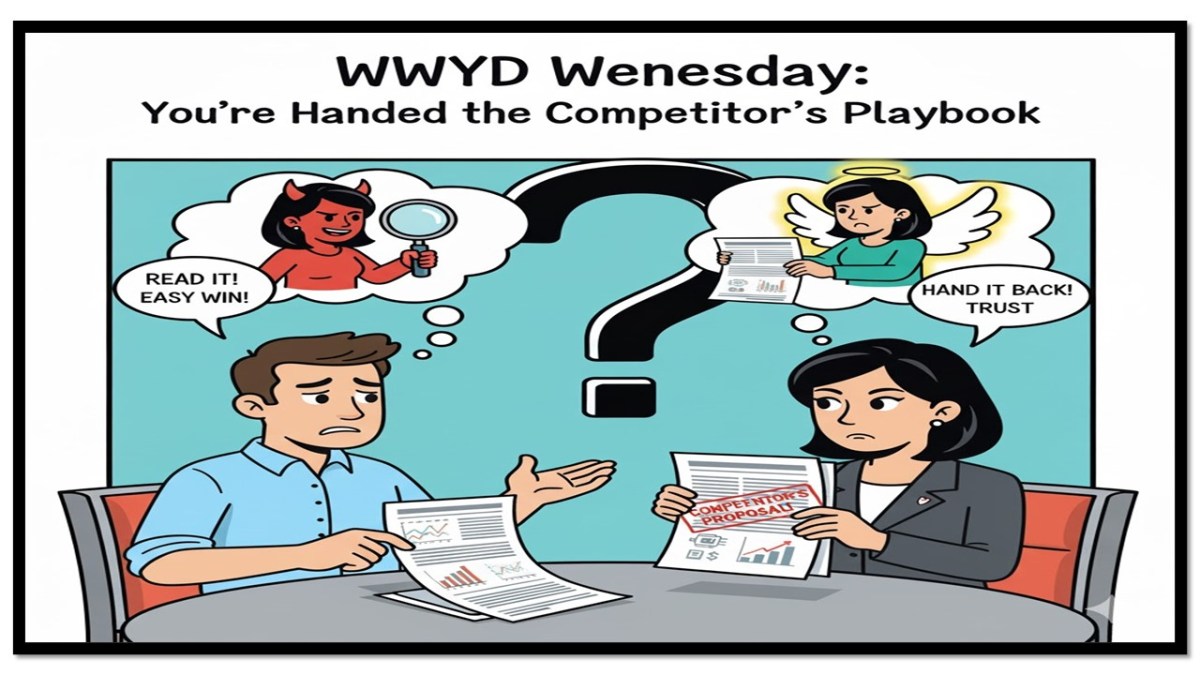
WWYD Wednesday: You’re Handed the Competitor’s Playbook

Welcome back to WWYD Wednesday, the series where we tackle the tough, ambiguous, and all-too-real situations that merchant services professionals face every day.

In our industry, we’re part-strategist, part-consultant, and part-psychologist. We’re used to navigating complex conversations. But every now and then, you’re faced with a choice that isn’t just about strategy—it’s about character.

This week’s scenario is a high-stakes ethical dilemma. Let’s set the scene.

The Scenario

You’re in a meeting with a high-volume restaurant owner who is unhappy with their current provider. They’re frustrated and want to show you exactly why.

“Look at this,” they say, sliding their most recent merchant statement across the desk.

You immediately recognize the statement format—it’s from your biggest local competitor.

As you pick it up to do your analysis, you see a second piece of paper stapled to the back of it, face down. Curious, you turn it over.

Your stomach drops.

It’s a full, detailed proposal from another competitor. It outlines their entire pricing structure, recommended equipment, and their complete strategy to win this exact account.

You look at the merchant. They’re busy complaining about their current rates and clearly have no idea it’s there. You’re holding the entire game plan to win this deal.

So, What do you do?

The Dilemma

Your brain is racing. This single piece of paper holds all the answers. You know their “best and final,” what they’re leading with, and what they think this merchant’s hot buttons are.

You could create a proposal that beats them by a few basis points, just enough to win the deal while maximizing your own profit. It’s a massive, unearned advantage, served up on a silver platter.

No one would ever know. Or would they?

Let’s break down the options.

Option 1: Read It. (The “Win at All Costs” Approach)

You discreetly scan the entire proposal. You absorb the pricing, the equipment notes, and the proposed solution. You then slide the statement back, “forgetting” to mention the paper on the back.

  • The Pro: You gain an almost unfair competitive advantage. You know exactly what you need to do to win. You can perfectly position your solution against theirs and guarantee your pricing is sharper. In the short term, your odds of closing this lucrative account just went way up.
  • The Con: This is the definition of a bad-faith negotiation. You’ve started the most critical part of a business relationship—the foundation of trust—with a lie of omission. What if the merchant sees you? You’re done. Instantly. But even if they don’t, you’ve set a precedent for yourself. Is this how you want to build your portfolio?

Option 2: Ignore It. (The “Pretend You Saw Nothing” Approach)

You see the proposal, and you immediately turn it back over. You ignore it. You proceed with your analysis of the statement as if you never saw the second page. You try to put it out of your mind.

  • The Pro: You maintain your personal integrity (mostly). You haven’t used the information, so you can’t be accused of cheating. You avoid a potentially awkward confrontation with the merchant.
  • The Con: This is a passive and weak position. The proposal is still right there. The merchant might find it later and wonder if you saw it. You’ll spend the rest of the meeting trying not to think about what was on that paper, which may unconsciously affect your own proposal. You haven’t built trust; you’ve just sidestepped a test.

Option 3: Hand It Back. (The “Integrity Play” Approach)

You stop the conversation. You hold up the stapled-together papers, turn the proposal face-down, and slide it back to the merchant.

You say, calmly, “You probably don’t want me to see this.”

  • The Pro: In one 10-second act, you have completely changed the dynamic of the meeting. You have instantly demonstrated that your integrity is not for sale. You’ve just saved the merchant from making a huge mistake (showing their hand to you or, even worse, the next rep who walks in). You’ve moved from “salesperson” to “trusted advisor.”
  • The Con: You lose the “easy win.” You give up all that juicy competitive intel. You now have to win this deal on your own merits, your own solution, and your own value proposition.

My Analysis

For me, it’s Option 3, and it’s not even close. It’s also the single best sales strategy.

The second you hand that proposal back, the merchant’s perception of you completely transforms. You’re no longer “the payments guy.” You’re the professional who just looked out for their best interest, even when it was a disadvantage to you.

Trust is the single most valuable currency in our industry. It’s worth more than any single deal.

That act of integrity is more powerful than any rate you can offer. The merchant now knows you’re not there to just “beat a quote.” You’re there to be a partner. They will be more honest with you about their business, more receptive to your solution (even if it’s not the rock-bottom cheapest), and less likely to shop you in the future.

You’re not just winning an account; you’re earning a client. And that’s how you build a long-term, referral-generating business.

What Would You Do?

That’s my take, but this is a tough spot.

  • Is winning the deal the top priority, no matter what?
  • Is there a middle-ground approach I missed?
  • Have you ever been in a similar spot?

Leave a comment below and tell me exactly how you’d handle this. I want to hear your thoughts.

Happy Selling,

David

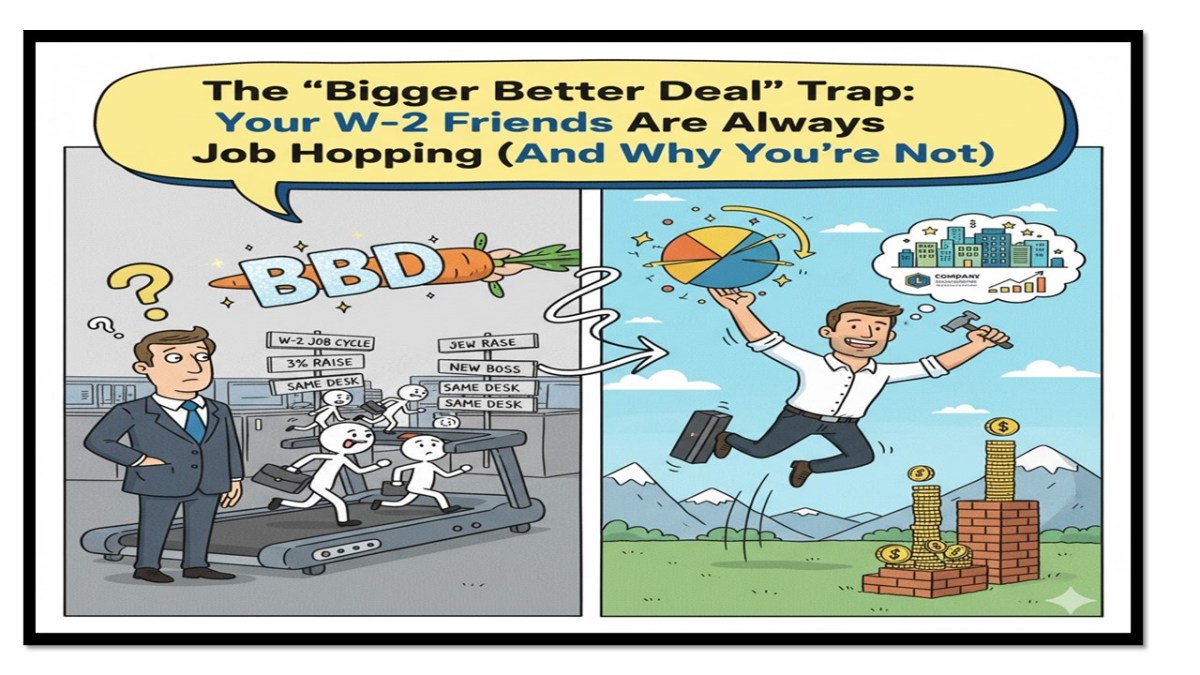
The ‘Bigger Better Deal’ Trap

Have you ever watched this happen?

You meet the new office manager in a building you service. They’re sharp, excited, and genuinely happy with their new role and the pay. You build a little rapport. Six months later, you stop by, and that energy is gone. They seem restless, maybe a little cynical. By nine months, they’re telling you they’re “keeping their options open.” Before the year is out, someone new is at the desk, and the cycle starts all over again.

I’ve seen this exact story play out for years. It’s not just office managers. It’s restaurant managers jumping ship for an extra $2,000 a year. It’s talented servers bouncing from one new “hot” restaurant to the next. I’ve even seen it with accountants and some commission-only sales folks who are, for all intents and purposes, still operating on a W-2 mindset.

They are all chasing the BBD: the Bigger Better Deal.

As a self-employed business owner, it’s a fascinating, and frankly, a foreign way to think. We watch these talented, capable people get stuck in a loop, always looking for someone else to give them a raise, a new title, or a slightly better benefits package.

What they’re doing is outsourcing their own value. They’re waiting for an employer to tell them what they’re worth. And when they get restless, their only solution is to find a new employer to give them a slightly different number.

They’re not betting on themselves. We are.

The Capped Ceiling of the “BBD”

The core of the W-2 mindset is the search for perceived security. The “BBD” is the only lever they feel they can pull to increase their income.

  • They get a 3% cost-of-living raise and feel stuck.
  • They get restless and start browsing LinkedIn.
  • They find a new job that offers them a 7% bump to jump.
  • They feel like they “won.”

But what did they win? A new boss, a new set of problems, and a new, slightly-higher-but-still-capped ceiling. The fundamental problem remains: their income is not tied to their direct performance; it’s tied to a line item in someone else’s budget.

This is why the excitement fades. The new-job shine wears off, and they realize they’re in the exact same position, just at a different desk.

The Entrepreneur’s Mindset: We Don’t Find the BBD, We Create It

As merchant services professional, as self-employed business owners, our entire world is different. You and I live by a different code.

We don’t look for a raise; we go out and make one.

  • Want a “raise”? You don’t ask a manager. You go out and sign one or two new high-volume accounts.
  • Feel restless? You don’t update your resume. You refine your sales process, build a new lead-gen funnel, or find a new strategic partner.
  • Want “security”? You don’t hope for a stable company. You build a diversified and sticky residual portfolio that pays you month after month, year after year.

This is what it truly means to bet on yourself.

Your income isn’t capped by a manager’s budget. It’s capped only by your time, your strategy, and your willingness to hunt. When we feel that same restlessness our W-2 friends feel, it doesn’t manifest as “I need a new job.” It manifests as “I need to close a bigger deal.”

Why We Chose This Path

Sure, the W-2 world looks “safe.” A steady paycheck. Paid vacation. Health benefits.

But we see the trade-off. We see that “safety” is an illusion that costs them 100% of their upside. They’ve traded exponential potential for linear, predictable, and ultimately unfulfilling, growth.

We, on the other hand, embrace the risk because we want the reward.

  • We eat what we kill.
  • We own our losses and our wins.
  • We are building equity—in our client book, in our business, in our brand.

Our W-2 friends are building someone else’s equity in exchange for a salary.

So, the next time you see a talented acquaintance jump ship for the third time in two years for a minor bump in pay, just nod. They’re playing a different game. They’re looking for the BBD.

You and I are busy building it.

What about you? When was the moment you realized you had to stop looking for a “BBD” and start building your own? Let me know in the comments.

Happy Selling,

David

Small Business Saturday

The holiday shopping season is about to kick into high gear. For merchant services professionals, this isn’t just a busy time for retailers—it’s the single best opportunity of the year to connect with new prospects and grow your portfolio.

While your prospects (small business owners) are prepping for the sales rush, you should be prepping your sales strategy.

Small Business Saturday is on November 29th. This gives you and I a perfect a two week window to get in the door. While your competition is sending cold emails, you have a warm, relevant, and urgent reason to talk to every merchant on your list.

This post isn’t about how to run a retail store. It’s a strategic guide on how to leverage the “Shop Small” movement to become a trusted advisor and sign more merchants.

Why This Day is Your “IN”

Small Business Saturday is a day when merchants are hyper-focused on one thing: maximizing revenue.

The stats prove it. Last year, shoppers spent a record-breaking $19.8 billion during this one-day event.

This is your “so what”:

  • Merchants are thinking about payments. They’re worrying if their POS system can handle the rush, if their terminal is fast enough, and if high credit card fees are eating their profits.
  • They are open to solutions. The pain of a slow transaction or a system crash is most acute right before the rush.
  • You have a reason to talk. You’re not just “another salesperson”; you’re a consultant dropping by to ensure they’re ready for their biggest sales day.

Your 5-Step Sales Plan for Small Business Saturday

Forget cold calling. Use the next couple weeks to lead with value. Here’s your new playbook.

1. Lead with Value, Not a Pitch

Your opening line for the next 14 days is not “Can I save you money on processing?” It’s “Are you ready for the Small Business Saturday rush?”

Walk in or call with a helpful mindset. Share a simple tip:

“Hi Andy, I’m just stopping by to see how local businesses are prepping for Small Business Saturday. I know a lot of owners are running special ‘Shop Small’ promotions to get extra foot traffic. Have you planned yours?”

You instantly position yourself as a helpful advisor, not a sales rep.

2. Pivot “Experience” to the “Checkout Experience”

This is your most powerful pivot. A merchant’s great customer service can be completely ruined by a bad checkout.

  • Ask discovery questions: “Where do your lines bottleneck when you get busy?”
  • Highlight the pain: “A great experience can be lost in the last 30 seconds if the payment is slow or clunky.”
  • Connect to your solution: “Are you set up to take tap-to-pay and digital wallets like Apple Pay? Shoppers expect that speed now, especially when it’s busy. Our newest terminals process transactions in under 2 seconds.”

3. Use “Online Prep” to Uncover Problems

Last year, 56% of Small Business Saturday shoppers made their purchases online. This is your “in” to talk about their e-commerce gateway.

  • Ask about their site: “Are you expecting a lot of online orders, too? Have you stress-tested your online checkout?”
  • Identify their frustration: “Nothing’s worse than paying for ads to get people to your site, only to have them abandon the cart because the payment page was slow or didn’t work on their phone.”
  • This is a direct line to discuss their online gateway, security (TLS/SSL), and mobile payment optimization.

4. Be a Connector (and Bring a Gift)

This is your “foot in the door” tool. American Express provides free “Shop Small” marketing kits, decals, and tote bags. Use this as your reason to stop by.

“Hi, I’m just dropping off some ‘Shop Small’ resources for local merchants. I wanted to make sure you had the official Amex kit for your storefront.”

While you’re there, you have a perfect, non-threatening opportunity to look at their current setup.

  • What terminal are they using? Is it old?
  • Is their POS a modern, cloud-based system or a clunky legacy machine?
  • Do they have a surcharge or cash discount sign up?

Take note of what you see. This is all intel for your follow-up.

5. Use the Amex Link as Your “Reason to Follow Up”

The link below isn’t for you—it’s for your prospects. Add it to your email signature. Send it as a “helpful” follow-up after a conversation.

This is a high-value, no-cost “leave-behind” that keeps you top-of-mind.

🛍️ Your Prospecting Tool: Free “Shop Small” Supplies

Here is the direct link to the American Express merchant supply page. Email this to prospects or use it to order kits yourself to hand-deliver.

Link: Order Free Merchant Supplies from American Express

Don’t Scrooge It Up!

It’s the season of joy, and for you, it’s the season of prospecting. Small Business Saturday gives you a warm, compelling reason to talk to every business on your route.

Don’t let this opportunity pass. Use this event to be a trusted advisor, solve a real, time-sensitive problem (slow checkout, high fees), and deliver an exceptional experience to your merchants.

Now, go help them prepare and grow your portfolio this holiday season.

Happy Selling,

David

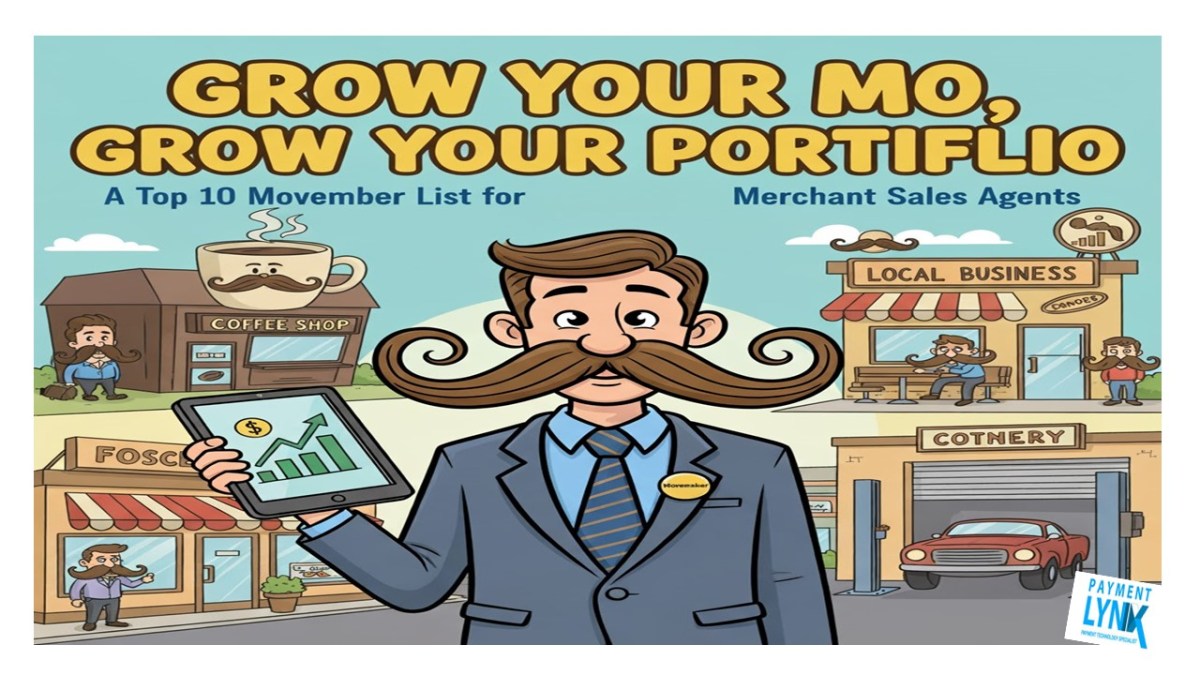
Friday’s Top Ten Ways to Grow Your Mo & Grow Our Portfolio

This November, you’re going to see a lot of moustaches. But that ‘stache (or supporting someone else’s) is more than just a style choice—it’s a billboard for Movember, the global movement dedicated to men’s health, focusing on mental health, suicide prevention, prostate cancer, and testicular cancer.

For us as merchant services rep, this month is a golden opportunity. Our job is a marathon, not a sprint, built on trust, conversation, and relentless prospecting. Movember’s themes don’t just align with your goals; they provide a perfect playbook for achieving them.

Here is your top-10 countdown for using the spirit of Movember to build Our merchant portfolio.

From the Home office in Beard Texas

Here are the Top 10 Ways to Grow Your Mo & Grow Our Portfolio

10. Grow the Ultimate Conversation Starter

The moustache is the ultimate icebreaker. Our single biggest challenge is getting a business owner to stop and talk to you for 30 seconds. Walking in cold and leading with “Can I see your processing statement?” is a fast track to a “no.”

Walking in with a questionable (or magnificent) moustache gives you a disarming, human reason to start a chat.

  • The Opener: “Hey, I know the ‘stache is a little much, but I’m supporting Movember for men’s health. While I’ve got your attention, I’m [Your Name], and I work with local businesses like yours…”

You’ve instantly broken the sales script, shown you have a personality, and earned a few crucial seconds of goodwill.

9. Reframe the “Health Check-Up”

Movember is all about encouraging men to get a check-up. This is the perfect metaphor for what you do. Merchants are notorious for “setting and forgetting” their processing, even if it’s “sick” with high fees, bad service, or compliance issues.

  • The Pitch: “Just like Movember encourages a health check-up, I offer a free ‘health check’ for your processing statements. Let’s take 10 minutes to make sure you’re not bleeding money on hidden fees. No cost, no obligation, just a clean bill of health.”

This positions you as a trusted advisor, not a pushy salesperson.

8. “Move for Movember” and Walk Your Territory

One of Movember’s key initiatives is “Move for Movember,” where participants walk or run 60k over the month (for the 60 men we lose to suicide every hour). Sound familiar? Your job is literally “Move for Merchants.” You’re walking your town, pounding the pavement, and visiting dozens of businesses a day.

Combine the two. Track your prospecting miles as part of your “Move” challenge. Share your progress on LinkedIn or with prospects. It shows grit, commitment, and dedication—the exact same traits needed to build a long-term residual portfolio.

7. Find Your “Mo Bros” (Your Referral Network)

Movember builds an instant community. When you see another “Mo Bro,” there’s an immediate connection. As an independent agent, you can feel like you’re on an island. Use Movember to break out of that.

Intentionally network with other local business owners who are participating. This isn’t about selling them; it’s about building a community. Grab a coffee with the “Mo Bro” who owns the local insurance agency or the “Mo Sister” who runs the print shop. This is how you build the referral network that will feed your pipeline for years to come.

6. Turn Your “Why” Into Their “Yes”

Business owners are sold to all day, every day. They are cynical and time-poor. What they rarely see is a salesperson with a clear “why” that isn’t just about making more money.

Fundraising for Movember is your “why.” Share your donation link. Talk about the cause. When a merchant sees you’re driven by something bigger than yourself, it shatters their perception of you. They’re not just buying from a sales rep; they’re doing business with a person who cares about their community. That’s a massive competitive advantage.

5. Master the Cold Shoulder (and the Gatekeeper)

You will face rejection. Lots of it. Gatekeepers will shut you down. Owners will say “not interested” before you finish your sentence. This daily grind is a huge mental health challenge.

Movember’s focus on mental health is a critical reminder to protect your own. Understand that a “no” is not personal. It’s a number. Your job is to stay positive, stay motivated, and focus on the process, not the results of a single call. Use this month to check in with yourself. Are you managing the stress of a 100% residual life?

4. Be the Face of “Long-Term” Reliability

A Movember ‘stache isn’t grown in a day. It takes a full 30 days of commitment, looking a bit ridiculous, and sticking with it. This is a powerful, visible symbol of follow-through.

Your entire business model is based on long-term relationships (residuals). Use your ‘stache as a physical promise. You’re not a “one-and-done” rep who signs a merchant and disappears. You’re the person who sticks around, provides support, and is in it for the long haul—just like this moustache.

3. Change the Conversation from Cost to Character

Anyone can promise to save a merchant a tenth of a percent. Your competition is a race to the bottom on price. Don’t compete there. Compete on character.

When you lead with Movember, you’re not talking about basis points; you’re talking about values. You’re showing you are a proactive, community-minded, and trustworthy person. A merchant will pay a little more to partner with someone they trust and like. Movember is your chance to prove you are that person before you even open your pitch book.

2. Support Other Businesses to Support Your Own

Get creative. Offer to make a donation to your prospect’s Movember team (or a charity of their choice) just for letting you give them a quote.

  • The Ask: “I’m donating to Movember all month. Just for letting me run a 10-minute cost comparison, I’ll donate $25 to your Movember fundraising team, whether you sign up with me or not. You get a free review, and we both support a good cause.”

You’ve just flipped the script from “taking” their time to “giving” to their cause.

And the #1 Top Ten Ways to Grow Your Mo & Grow Our Portfolio is …

1. Grow Your Pipeline by Talking About Something Else

The number one rule of Movember is to “Change the face of men’s health.” The number one rule of sales is to build a relationship before you try to make a sale.

This Movember, make a goal to have 100 conversations about anything but merchant services. Talk about your ‘stache. Ask about their Movember plans. Talk about the local sports team. Be a human first and a salesperson second.

By focusing on genuine connection, you’ll open more doors, build more trust, and close more deals than you ever could with a cold pitch. The ‘stache isn’t just a filter for your face; it’s a filter for the entire sales process, turning cold calls into warm conversations.

Now, go grow that mo and grow that portfolio.

Have a great weekend,

David

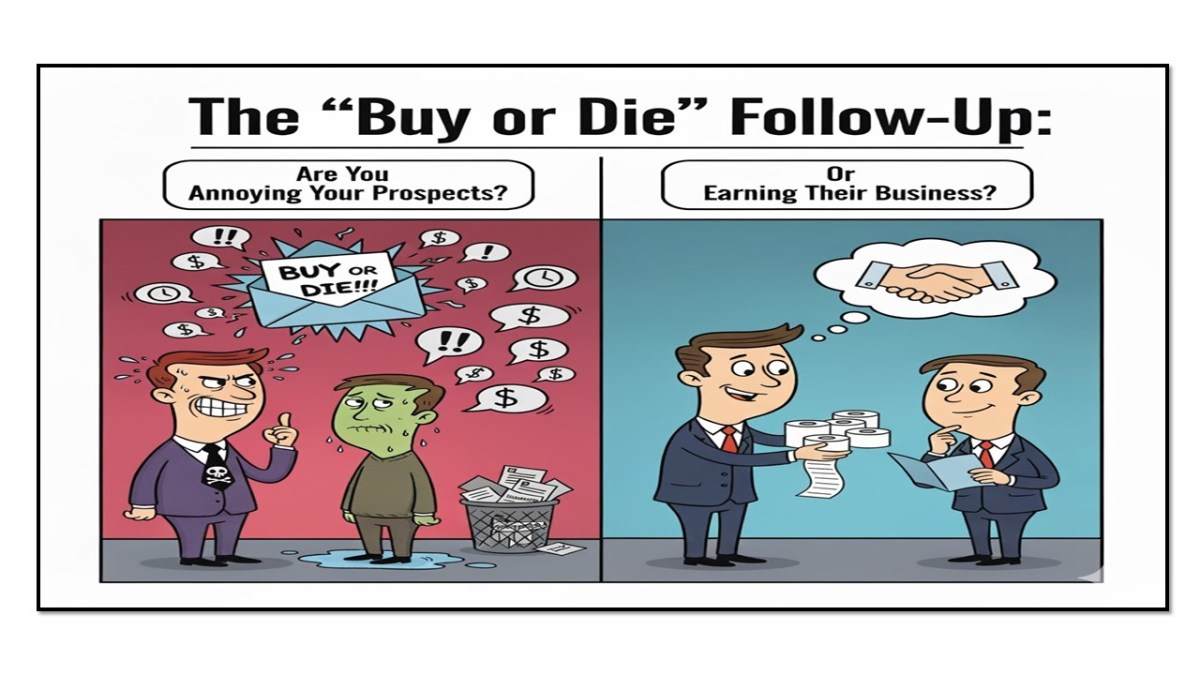
The “Buy or Die” Follow-Up: Are You Annoying Your Prospects or Earning Their Business?

We’ve all heard the old-school sales adage from a grizzled veteran manager: “How many times do you follow up? You follow up until they buy or die!”

It sounds intense, maybe even a little crazy. But there’s a core truth to it that separates the top 1% from everyone else. The data doesn’t lie: something like 80% of sales require at least five follow-ups, yet nearly half of all salespeople quit after just one.

The problem is, nobody tells you how to follow up five, eight, or twelve times without becoming that person the business owner ducks in the back to avoid.

If you feel like most of your day is spent chasing ghosts and sending “just checking in” emails that go straight to the trash, you’re not alone. But what if we could reframe the follow-up? What if, instead of being a pest, you became a valuable resource they were happy to see?

The Fatal Flaw of “Just Checking In”

Let’s be honest. “Just checking in” is the weakest phrase in sales. It’s a passive, zero-value statement that screams, “I have nothing useful to say, but I want to remind you to give me money.”

Business owners are drowning in tasks. They’re managing inventory, scheduling staff, putting out fires, and trying to turn a profit. They don’t have the time or mental energy for a conversation that doesn’t solve a problem for them. Your follow-up needs a purpose beyond simply reminding them you exist.

The Game-Changer: A Follow-Up with a Trojan Horse

I’ve discovered one tactic that has converted more accounts for me than anything else. It’s simple, it’s brilliant, and it works.

I pivot the conversation right when I feel the owner losing interest in my processing pitch. As I’m getting ready to leave, I’ll say:

“One more thing before I go, where do you get your terminal/POS paper from?”

They’ll usually name a big box store or their current provider. Then I hit them with the offer:

“If I can sell you the paper and bring it to you for cheaper than you’re getting it now, would you be willing to give that a try?”

About 80% of the time, the answer is “Yes.” It’s a no-brainer for them—they need the product, and I’m offering it for less, with free delivery. I keep a small case of the most common paper sizes in my truck, so I can walk right back in with 4-5 rolls on the spot. I’ve just made them a customer, solved a minor annoyance, saved them money, and, most importantly, I get their cell phone number for the receipt and future orders.

Why is this so effective?

  1. It Changes the Dynamic: You’re no longer just a “merchant services guy.” You are now a helpful vendor who is already saving them money. You’ve provided tangible value.
  2. It Builds Micro-Trust: You did what you said you would do (save them money), which is a small-scale proof of concept for your larger promise of saving them money on processing.
  3. It Buys You a Reason to Return: The next follow-up isn’t a cold check-in. It’s a warm, “Hey Joe, just wanted to see if you needed any more paper rolls this week?” You have a legitimate, service-oriented reason to talk to them again.

More Value-Driven Follow-Up Ideas to Close the Deal

That paper-roll trick is my ace in the hole, but the principle behind it can be applied in many ways. Always have a reason to contact a prospect that benefits them, not you.

Here are a few more ideas to add to your arsenal:

  • The Industry Intel Drop: Keep an eye on news relevant to your prospect’s industry. Did a new law about credit card surcharging pass? Is there a new security standard they should know about? Stop by or send a text with a link and a note: “Hey Mike, saw this article about chargebacks in the auto repair industry and thought of you. Just wanted to make sure you were aware.” This positions you as a consultant.
  • The Social Media Assist: Follow your top prospects on social media. When they post about a special or an event, share it on your own page. Better yet, stop in and buy the special, take a picture, and post a glowing review tagging their business. A text that says, “That new lunch combo is incredible! Was happy to share it with my network.” builds a genuine relationship money can’t buy.
  • The Technology Tip: Notice they’re using an older terminal that can’t accept contactless payments? Find a short article or video on the benefits of Tap-to-Pay (speed, security, customer preference) and email it over. “Hi Mike, I noticed you guys were super busy at lunch today and thought this might be interesting. Tap-to-Pay can really speed up your line.”
  • The Competitor Observation: Be observant and helpful, not sneaky. If you see a non-competing business nearby doing something innovative, share it. “Was just at the bakery down the street and saw they’re using QR codes on tables for easy re-ordering. Really clever idea. Is that something you’ve ever considered for your patio?”
  • The Connector: You meet a ton of business owners. Use that network! Introduce your restaurant prospect to a local print shop owner you work with. “Hey Jim, I was just talking to Hailey over at The Print Shop and she was looking for a place to host their company party. I told her she had to check you guys out.” Being a source of new business for them is the ultimate value-add.

Final Thoughts: Serve Until They Sign

So, how many times do you follow up?

You follow up for as long as you can provide value.

Shift your mindset from “Buy or Die” to “Serve Until They Sign.” Your job isn’t to relentlessly hound a prospect. It’s to relentlessly and creatively demonstrate your value. When you consistently show up to help, the conversation about switching their processing becomes the next logical step in an already profitable relationship.

The sale isn’t made in the first meeting. It’s earned in the follow-up.

Happy Selling,

David

WWYD – 19 Calls and A Call me, Maybe

Let’s dive into another WWYD Wednesday and play out a scenario that every single one of us in this business has lived through.

Imagine this is your day. You just got back to your car or home office after a full day of hitting the pavement. You pull out your notes and this is what you’re staring at:

“Did 20 in-person cold calls today. Got the Heisman at 19 of them. I’m feeling pretty down in the dumps.”

The breakdown of those 19 “NO’s” was brutal:

  • 3 merchants told you to “Flock off”
  • 5 told you to “get lost”
  • 10 gave the classic, “we’re good with our POS”
  • …and 1 said, “call me next week.”

You’re exhausted, your feet hurt, and your motivation is shot. That single potential follow-up feels miles away. You look at your numbers for the day, and all you see is a 95% failure rate. The feeling of defeat is creeping in.

So, what do you do right now? What’s your very next move?

Path A: Let the Day Control You

Do you pack it in, call it a day, and write it off as a total loss? Do you start thinking, “My pitch is terrible,” or “This market is impossible”? Do you let the frustration from those 19 rejections poison your mindset for tomorrow?

This is the path where the problems take control. You let a bad day define your strategy and your self-worth, and you wake up tomorrow already expecting to lose.

Path B: You Control the Day

Or, do you take a different approach?

You acknowledge the frustration—it’s real, and it’s okay to feel it. But you don’t let it dictate your actions. Instead, you treat the entire day as a data-gathering mission for your business. You decide to find the lesson in the loss.

You pull out a fresh sheet of paper and ask:

  1. What can I learn from the rejections?
    • For the merchants who were immediately hostile (“Flock off”), was my opening line intrusive? Did my body language seem too “salesy”? How can I soften my approach for the first 5 seconds?
    • For the 10 who said “we’re good,” how can I pivot from that objection? What question could I ask next time to uncover a hidden pain point they aren’t admitting? (e.g., “That’s great to hear, a lot of people love that system. How are you handling your PCI compliance and data security fees?”)
  2. What WORKED with that one “YES”?
    • This is the most important question. What was different about that interaction? Was it the type of business? The time of day? Something you said differently in your pitch? You analyze that single win with twice the intensity you give the losses, because success leaves clues.
  3. How do I reset for tomorrow?
    • You recognize that your effort (20 doors) was solid. It’s the strategy that needs a tweak. You end the day by refining your opening line or your objection handling, turning today’s failure into tomorrow’s weapon. You focus on the one opportunity, not the 19 closed doors.

A tough day on the street isn’t a verdict on your career; it’s just a seminar. It’s a raw, unfiltered lesson in what the market is telling you.

The road to building a strong residual portfolio is paved with days just like this. The only thing that separates the top earners from everyone else is what they choose to do when they get back to the car feeling “down in the dumps.”

So, what would YOU do? Share your go-to strategy for turning a day like this around in the comments below!

Happy Selling,

David

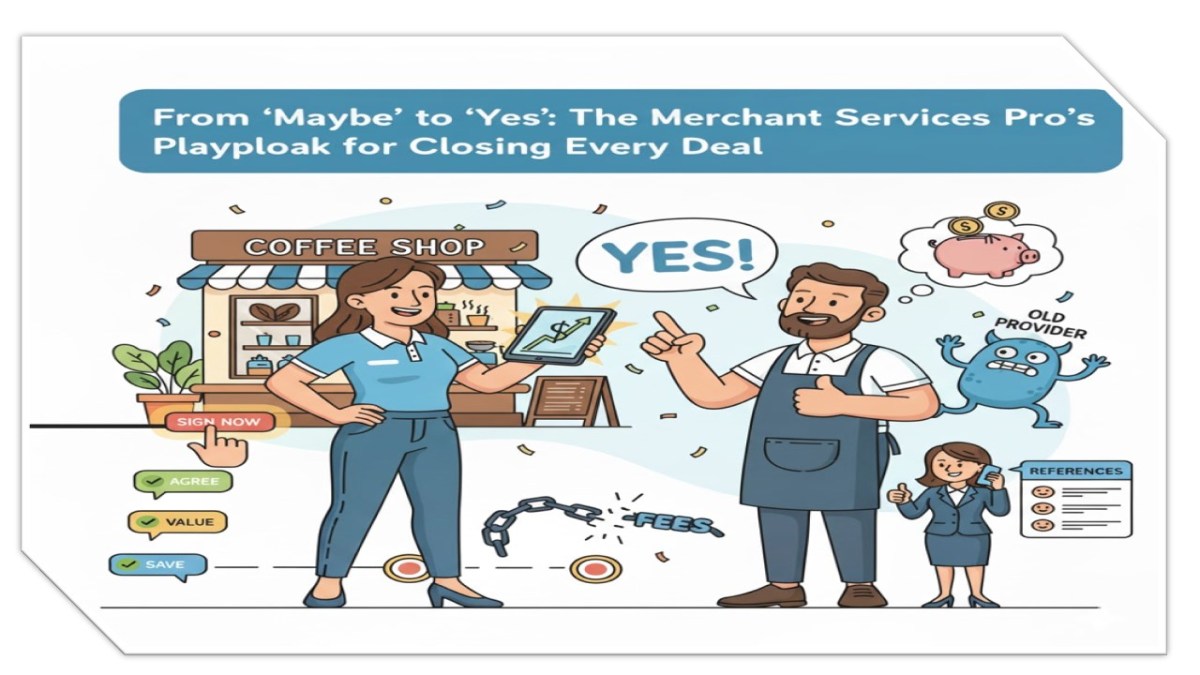
Maybe to Yes – Closing Every Deal

You know the feeling. You’ve just delivered a killer presentation. You’ve built rapport, you’ve demonstrated value, you’ve shown them the clear savings on their statement. The merchant is nodding along. You feel the momentum.

Then you get to the end, ask for the business, and the air goes out of the room.

“I need to think about it.” “Let me run this by my partner.” “This looks great, but I need to check with my current provider first.”

Suddenly, a sure thing becomes a “maybe,” and a “maybe” almost always becomes a “no” once you walk out that door. The money you left on the table haunts you.

Here’s the hard truth: Many of us in sales are masters of the pitch but amateurs at the close sometimes. They treat the close as a single, high-pressure moment at the end of a meeting.

That’s the mistake. The close isn’t the final question. The close is a mindset and a process that starts the second you say hello.

If you want to stop leaving those residuals on the table and start getting signatures on the dotted line, you need to change your playbook. This is how you close the deal, every single time.

Myth Buster: The “Close” Starts at the Beginning

Stop thinking of the sale as a series of steps culminating in a big, scary question. Instead, see the entire process as a straight line of small agreements, or “micro-closes.” We talked about this back in the August post of All Sales Are the Same.

Your goal is to get the merchant to say “YES” in small ways throughout the entire conversation.

  • “Running end-of-day reports is a real pain with your current system, isn’t it?” (Yes)
  • “So having a terminal that automatically updates its software would be a lot more secure and save you time, right?” (Yes)
  • “It sounds like getting a real person on the phone for support instead of a robot would make a huge difference when you’re busy.” (Yes)

By the time you present the merchant agreement, signing it should feel like the natural, logical conclusion to a conversation where they’ve already agreed you are the solution to all their problems.

Your Secret Weapon: The Discovery is 90% of the Close

Top closers are master detectives. They know that you can’t close a deal if you don’t understand the merchant’s true pain points. And spoiler alert: it’s not always about the rate.

Price is a factor, but loyalty is built on solving problems. Dig deeper than the statement. Ask powerful, open-ended questions:

  • “What’s the single most frustrating part of your current payment processing experience?”
  • “Walk me through what happens when your terminal goes down during a lunch rush.”
  • “How much time do you or your manager spend each week trying to decipher your merchant statement?”
  • “If you could wave a magic wand, what’s one thing you’d change about how you accept payments?”

Listen for the gold. They won’t tell you, “I want to switch to you.” They’ll say, “I wasted 45 minutes on hold with customer service last Tuesday,” or “My old POS system doesn’t track inventory correctly, and it’s killing my margins.”

These pain points are the ammunition you will use to build an undeniable case for your solution.

The Art of the Assumptive Close: Guide, Don’t Ask

Weak salespeople ask permission. Strong closers lead the way. When you’ve confirmed their problems and presented your solutions, don’t deflate the moment with a weak question like, “So, what do you think?”

That invites hesitation. Instead, confidently guide them to the next step. This is the assumptive close. You assume the sale is happening because, based on everything discussed, it’s the best decision for their business.

The Golden Moment: They’ve Agreed to Dual Pricing

Let’s get specific. You’ve just finished the statement analysis. You’ve circled the $847.00 they’re losing every month in fees. You’ve explained how a dual pricing or cash discount program will eliminate nearly all of that, and they look at you and say, “Wow, that makes a lot of sense. Let’s do it.”

This is the most critical moment in the sale, and it’s where most reps hesitate. DO NOT PAUSE. Don’t ask another question. Don’t wait for them to lead. This is your green light. Maintain all momentum and pivot directly into the close with this proven three-step transition:

  1. Verbally Solidify the Agreement: Immediately confirm their decision and restate the primary benefit.
    • YOU: “Excellent. So we’re agreed. We’re going to implement this program to put that $847 a month right back into your business instead of sending it to the processors. That’s nearly $10,000 a year in your pocket.”
    • This makes the decision feel real and reinforces the value one last time. They will nod in agreement.
  2. State the Next Step with Authority: Don’t ask for permission. Tell them what happens next.
    • YOU: “Perfect. The next step is very simple. I just need to get the formal agreement filled out to get you approved in the system. I have it right here on my tablet—it’ll only take about five minutes.”
    • The key is the language: “The next step is…” and “I just need to…” This is confident and directional.
  3. Physically Begin the Process: Action creates commitment. Immediately pull out your tablet or the paperwork and begin.
    • YOU: “Let’s get this knocked out. What is the exact legal business name that should be on the account?” (As you turn the tablet toward them or point to the first line on the form).
    • By starting the agreement, you’re moving past the “decision” phase and into the “implementation” phase. It’s much harder for a merchant to backtrack from here.

This transition from “yes” to paperwork should be a single, smooth, unbroken motion.

More examples of confident, assumptive closing lines:

  • For the tech-focused merchant: “Based on our conversation, the [Your POS System Name] is the perfect fit to handle your inventory and reporting needs. My schedule for installation is open __________. Which day works better for your team?”
  • To minimize friction: “The paperwork is the simplest part of this whole process. Let’s knock it out right now so you can officially cross ‘deal with credit card processing issues’ off your to-do list for good.”

Handling Objections: The Final Test

Even with a perfect process, objections will happen. Don’t fear them. An objection isn’t a “NO.” It’s a request for more information or reassurance. Use the “Acknowledge, Reframe, Respond” method.

Objection: “I need to think about it.”

  • Acknowledge: “I completely understand, and you absolutely should. It’s a big decision for your business.”
  • Reframe: “You know, that’s a great idea. I mean, you conduct interviews for new employees, right? Why not do the same for the people handling your money? Let’s treat this like an interview right now, comparing me versus your current provider.”
  • Respond: “Let me ask you this: is your current provider local? Can you call or text them directly when you have an issue? Is their customer service easy to get a hold of, even on a busy weekend? (Pause and let that sink in). Better yet, you shouldn’t just have to take my word for it. Here is a list of three other local business owners I work with. I want you to call them. Ask them how easy it was to switch and what their service experience has been like since. A good partner should have nothing to hide.” (This brilliant move turns a stall tactic into a due diligence process that you control, highlighting your strengths and showing unbreakable confidence).

Objection: “I need to talk to my business partner/spouse.”

  • Acknowledge: “That makes perfect sense. I wouldn’t want you to make a big decision like this without their input.”
  • Reframe: “When you talk to them, what do you think will be the most important benefit to them—the monthly savings we found or the fact that they’ll no longer have to deal with your current provider’s terrible customer service?”
  • Respond: “Let’s do this: let’s get them on the phone for a quick three-minute call right now to bring them up to speed. If they’re not available, let’s schedule a follow-up call with all three of us tomorrow morning at 10 AM. What works?” (This seizes control and sets a concrete next step, preventing a vague stall tactic.)

Objection: “Your rate is higher than another quote I got.”

  • Acknowledge: “I appreciate your transparency. It’s smart to compare your options.”
  • Reframe: “As you know, this industry has a reputation for hidden fees and confusing statements. My goal isn’t just to be the cheapest number on paper, but to provide the most transparent value.”
  • Respond: “Can we pull up that other quote? Let’s go through it line by line against your current statement and my proposal. I want to show you exactly where those other guys might be hiding their junk fees. Once we account for our superior support and locked-in pricing, you’ll see the true long-term value is right here.” (This turns you into a consultant, not just a salesperson.)

Closing isn’t a trick. It’s the result of a masterful sales process where you act as a consultant who has genuinely listened, diagnosed a problem, and presented the perfect solution.

Stop hoping for the sale. Start expecting it. Lead the conversation, build your ladder of “yeses,” and make signing the agreement the easiest and most logical decision the merchant will make all day.

Now go out there and close.

What’s your killer closing line or favorite objection-handling technique? Share it in the comments below!

Happy Selling,

David

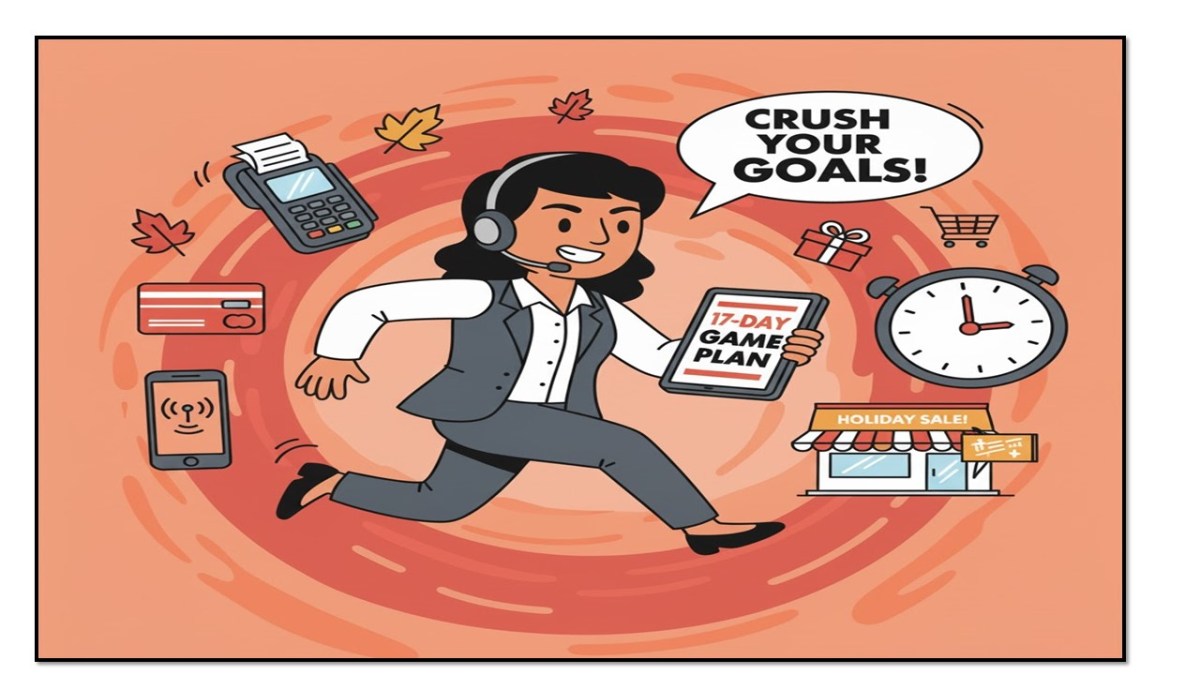
Your 17-Day Game Plan

It’s Monday, November 3rd, 2025.

You’ve had your coffee, you’ve checked your email, and you’re ready to attack the month. But let’s be honest with ourselves. The calendar on the wall says 30 days, but for a sales professional in merchant services, November is a ghost.

Let’s break it down:

  • We have Veterans Day next week. Still workable of course.
  • Then there’s the big one: Thanksgiving week. That Wednesday is a wash, and Thursday and Friday are gone.
  • The following Monday is Cyber Monday, and every merchant you want to talk to is either putting out fires or counting their money.

When you strip it all away, we’re left with about 17 real, sellable days.

Seventeen days to get a few deals closed, build our pipelines for Q1, and earn some extra holiday residuals. Seventeen days until the “Call me after the New Year” excuse becomes nearly impossible to overcome.

The good news? A deadline creates focus. A short month separates the disciplined from the disorganized. So, the question isn’t if you can hit your goal, but how you plan to spend your time.

Here is your 17-day game plan to make this November a record-breaker.

1. Triage Your Pipeline Today. Right Now.

Before you make a single cold call, audit your pipeline with ruthless efficiency. Your time is your most valuable asset this month. You can’t afford to spend it on “maybes.” Segment every prospect into one of three categories:

  • Category A (The Closers): These are prospects who have a proposal and or have signaled they are, could b ready to move forward, you’ve done the follow-up, and they are on the verge of signing. Your primary goal is to get ink on paper this week. Create urgency by highlighting the need to get them installed and running before the Black Friday rush.
  • Category B (The High-Potentials): These are qualified leads you’ve spoken to. They’ve expressed interest and you’ve identified a clear pain point (high fees, clunky hardware, lack of support or online payment options). Your mission is to get them a proposal and a decision within the next 7-10 days.
  • Category C (The Nurtures): New leads or long-term prospects. These are important for your Q1 pipeline, but they are not gonna make our December residuals. Time-block specific, limited hours for prospecting this group.

2. Sharpen Your Pitch: The Holiday Angle

Stop selling “lower rates.” This month, every merchant—from the local pizza shop to the boutique retailer—is laser-focused on one thing: maximizing holiday revenue. Your pitch needs to reflect that. Frame every conversation around how you can help them have a more profitable holiday season.

  • “Is your current terminal fast enough to handle the Black Friday lines? A slow transaction can cost you a sale.”
  • “Are you set up to sell gift cards? It’s a huge revenue driver and brings in new customers in January.”
  • “With Small Business Saturday coming up, let’s make sure your customers can pay any way they want—tap-to-pay, Apple Pay, you name it.”
  • “For Cyber Monday, are you able to easily accept payments on your website or send invoices via email?”

You’re not a salesperson; you’re a holiday business consultant. Solve their immediate problem, and the sale will follow.

3. Master the “Holiday Stall” Objection

You’re going to hear it a dozen times: “This sounds great, but I’m just too busy. Call me back in January.”

Do not accept this. Acknowledge their concern, then pivot to the value of acting now.

Your Response: “I completely understand. That’s exactly why we should talk for 10 minutes now. Getting you set up before the holiday madness means you’re not leaving money on the table paying fees during your busiest month. A simple switch now to dual pricing could add hundreds, even thousands, back to your bottom line in December. When’s a better time, tomorrow at 10 AM or 2 PM?”

4. Leverage Your Existing Book of Business

Your fastest path to a new deal is through a happy customer. Block out 30 minutes every single day this month to call 3-5 of your current clients.

  • Check-in: “Hey Clyde, just calling to see how everything is running ahead of the holidays. Any issues I can help with?”
  • Upsell: “Have you considered adding a virtual/mobile terminal for on the go/ phone orders? It could be a big help this time of year.”
  • Ask for Referrals: “Glad to hear things are going well! You know, we’re trying to help other local business owners prepare for the holidays. Who do you know that might be unhappy with their current processor?”

Your 17-Day Challenge

This isn’t just another month. It’s a sprint. Forget multitasking. Focus on one thing at a time. Time-block your calendar with obsessive detail and stick to it.

  • Mornings: Dedicated to your “Category A” closers and “Category B” follow-ups.
  • Mid-day: Prospecting with your new holiday-centric pitch.
  • Afternoon: Checking in with existing clients and preparing for the next day.

Seventeen days is more than enough time to crush your goal if you have a plan. The clock is ticking.

Now, who are you calling first?

Happy Selling,

David