Back On Track

Success is definitely a journey, not a destination. In order to have consistent success, momentum plays a key part of that. 

The road to success is filled with many detours, obstacles and challenges. It’s wonderful when we get that momentum going, and we feel that we are in the success zone. However, it’s important to understand that we will have failures and we will have tough times. Most of us will have moments when we feel we’re not as successful as we should be. We all have faced obstacles that seem impossible to overcome. Unfortunately, this can lead to almost giving up on our goals and dreams entirely.

The important thing to remember is that you will get through and overcome all of your obstacles. You must understand that being defeated is temporary, but giving up makes that permanent. 

Perhaps you have lost your mojo or you are in a funk. You might be going through a slump and you’ve lost your confidence and motivation. I want to encourage you today to stay positive, because you will get through this. Everyone who has accomplished great things has been there. So the question comes, “How do I get myself back on track again?” Well, I am so glad that you have asked that. 

It is time to remember why you started in the first place. It is time to reevaluate. Let’s take a good look at your priorities, and make a commitment to get yourself back on track. You can do this!

Break out a sheet of paper and write out your dreams again. It’s important to take a look at your WHY. Now is your time to get back on track. Put together a plan of action and make a commitment to never look back. 

Today is the day that you start. You start right where you are and you use everything that you have and you do everything you can. It’s time to do the next thing. Keep this simple and you will have excellent progress.

Embrace failure because failure is part of the success process. View each day as a brand new opportunity. You cannot change the past, but you can learn from it.

Getting that momentum back is going to be difficult in the beginning. You must understand that. You may even experience more challenges than ever. That’s part of the process. You may be going slow but, no matter what, do not stop. The most important thing is to make consistent progress. If you keep this mentality and you keep plugging away, I guarantee that you will get your momentum back. You will experience incredible success, and you will find yourself with more gratitude and you’ve ever had. 

The most certain way of having success is to keep plugging away, one step at a time. It’s not going to be easy, but it is definitely going to be worth it. 

Today is the beginning of the rest of your incredible life. The best is yet to come. It is time to build a better and stronger version of yourself. It is time to get back on track again. Start today with a super positive attitude. Start talking to people that will encourage you and lift you up. Talk like a winner and act like a winner. Let’s get that momentum going, and let’s go out and make it happen!

Happy Selling,

David

7 Old School Sales People and What We Can Learn

The definition of a great salesperson varies from one source to another. As the stereotype goes, the archetypal salesperson is extroverted, aggressive and pushy among other traits. Are these the qualities and qualifications of a great salesperson?

The best way to learn what defines a great salesperson is to consider examples of famous salespeople and identify their defining traits.

Let’s take a look at seven of the most famous old school salespeople of all time and the lessons we can draw from each one:

1. Mary Kay Ash

Yes, the Mary K lady. Highly famed for developing the very first multi-level marketing strategy, Mary Kay Ash is considered a pioneer for business women. Just like David Ogilvy, Ash too had humble beginnings, selling books door-to-door.

Her main sales tactic involved convincing women to host parties where they would sell to their friends. The principle behind this was that people are more likely to buy from friends rather than strangers. Another signature strategy was the use of sales incentives. Her company made headlines for awarding the top salesperson with a pink Cadillac.

Due to frustrations at her workplace that kept her from advancing because she was a woman, she founded her own cosmetics company. Here she applied her sales philosophies. One of her rules was to treat others as you want to be treated. By its second year, the company sold almost $1 million worth of products and has received countless accolades since then. Work to empower the people around you and offer incentives and rewards for great performance. Treat everyone as you would like to be treated and use frustrations as opportunities. And always expand your network to increase sales.

2. Joe Girard

Famed for being one of the best car salespeople of all time, Joe Girard, started his business career at the tender age of 9. Initially, he was a shoe shiner, moving on to become a news carrier at 11. For every new customer, he got a box of Pepsi-Cola and soon established a soda pop business, selling at unbeatable prices to neighborhood kids.

From his early days, he learned the value of hard work and sacrifice. After struggling through life and finally landing a job as a car salesperson, he realized he was good at selling cars. He set the record for selling 13,001 cars in a span of 15 years, once selling a whopping 18 cars in one day!

His secret to success? He sold more than just cars. Girard always told customers to come back and would take great care of them when they came for service, even paying for parts. He would also keep sending handwritten greeting cards to his customers every month…. Are you sending cards out? Check out Send Out Cards.

3. Dale Carnegie

Most highly famed for his book “How to Win Friends and Influence People” Dale Carnegie came from a really humble background. In spite of this, he realized early on that he had a way with words and went on to become a pioneer in modern sales.

He was so good at public speaking that his college mates were willing to pay him to get his skills. Soon, he started adult public speaking classes, and two years afterward, he founded the Dale Carnegie Institute. The book mentioned at the onset was his second and has sold over 8 million copies to date.

He outlined lots of social and business lessons in the 1936 book which still remain relevant to date for salespeople. Carnegie believed that influence began with relationships and that to engage someone, you need to make them feel important. His sales secret to success was to show genuine interest in people, asking questions, remembering names, and avoiding flattery.

4. Zig Ziglar

Oh how I love some Zig Ziglar. One of the world’s most popular motivational speakers, Zig Ziglar, left a rich sales legacy in the form of books, recorded speeches and so much more. He started out as a humble salesman, becoming exceptionally good at it, and later went on to be a renowned author.

As a salesperson, he started out selling pots and pans, and later cooking equipment. Following his success at sales, he became field manager and later, supervisor. Later, he left sales to become a full-time public speaker and then started authoring books.

In his lectures and writings, he taught attitudes needed to succeed in life and professionally. Confidence in your ability to help others, being able to showcase your value to prospects and the ability to get up when knocked down are the qualities that make famous salespeople what they are. He also emphasized the value of teamwork saying you can achieve more with others than you can alone.

5. Erica Feidner

You may ask how does she end up on this list? Well she’s on the list for her prowess at selling pianos. Erica Feidner was a force to reckon with in the field. During her career, she sold at least $40 million worth of Steinway Pianos, a product with little repeat purchase and long sales cycles.

She was able to bring out a passion for piano in people who had never played nor had musical ambitions. Feidner insisted that she was not a salesperson, but rather, a matchmaker matching customers to their perfect pianos.

She would take her time to teach novices the basics of piano playing. For more seasoned players, she would listen to them play and guide them to the right instrument for their needs. Her secret was preparing for every sale and tailoring each session to the client’s needs.

Notably, she would avoid going for a quick-sale and refuse to sell a piano when she felt it was not the right match for a customer. Become an expert in your field, take time to understand your prospect and tailor your approach to every individual’s needs.

6. Napoleon Barragan

No not Napoleon Hill , Napoleon Barragan Like many other famous salespeople, Napoleon Barragan came from a humble background. His career in sales started off when he was 17, delivering soda and beer on a donkey. He was determined to start his own business despite his small beginnings.

He borrowed money to start his first business, a second-hand furniture store. Then one day, he got the idea of selling mattresses over the phone and 1-800-mattress was born. It goes on to become an iconic slogan that spurs him on to fame. Be ready to take risks and handle challenges, always excited to take the initiative. Always be ready to change and adapt so as to remain relevant and successful. Focus on the big picture, your long-term dreams, not on individual sales.

7. David Ogilvy

He may not be a known name today by us modern sales people but David Ogilvy is Known as the founding father of advertising.

David Ogilvy had rather humble beginnings in the sales career. His earliest foray into sales involved door-to-door sales of cooking stoves. Notably, Ogilvy was so successful at it that his boss had him write out a sales manual for other salespeople to use.

More than eight decades, later, the manual, “The Theory and Practice of Selling the AGA Cooker” is still hailed as one of the best ever written. In this book, he urged salespeople to research their prospects as much as they could before the first meeting.

He also firmly believed that the worst mistake a salesperson could make is to bore the customer. To him, sales is a game of numbers; the more prospects a salesperson talked to, the higher the number of sales they would be exposed to.

However, he was quick to add, “Never mistake quantity of calls for quality of salesmanship.” He urged salespeople to be persistent, reaching out regularly until they got a “NO.” He favored the long-term soft-sell model over the quick-sale style of the time.

Later in his career, he went into advertising where he established the principles that underpin the industry to this day. He is also renowned for iconic campaigns for Schweppes, Hathaway, Rolls Royce and Shell. The customer relationship development is one of the most important paradigms of successful sales. Take time to research prospects, establish a rapport, cultivate it and then make your pitch.

Clearly, there are lots of lessons to learn from these famous salespeople and their secrets to success. No matter whether you are employed in sales, run your own business or simply dream of running one, there will always be hurdles on the path to success.

Fortunately, these famous salespeople have been there and were able to navigate successfully. Mimic their tactics and learn their philosophies to chart our own paths to success.

Happy Selling,

David

Friday’s Top 10 Tips for Prospecting for the Non-Salesperson

You think you’re not in sales, but everybody is in sales. Everyone is selling something, and everybody has to find new customers. I’m sure you know a small business owner who says, “I need to find more customers. How do I go out and do that?” Let’s walk through The Top 10 things that you can be doing right now to be prospecting for the non-sales person.

From the Home Office in Chugwater, Wyoming, Here are The 

Top 10 Tips for Prospecting for the Non-Salesperson

10. Relax, it’s only a conversation. 

You are not solving world hunger. You’re not creating perpetual motion machines. No, you’re just having a conversation. Whatever means you use to reach prospects, just relax and dial it down. 

9. Leverage your network. 

You already have relationships out there. Use them. Talk to them. Have them become your supporters. They probably know customers who could benefit from your service. They may even be people who could benefit from your service. As I work with non-salespeople in helping them sell,  they find a tremendous amount of business just from their existing network.

8. Find your fans. 

This is a subset of your network because you probably know hundreds of people. But who are those five or ten fans of yours who can help you by talking you up to other people, or introducing you to other people. You want to find raving fans because they’re going to give you the best advice and input. They are a huge source of new opportunities.

7. Your current customers. 

Just because you’ve served your customers once doesn’t mean it’s over. Go back and talk to them again. Your current customers are a tremendous source of referrals—that means new business! You may have customers from two or three years ago. Pick up the phone and call them, “Hey, we haven’t talked in a couple years. How are things going for you?”

6. Focus your effort.

Don’t try to boil the ocean. What are the outcomes that you can create for customers?  Look at your current customers, and how you’ve been able to help them. Now, who are other people like that? 

When you realize the outcomes you create, it’s going to make you more knowledgeable. As you have those conversations, as you leverage your network, you’re going to be able to be more confident and competent about talking and asking questions and getting conversations going.

5. Give referrals to get referrals. 

Many non-sales people are afraid to ask for referrals. Referrals are the easiest way to get business! One of the easiest ways to get referrals is to give referrals. How many referrals are you giving? 

I take every opportunity to give out referrals—I don’t know if it’s going to be a straight line back to me, but I have noticed that the more referrals I give, the more referrals I get.

4. Share information.

You have knowledge about something—just share it with other people. Share it with other people in your network, your fans, your customers. Share it with anybody and everybody because it allows you to be seen as an expert. It raises your confidence level, and raises your competence level as well as that of the individuals you share with. 

3. Treat your prospects like a customer. 

If there’s information that you give to customers, send it to your prospects. Treat your prospects exactly like your customers, and it’s amazing how very quickly they will become your customers.

2. Think vertically. 

“If anybody calls me and anybody talks to me, I’m going to try to sell them what I have.” No, think vertical. Not everyone is your ideal customer. Know exactly who you can really help, who you can benefit, and stay tight in that lane. Stay within the companies you’re already prospecting. There are probably other customers you can ask, or maybe another division, another company, another person they know, etc. For example, let’s say you provide a part or a service that gets used on a production line. Tell people, “Hey, I want to go out and look at the production line, see how it’s being used.” Talk to other people. Think about how your product or service helps people do their job. When I go downstream, I may find other customers, other people who I should be talking to.

And the #1 Tip for Prospecting for the Non-Salesperson is …

1. Never forget your goal is to help them. 

So many people who are in a non-sales role think, “I can’t prospect because I’m selling.” You’re not selling, you’re helping them. Remember, the objective of prospecting is very simply this: if you know you can help someone, you have an obligation to reach out to them. 

If I had a problem and I knew that you could help me, I would want you to reach out to me. Of course, when you call me, I don’t know who you are. You’re right. But you know what? You’re interrupting to help me. That is huge.  Always remember your objective for every communication you have is to help others. You’re going to help them see and achieve what they didn’t think was possible.

Have a great weekend,

David

How Prospecting Puts Success in Your Hands

Some salespeople don’t prospect because they simply don’t believe in prospecting. Are you willing to allow your fate to be controlled by inbound calls? The marketing department? Repeat business?  A major perk of being in sales is having a much greater influence on your own destiny.

Read these six tips, then make your own choice.

1. You can’t close what you don’t first prospect. 

How am I ever going to get deals to close if I don’t first prospect? 

“But David, our telephone rings. Our website is great. Our pricing is good. We get referrals get repeat customers.” Great. I love all that. But you know what? That’s not going to be enough. 

2. Are you willing to put your success in someone else’s hands?

If you’re thinking, I’m going to rely on existing customers, or I’m going to rely on referrals. What you’re really saying is that all future business relies on all your customers doing nice things for you. 

I’m going to rely on advertising or marketing. So you’re going to rely on your marketing team or advertising, but what you’re really doing is entrusting yourself to other people. 

Ask yourself, Why are you in sales? Because you want to control your destiny. You control your destiny by prospecting. 

3. Waiting for the phone to ring is not a business strategy. 

That’s an order fulfillment strategy. 

A lot of people say, “Well, our business is all generated. It is all done because we have people who call in and place orders.” That’s an order-taker. That’s not a salesperson.  What happens when the phone doesn’t ring?

When times are good, you may get the phone to ring a lot. I get that. A couple years ago, I was hearing that a lot from companies and salespeople. As merchant service sales professionals we are a feet on the street business. We need to be actively Prospecting.

4. You have a solution

Others need to hear about it. If you have the ability to help someone, you owe it to them to reach out.  You have a solution others need to hear about, and they’re not going to hear about it unless you pick up the phone and call them. One-to-one calling, one-to-one prospecting meeting in person is really nothing more than very focused advertising or marketing. But it’s advertising or marketing you control. It’s not in the hands of somebody else. 

5. Change your mindset and you’ll change your destiny. 

As you have heard me say time and time again, Mindset is everything. When you change your mindset about prospecting, it is amazing how you’ll change your results. 

I want you to look at prospecting as the starting point for success—for you and for your customer. I can take two people and give them virtually the same list. If one person has a great attitude, and the other one doesn’t like prospecting, guess who’s going to have the best results? 

Of course the one who has the right mindset. 

  • When you go into a call and your focus is to help people…
  • When you know you can provide them with a solution because you’ve been able to help others like them…
  • Or when you realize that this is just a conversation, it’s not world peace…

THEN…your mindset changes. And that changes your destiny. 

6. It’s not about what you sell. 

It’s why you sell that matters.  A lot of people don’t believe in prospecting because they don’t believe in their product. “Our product isn’t any good.” Hold on here folks. Big mistake. Nobody buys anything just to buy something. They buy something because they’re trying to solve a problem, fix something, correct something. 

It’s why you sell. That’s what matters. Take these 6 tips and go solve a problem.

Happy Selling,

David

The 2 MMA’s of Selling Merchant Services

In today’s post I would like to condense the core principles of my merchant services training in two main points.

1. Sell according to stages. Too many agents walk into a business with the intention of getting a sale rather than the intention of meeting a business owner. Therefore, they come across too strong and make the prospect feel uncomfortable. Focus on one stage at a time. You can accomplish multiple stages in one visit, but make sure the conversation follows the following path:

  • Meet the Business Owner
  • Obtain a Processing Statement
  • Pitch dual Pricing
  • Complete an Analysis as quickly as possible – use Clientvine or James Shepherds ISO AMP/ Instant Quote Tool for on the spot analysis.
  • Present the Analysis (Cost Savings Summary) to the merchant
  • Close the Deal / Go through the Paperwork
  • Install the Terminal as quickly as possible. If you follow these stages one by one and track your results accordingly, you will be successful as long as you are putting in the time.

2. Use each customer as a mini lead engine. Treat each customer like he or she represents $1,000 per month in income for you, and within two or three years this will be the case. I believe the biggest area of lost opportunity for agents is in the area of networking locally. Here are a few tips to get the most out of each client:

  • Do the installation quickly with no hassle. Your relationship doesn’t start when you meet, in this industry your real relationship starts when you show up to install the terminal. Whether you install over the phone or in person, your ability to do a quick, painless installation will set the tone for your future relationship.
  • Provide incredible, amazing, proactive service! Again, look at each new client as if he or she represents $1,000 per month in profit for you.  You should call or stop by at least once per month for the first six months.
  • Get the customer’s email address and send a LinkedIn invite, even if they are not on LinkedIn. For more information about this, read “Using LinkedIn to Generate Leads.”
  • Search for the customer on Facebook and Twitter. Like their business page, patronize their business, comment on post, send a friend request or follow if it’s an active account.
  • Ask this question, “Mr. ball, one of the tough things for me is walking into businesses without knowing for whom to ask. Do you know the names of any business owners in the area?” This question is much more effective than asking for a reference and will get you more leads.
  • Your goal should be to close one deal every sixty days from each active account. Just walk in to the business about which Mr. Ball told you and drop his name as a reference.
  • You should only use the owner’s personal introduction (i.e. “Can you give LD a call and let him know I will be stopping by?”) once ever six months. So use it wisely. Find a large, multi-location or influential company with which this owner is connected, could be a supplier or friend.

I know these tips will help you close more deals! The longer I am in this industry the more I believe you can make a huge profit…as long as you have the right sales partner (me, of course! LOL) and follow a step by step plan to achieve your goals.

Happy Selling,

David

Building Momentum After Labor Day

Firstly happy Tuesday and I hope you’ve had a great Labor Day weekend! 

We’ve all been there haven’t we?! After an amazing holiday or bank holiday weekend many of us suffer from a massive work hangover

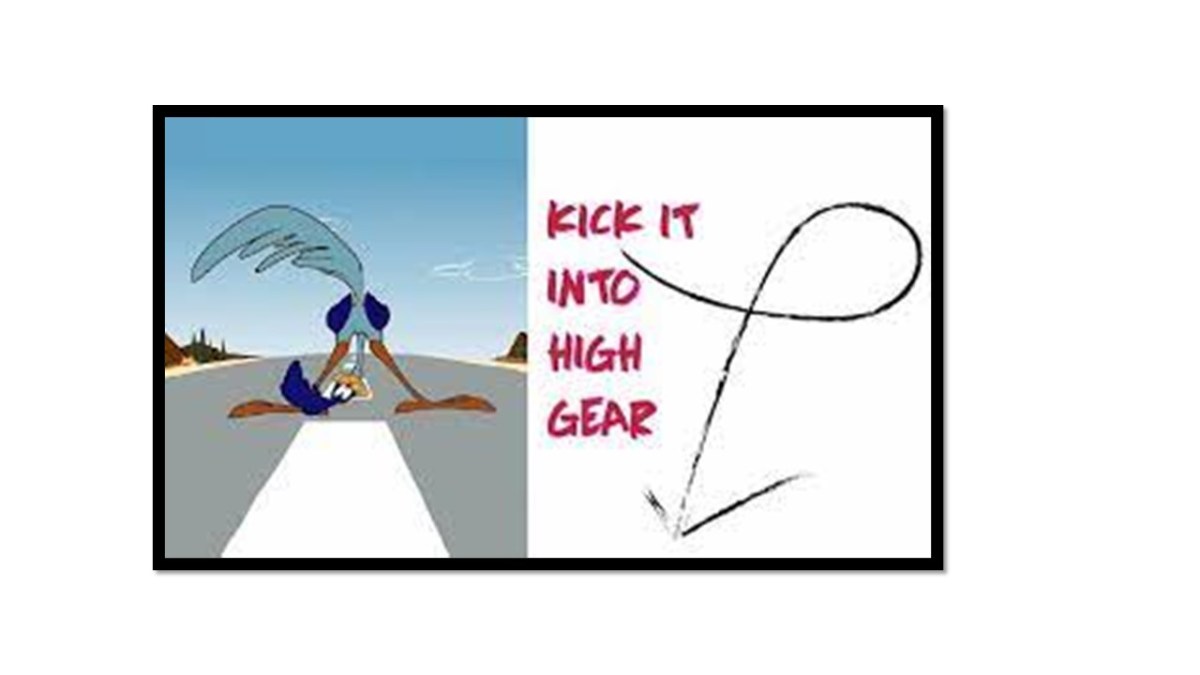
What does this mean? Its very simple…. it can take many of us much longer than necessary to get yourselves back on track firing with all guns blazing. Like we discussed yesterday, It’s time to kick things into high gear!

So how can you speed up the recovery process from the holiday hangover? There are some key basic steps to follow which will help you to ensure that you win your momentum back rapidly! 

So below are 5 key steps you want to take: 

  1. Take time at the very start of the week to plan and prepare your week- this can only be a 30 minutes short session but it will help you to create clarity around the action you need 

2. Cheat and pick your easy tasks first to help you build momentum. Pick tasks in your to – do list which are easy to complete. The concept of completing these tasks will help you to build momentum 

3. Aim to work with a high level of intensity. Be very focused on working fast. Not rushed, as you don’t want to make mistakes. But you do want to focus on creating a self energy of ”getting stuff done” 

4. Don’t stress about trying to do everything- the fact is a lot of times after a holiday you will be playing catch up- so its vital that you don’t stress about not getting everything done. Remember the sun will rise again tomorrow- meaning you will still have tomorrow to complete your tasks. 🙂

5. Don’t work to many extra hours- its easy when coming back from holiday to want to work extra time, to get through your tasks. This can have a detrimental effect though, whilst you can hold this level of work for maybe 1-2 weeks- this is the fastest way to reach a burn out. The best things to do is pick your clear working hours- stick to these hours and get in the habit of working within those hours. Over a period of time you’ll notice how much faster you become! 

We are headed into the last quarter of the year and we need close out the year on top!

Happy Selling,

David

Tomorrow is the Time to Kick it into High Gear!!

Ah, Labor Day… Yes. Growing up I always thought this was a holiday specifically for parents to celebrate the fact that us kids were going back to school  the next day. Sure, in some parts of the country like here in Mississippi school started a few weeks ago, but looking at the holiday as whole, it has a valuable place in the payments world.

Labor Day is also known for its sales. For as long as I can remember, Labor Day weekend has been known for its great sales on everything from appliances and clothing to school supplies. Some I bet even bought a new dishwasher and grill this weekend…  you know who you are.

No matter the purpose, the Labor Day sale has also been the traditional starting point for retail merchants to race toward Black Friday. Their sales volume will grow from Labor Day until the end of the holiday season. 

When it comes to your credit card business, Labor Day also has a key significance. It is the forbearer to the holiday season. It is the warning sign that selling time is fast drawing to a close for good ole 2023. 

When I first started in the payments world a veteran told me that Labor Day as a trigger. He felt it signified that time when you “fire all your bullets” and that “there is no need to hold back anything now.”

As such, he would work with reps to identify what bullets they had left to fire. He would critique their approach, and would help them maximize their efforts. His goal was to make the Tuesday following Labor Day the first day in their race to the finish. Are you gonna be ready for tomorrow?

His approach is still applicable today and can be done well if you answer the following questions.

1. What worked and what didn’t?

Now is the time to analyze your efforts year to date and answer these two questions. Before you know it the year will be coming to a close, so you need to concentrate on what worked and avoid what hasn’t. The time for experimentation has passed.

2. Is there a market in which I have been or can be more successful?

How can I maximize that market?

If you have identified and signed many merchants in a specific market type, you need to identify what you offered that made them chose you from the slew of credit card processing companies that are out there. You should then look to concentrate your efforts within this segment.

If you find that you have almost saturated this segment, identify a segment that is similar. For example, if you have found success in the auto repair industry, consider the other repair and support industries. Or if you have done well with dentists, consider chiropractors or the types of businesses that support the dental industry, like dental labs. All these mentioned by the way would benefit from our cash discount or surcharging programs.  

3. Has your pitch become stale?

If you can recite what you say to a merchant without thinking, you also are likely to be reciting it without tone, inflection, or meaning. Remember, how you say something carries as much weight as what you say.

Tweak your presentation and approach it in a way that forces you to concentrate on what you say, and then listen to how the merchant responds. It may also help you if you shorten your pitch and listen more, and above all focus on what differentiates you from other credit card processing companies such as cash discount or surcharging. I heard a great pitch over the weekend that went like this. 

” Hi I’m David with Payment Lynx I was stopping by today to if you had heard of the new laws that have passed with Visa and Mastercard? 

It’s where your business is exempt from paying any credit card processing fees, thats 0% percent and 0% swipe! 

Would you like me to show you how? Yes, Great, ­­­Grab one of your statements and I will show you how it works” 

It’s that easy.

4. Have I asked my portfolio for referrals?

This may surprise you, but the number of salespeople who want to ask for referrals but forget to ask is staggering, I mean there’s money waiting on YOU,  You just have to ask. There is no time like the present. Reach out to your base, as they are your best source for new accounts. 

Come tomorrow, Tuesday,  Just a few hours away. Make sure you hit the streets with urgency. Time is the most precious commodity we have, and it should not be wasted.

Instead focus on what has made your credit card processing business successful so far, and make sure you focus on doing the right things. Then you’ll be prepared for the race to the finish and will be able to finish the year strong.

Do you have any tips for how to finish the year on a high note that you’d like to share? If so, please call, text or email me.

Happy Selling,

David

Friday’s Top 10 Top Things You Didn’t Know About Labor Day

As we bid summer adieu, and we look forward to the last long weekend of the summer, Yes, Monday, September 4, 2023 is Labor Day. The holiday will be celebrated by families around the country with picnics, barbecues, road trips to home depot for dishwashers and grills … and of course sports events.

 It is the last blast of the summer vacation season.

Labor Day is a federal holiday and I’m sure most all Government offices, schools, and, businesses are closed. So as most of you who are familiar with my blogs know Fridays are reserved for an old-fashioned Dave Letterman top 10 list. Let’s look at the Top 10 things you might not know about Labor Day.

From the Home Office WhyNot Mississippi

The Top 10 Top Things You Didn’t  Know About Labor Day 

10. Labor Day in Canada began in 1872 in Toronto but quickly made its way south to the U.S.  Originally it began as a significant demonstration demanding rights for workers.

9. The first U.S. Labor Day was celebrated on Tuesday, September 5, 1882, in New York City, planned by the Central Labor Union.  The Labor Day parade of about 10,000 workers took unpaid leave and marched from City Hall past Union Square uptown to 42nd street, and ended in Wendel’s Elm Park at 92nd Street and 9th Avenue for a concert, speeches, and a picnic.

8. Oregon was the first state to make Labor Day a holiday in 1887.

7. On June 28, 1894, Congress passed an act making the first Monday in September of each year a legal holiday in the District of Columbia and the territories.

6. What are we celebrating? The contributions and achievements of the 155 million men and women who are in the U.S. workforce.

5. In the late 1800s the average American worked 12-hour days and seven-day weeks to eke out a basic living.  Children as young as 5-6 years old worked in factories and mines. Those some hardcore closers there.

4. The year in which the 8-hour day was firmly established was 1916 with the passage of the Adamson Act.  This was the first federal law regulating hours of workers in private companies.

3. Traditionally people did not wear white or seersucker clothes after Labor Day as it unofficially marked the end of summer.

2. The football season starts on or around Labor Day and many teams play their first game of the year during Labor Day weekend. Ahhhh. Football season is here…

And the #1 Thing You Didn’t Know About Labor Day Is

1. Labor Day is viewed as the unofficial last day of vacation before the start of the new school year (and mourned by students all over).  Stated differently, it is the Back-to-School kickoff (cheered by parents all over!).

So take some time during this last summer hurrah to relax, enjoy the family, and enjoy the end of summer! And be ready on Tuesday to follow up, close deals and make some money!  

Have a safe and happy weekend everyone,

David

Circle of Influence

Do the people that we hang around with on a consistent basis make a difference in our lives when it comes to having success?  

The answer to that question is a definite YES. Our circle of influence really does matter.

The people you surround yourself with will affect your future success. The bottom line is that you are the result of the closest five people that you surround yourself with.

This is why it’s important to surround ourselves with good positive influences. When you have the right people in your life, they are an excellent source of inspiration and help in your life. This allows us to become better versions of ourselves.

Take a look at the five people that you surround yourself with. Take inventory on whether or they are adding to your success or hindering your success.

You become who you surround yourself with. You are a product of your own environment. If you hang around with people that speak foul language constantly, eventually, you will fall into the trap also. Your odds of having success and joy in your life will grow much more if you are surrounding yourself with positive and joyful people.

This is incredibly important, because your circle of influence definitely matters when it comes to your future success. If you are surrounding yourself with people who constantly complain and talk about others, eventually, you will also fall into that trap. 

If you truly want success in your life, you must hang around with others that are positive, encouraging and committed to lifting others up.

Now I am not saying to get rid of all your friends. What I am saying is be careful on who you spend the majority of your time with. The people that you hang around with will determine your future.

The first step is to make sure that you have the correct attitude that people want to be around. This all begins by committing to living life with an attitude of gratitude. Instead of complaining about things, start being grateful for all the blessings that you have in your life. Be an encouragement to others and commit to a lifestyle of positive thinking, always speaking uplifting words. Be the type of person that others are drawn to. Have the kind of attitude that will attract others to want to spend time with you.

The next thing is to find people that are close to or already where you want to be in life. Be around those that care about your success. Get to know them. Find out what makes them tick. Your circle of influence must always have a growth mindset. I always say that if you are the smartest person in your circle, than you are in the wrong circle. Get to know people that are committed to constantly improving.

It’s an amazing thing when you start to develop friendships with those who will influence you. These type of friends will encourage you, challenge you, and actually hold you accountable to your goals. Make sure that you are providing the same for others as well. Always show gratitude and appreciation for their friendship. 

True friendship is helping each other succeed in life. When you are surrounding yourself with others that are like-minded, you encourage each other to accomplish so much more. Always make sure that you are bringing value to others to help them be successful.

The bottom line is that if you want to get the right circle of influence, you must focus on others. Do the things that others find helpful. Always be encouraging and show compassion when interacting with your circle. Never be jealous of other’s success. Instead, be grateful and happy for their accomplishments. This will help you to develop true friendships.

So going forward, commit to being a positive winner that others want to be around and start surrounding yourself with people that are like minded. Commit to success, and commit to helping each other achieve goals. Remember, you are who you hang with! Make sure you are hanging with the right people.

Happy Selling,

David

If You Fail to Plan your Planning to Fail.

We’ve all heard the phrase if you fail to plan your planning to fail.

This phrase is often used to mean that if you don’t plan ahead, you’re setting yourself up for failure. And while that’s certainly true, it’s also important to remember that even the best-laid plans can go awry.

That’s why it’s important to have a backup plan (or two). And to be flexible in your planning, so that you can adapt as needed.

Here are some tips to help you plan for success in the new year:

1. Set realistic goals.

Don’t set yourself up for disappointment by setting unrealistic goals. If you’re not sure what you can realistically achieve, ask a friend or family member for their input.

2. Make a plan.

Once you’ve set your goals, it’s time to make a plan of how you’re going to achieve them. This should include everything from what you need to do each day or week, to what resources you need to accomplish your goals.

3. Set a deadline.

If you don’t set a deadline, it’s easy to procrastinate and never get around to accomplishing your goals. Make sure your deadline is realistic, and give yourself a little wiggle room in case you need it.

4. Be prepared for setbacks.

No matter how well you plan, there will always be setbacks. The best way to deal with them is to be prepared for them. That means having a contingency plan and being flexible in your planning.

Following this approach almost guarantees your success in whatever venture you work in. So it is very crucial to choose to plan every time. Choose success over failure. Remember, If you fail to plan you are planning to fail.

Start planning now!

Happy Selling,

David