A Black Friday Poem

“In the tone of It was the night before Christmas”

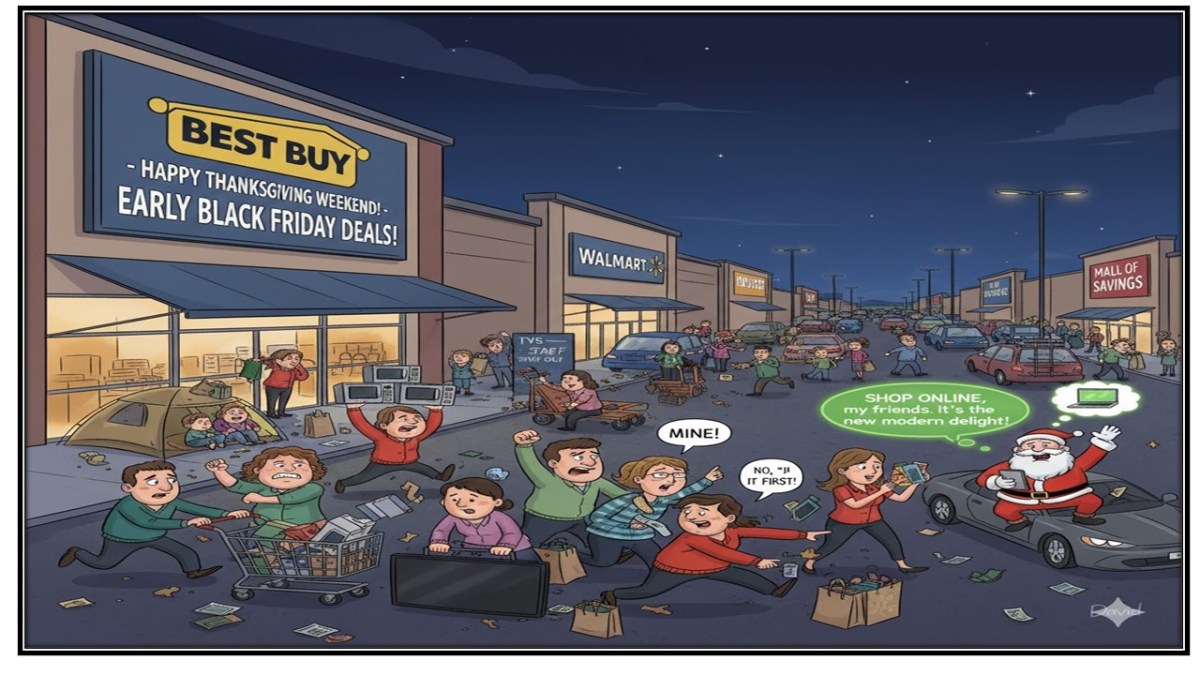
‘Twas the morning of Black Friday, and all through the town, Not a shopper was sleeping, all were scrolling down. The ad-scans were studied with meticulous care, In hopes that the doorbusters soon would be there.

The children were not in their beds, but were cramped, In a cold, frosty tent, where the bargain-folk camped. While Ma clutched her coupons and Pa checked the ad, “I need that new TV! I need it so bad!”

When at 5 a.m., there arose such a clatter, The doors were flung wide! (What was the matter?) Away to the entrance they flew like a flash, All trampling each other to make the mad dash.

Like animals hunting, a frenzied, wild bunch, A poor fellow fell in the terrible crunch. He’d just reached for a laptop, with true shopping zeal, “Get off me!” he yelled, “That’s a 50-buck steal!”

Two grown men were tussling right by the game rack, Over a console, they’d started to thwack. Flat screens and new gadgets, appliances galore, Were grabbed from the pallets and tossed on the floor.

The shelves were left barren, as shoppers tore through, “It’s MINE!” they all shouted, a chaotic crew. A cart filled with air-frys, just simply because At sixty percent off, they earned great applause.

A woman had tablets, a Target-run spree, Her cart was piled high, how lucky was she! An employee just pointed at TVs in back, “Don’t run!” he advised, “Or you’ll break the whole stack!”

The stores soon half-emptied, the doorbusters gone, A new wave crept in with the first light of dawn. Like vultures descending to pick at the gap, They searched for a bargain left on the map.

The five-dollar-bin searched, ’twas a terrible plight, For all that was left on this frantic, mad night. When from deep in the mess came a joyous shout, “A two-dollar Sharknado!” he cried, heading out.

The shoppers left broke, feeling nearly half-dead, And passed by a jolly man, dressed all in red. He exclaimed as I drove and passed out of sight, “Shop online, my dear friends! It’s the new modern delight!”

Have a Great Weekend everyone,

David

Happy Thanksgiving!

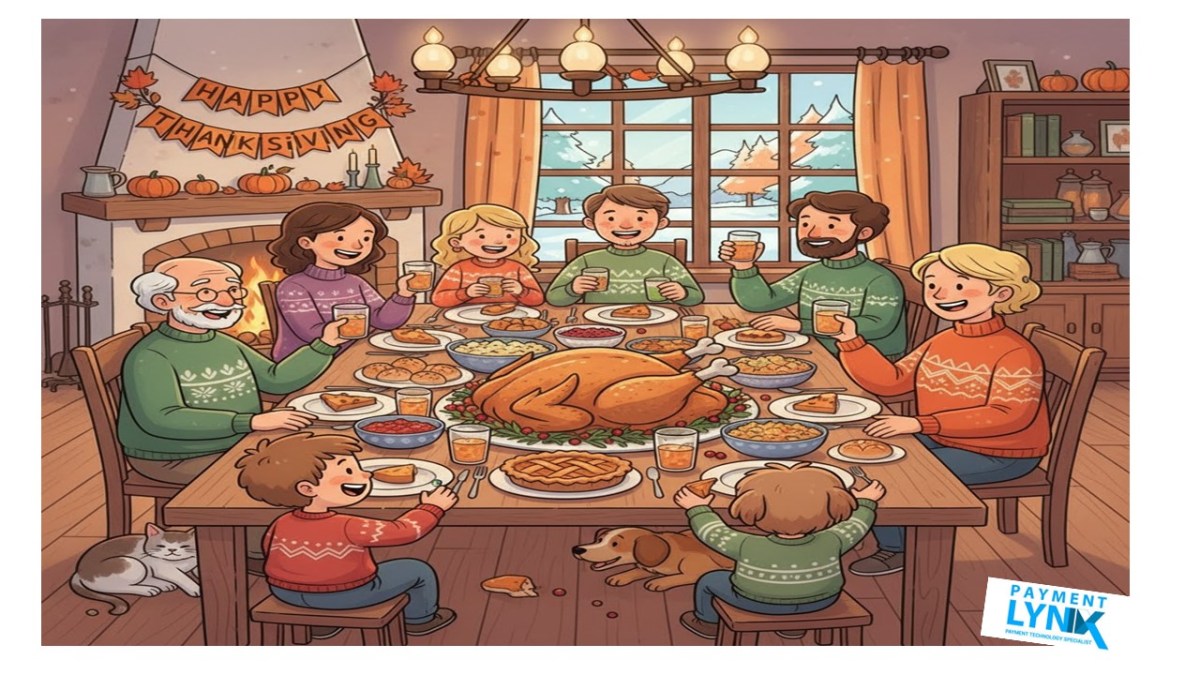
Good morning and Happy Thanksgiving everyone. I know shopping is just a few hours away. The big sales and the huge discounts are all locked and loaded. But for now, in the calm before the storm, I would like to wish everyone reading this blog a very happy Thanksgiving holiday!

So while you’re getting ready to dine on turkey and trimmings, I’m going to offer you up some fun facts about Thanksgiving, its history, and the bird it centers on:

Let’s Talk Turkey

According to the U.S. Department of Agriculture (USDA), turkey production has seen a decline in recent years. After U.S. farmers raised approximately 200 million turkeys in 2024, the forecast for 2025 has dropped to 195 million birds.

Of those, the National Turkey Federation estimates that approximately 33 million found themselves roasting in ovens across the country last Thanksgiving.

So, where do all these turkeys come from?

The USDA’s National Agricultural Statistics Service provides a clear picture. The forecast for 2025’s top turkey-producing states is:

  1. Minnesota (32 million)
  2. North Carolina (28 million)
  3. Arkansas (22 million)
  4. Indiana (20 million)
  5. Missouri (15 million)
  6. Virginia (15 million)

And what about the side dishes? U.S. farmers are forecast to produce 8.13 million barrels (or 813 million pounds) of cranberries in 2025. The top producers remain Wisconsin (by a large margin) and Massachusetts, followed by Oregon and New Jersey.

History of the Holiday

Though many competing claims exist, the most familiar story of the first Thanksgiving took place in Plymouth Colony, in present-day Massachusetts, in 1621. More than 200 years later, President Abraham Lincoln declared the final Thursday in November as a national day of thanksgiving. Congress finally made Thanksgiving Day an official national holiday in 1941.

Sarah Josepha Hale, the enormously influential magazine editor and author, waged a tireless campaign to make Thanksgiving a national holiday in the mid-19th century and is often cited as having an impact on getting Lincoln to declare it. An interesting fact about Sarah Hale: she is the author of the classic nursery rhyme “Mary Had a Little Lamb.”

What Was On The Menu?

The traditional foods we tend to associate with Thanksgiving were most likely not part of the menu that day in Plymouth. The feast was organized by Governor William Bradford and attended by some 50 English colonists and about 90 Wampanoag American Indians. It lasted for three days and had some foods that might surprise you.

National Geographic suggests that the Wampanoag killed five deer for the feast. And that the colonists shot wild fowl—which could have been geese, ducks, or the turkey we all associate with the feast. It is regarded that some forms of Indian corn dishes were also served. The article also suggests that the Wampanoag supplemented the venison with fish, lobster, clams, nuts, and vegetable dishes like pumpkin, squash, carrots, and peas.

Recounting Turkey Day

The aforementioned National Geographic article also suggests Plymouth wasn’t really the first Thanksgiving. It states that American Indian peoples, Europeans, and other cultures around the world often celebrated the harvest season with feasts and gatherings, many of which gave thanks to higher powers for their survival and their sustenance.

In 1541, Spaniard Francisco Vásquez de Coronado and his troops celebrated a “Thanksgiving” while searching for New World gold in what is now the great state of the Texas Panhandle. After that, a similar feast was held in 1564 by French Huguenot colonists in present-day Jacksonville, FL. English colonists and Abnaki Indians feasted together in Maine’s Kennebec River around 1607. And the Jamestown, VA colony celebrated the arrival of a food supply ship that ended a brutal famine in 1610.

More Facts About the Holiday – A Short Top 10:

  1. Benjamin Franklin wanted the turkey to be the national bird of the United States. …Just seems wrong.
  2. The annual Macy’s Thanksgiving Day Parade tradition began in 1924. …I always wanted to go to that.
  3. Congress passed a law on December 26, 1941, ensuring that all Americans would celebrate a unified Thanksgiving on the fourth Thursday of November every year. (And American Express created Small Business Saturday in 2010.)
  4. Since 1947, the National Turkey Federation has presented a live turkey and two dressed turkeys to the President. He “pardons” the live one and allows it to live out its days on a historical farm. They should make a movie about that.
  5. Each year, the average American eats about 13.8 pounds of turkey (based on 2024 data), a number that has been trending down from over 15 pounds in previous years.
  6. Californians consume the most turkey by total volume in the United States (which makes sense, given its large population).
  7. Although Thanksgiving is widely considered an American holiday, it is also celebrated on the second Monday in October in Canada.
  8. The heaviest turkey ever raised was 86 pounds, about the size of a large dog. (That record, set in 1989, still holds!)
  9. Turkeys will have 3,500 feathers at maturity. Now that’s locked in my brain.
  10. Weird fact: Male turkeys gobble. Hens do not. They make a clucking noise. I have nothing for that…

So there you have it. A completely incomplete rundown on Thanksgiving and turkeys! Enjoy your meal, watch some football, and get ready for the big shopping blitz to begin later today. Black Friday is upon us, and credit card processing, merchant services, and e-commerce business is about to boom.

One last thing to share: this Thanksgiving, I hope you’re able to avoid the tragedy of the different foods on your plate from touching one another.

Have a Happy Thanksgiving,

David

Pause for Thankfulness

Good morning everyone,

With Thanksgiving tomorrow, we’re pausing our usual “What Would You Do Wednesday” to reflect on something that’s been on my mind: thankfulness.

First, I want to say how incredibly thankful I am for you. I’m thankful that you allow me into your inbox, that you read these posts, and that you give me your feedback. I truly am.

This holiday always makes me reflective, and I find that the most successful and fulfilled people I know share a deep sense of thankfulness. It’s not just a tactic; it’s a perspective.

As I thought about my own career, here are three things I am profoundly thankful for:

1. I Am Thankful for the Hard Lessons

This might seem odd. Who is thankful for failure?

I’m not thankful for the feeling of failing, but I am incredibly thankful for what the disappointments, the flops, and the “no’s” have taught me.

Once you get past the initial sting, the lessons are what stick. Great salespeople are agile learners, and the most powerful lessons often come from the bad, the disappointing, or the ugly moments. I’m thankful for those “shit sandwiches” because they gave me the tools and skills to grow and succeed later.

2. I Am Thankful for My Clients

I am deeply thankful for every client. Why? Because I know they have other choices.

There is always someone else trying to earn their attention and their business. I’m not entitled to their business, and I’m not just an order-taker. I have to keep earning their trust and showing my value.

In today’s competitive world, no one can afford to take their customers for granted. I’m thankful every time they choose me, and that thankfulness drives me to work hard to earn their loyalty.

3. I Am Thankful for This Career

Finally, I’m so thankful for the opportunity to have a career in sales.

When I look at my life, so many of my most enduring relationships came from this path. I’ve built friendships with people I first met on a cold call, colleagues I’ve sold alongside, and mentors who guided me. (you know who you are)

My life is filled with an abundance of wonderful people—partners, friends, and colleagues—all because of this career. It’s an embarrassment of riches, and for that, I am so very thankful.

If you’re reading this, my note of thankfulness includes YOU. Thank you for letting me into your inbox, your feeds, your businesses, and your brains. I do not take that privilege for granted.

As you head into the holiday, I’d love to know:

In your sales or business practice, what are you truly thankful for this year?

Until next time, stop hoping and start SELLING!

Happy Selling,

David

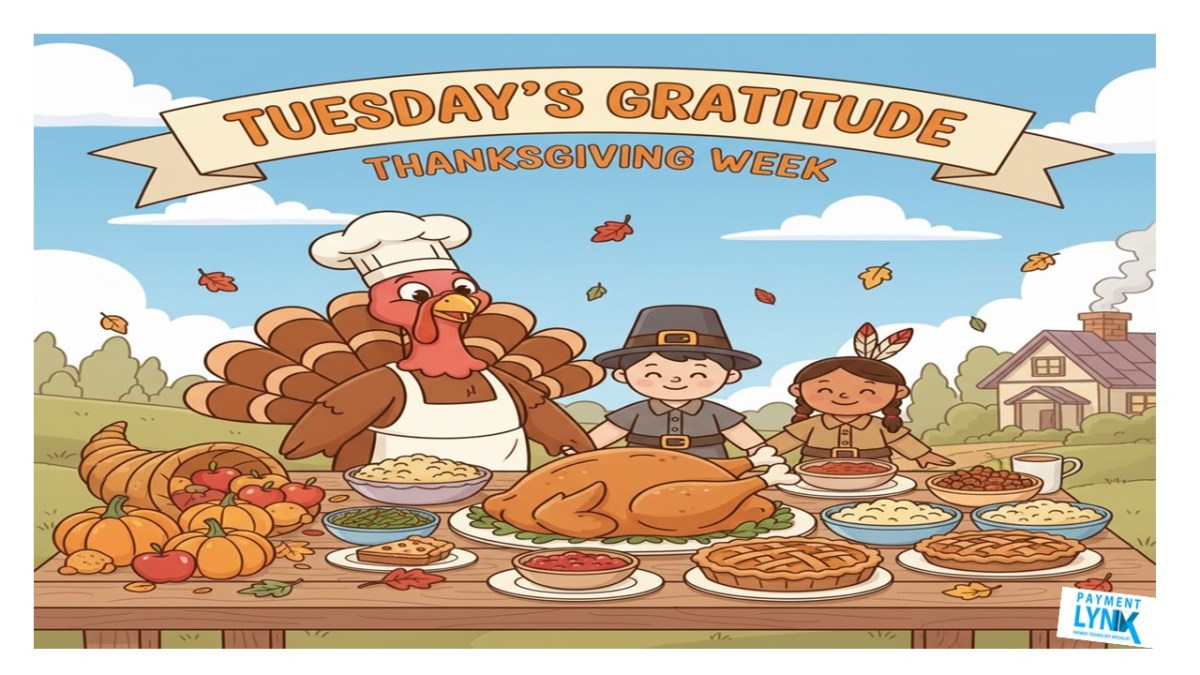
Tuesday’s Gratitude

As we head into day 2 of Thanksgiving week I know many are pushing hard to meet year-end goals while some are shutting it down till the new year. The hustle is part of our DNA, but this holiday reminds us to pause and reflect on the ‘why’ behind the ‘what.’

Let’s use this week to weave gratitude into our work:

  1. Count Your Wins: Before you log off for the holiday, take 10 minutes. Write down your three biggest accomplishments from the last quarter. Big or small, acknowledge them.
  2. Thank Your Partners: Think of one client and one colleague who made a real difference for you this year. Send them a personal note—no sales pitch, just genuine appreciation. It matters.
  3. Give Back: As a team, let’s remember our community. Whether you volunteer your own time or contribute to our company drive, giving back connects us to something bigger than a spreadsheet.
  4. Balance Your Time: Hit your targets, but also enjoy the holiday. Be present with your loved ones. A rested and grateful salesperson is an unstoppable one.
  5. Reflect for the Future: Use this time to think. What did you learn this year? What’s your biggest goal for the next?

Let’s make gratitude our secret weapon for a strong finish to the year. Thank you all for your hard work and dedication.

Happy Selling,

David

It’s Thanksgiving Week

With Thanksgiving only a few days away it’s only natural for me to think of all the things I’m thankful for. But I don’t need to wait till Thanksgiving to think about them.

I think about them daily. Literally every day presents something for me to be thankful for.

Every morning I wake up in my own house. Thankful for functional lungs to breathe the air I breathe. To be able to move around and get ready on my own. To get in my car and go out and make sales calls to make money to pay for my car and house and food etc..

It’s really the little things that matter the most. The things we often take for granted. But I’m sooooo very thankful for them. Even if I complain sometimes. Even if I want more sometimes. I really am grateful for what I have. And I’m grateful for all the people in my life.

I cherish the relationships I have with my family and friends. Old and new. Every interaction we have, every laugh we share, every lesson learned. Good, bad, and ugly. I’m thankful for it all!!

So I challenge you, not only for this week, but for the rest of the year, for 2025, 2026 and for years to come, instead of focusing on what you don’t have, consistently reflect on what you do have and be thankful for.

Happy Selling,

David

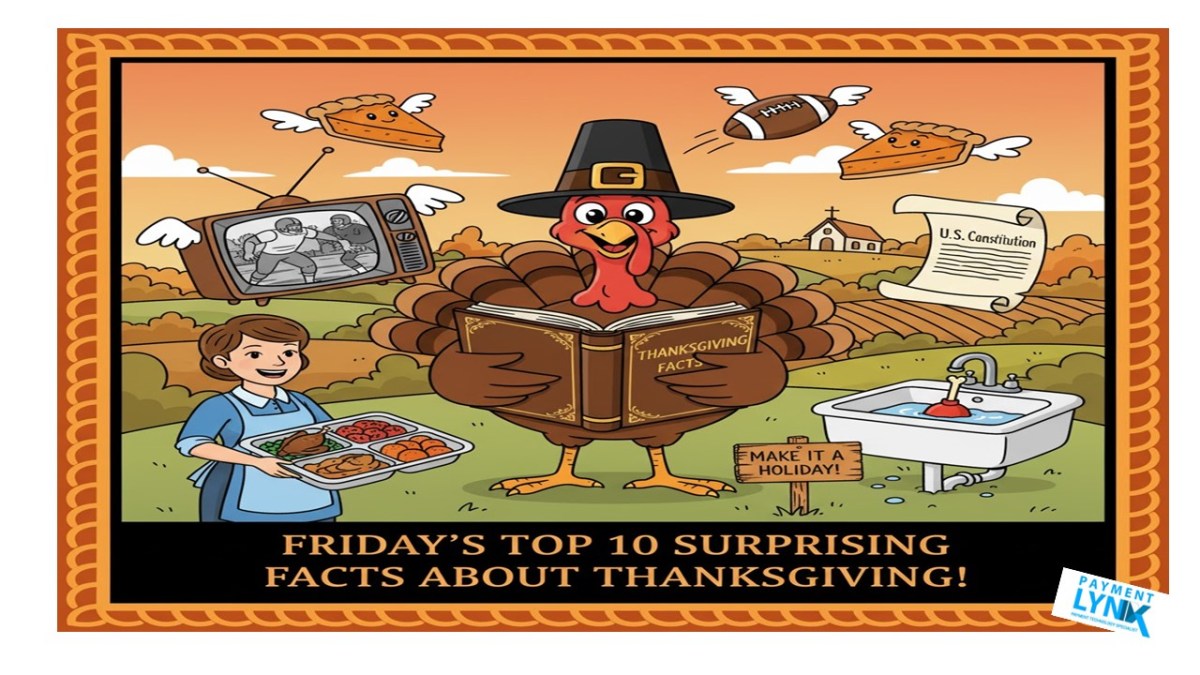
Friday’s Top 10 Surprising Facts You Never Knew About Thanksgiving

As we approach Thanksgiving next week, our minds turn to a celebration of family, friends, and food. It’s a moment to pause and give a nod to all the good things in our lives… and, yes, to double up on the mashed potatoes.

But the real history of Thanksgiving is a bit more complicated than turkey, dressing, and pumpkin pies. In fact, it has many layers of spectacle, entrepreneurial spirit, economic recovery, and, naturally, feasting.

If you’ve ever found yourself wondering why we celebrate Thanksgiving, or where some of our seemingly obscure traditions come from, read on!

From the Home Office in Harveston, Ohio,

Here are the Top 10 Surprising Facts You Never Knew About Thanksgiving

10. A woman named Sarah Josepha Hale lobbied Congress for years to make it an official holiday. If it wasn’t for this determined woman, Thanksgiving might not exist today. Hale’s allegiance to the holiday began in 1827 and was based in national pride; she hoped to make it “permanently, an American custom and institution.” It wasn’t until 1863 that President Lincoln finally declared Thanksgiving a national holiday. Seeing as he did this in the throes of the Civil War, some consider it an attempt to bring some peace back to the country.

9. Originally, Thanksgiving may not have been in November at all. There isn’t clear historical information on the actual date of the first Thanksgiving, but some historians suggest it may have taken place in mid-October. President Lincoln assigned the holiday to the last Thursday in November, possibly to coincide with the date the Pilgrims first landed the Mayflower in New England.

8. In 1939, President Franklin D. Roosevelt moved Thanksgiving one week earlier. FDR hoped that a lengthened holiday shopping season would increase spending and alleviate the effects of the Great Depression. This resulted in two consecutive years of conflicting Thanksgiving Day celebrations, as some states refused to recognize the change. By 1941, FDR gave in and signed a bill making the fourth Thursday in November the official date nationwide.

7. The first Macy’s Thanksgiving Day Parade featured animals from the Central Park Zoo. In 1924, New York City went all out for what newspapers called “a marathon of mirth.” Notably, there were none of the balloons the parade is known for today. Instead, the parade featured live bears, elephants, camels, and monkeys from the Central Park Zoo, alongside floats, puppets, celebrities, and Santa Claus.

6. Thanksgiving leftovers led to the first-ever TV dinner. In 1953, the food corporation Swanson overestimated how much turkey would be consumed on Thanksgiving and had to get creative with 260 tons of leftover poultry. Using 5,000 aluminum trays, they created a Thanksgiving-inspired meal of turkey, cornbread dressing, gravy, peas, and sweet potatoes. The dish sold for 98 cents, and they sold ten million in the first year, birthing the frozen meal industry.

5. Benjamin Franklin was very pro-turkey. It wasn’t just that Franklin thought the bird was delicious; he admired its qualities. Surprisingly, Franklin thought the turkey, not the bald eagle, should be the United States’ official bird. “I wish the bald eagle had not been chosen as the representative of our country; he is a bird of bad moral character,” he once wrote, noting the turkey was a “much more respectable bird.”

4. The first Thanksgiving menu in 1621 likely included lobster, seal, and swans. No, turkey did not RSVP to the first Thanksgiving. The feast between the Pilgrims and the Wampanoag Native Americans lasted for three days. While records are scarce, it’s known the Pilgrims hunted for local fowl (swans included) and the Wampanoag brought five deer. It’s thought that lobster and seal were likely involved, due to their availability.

3. Pumpkin pie has been beloved for a long time—but it isn’t America’s favorite. Records show people have been baking pumpkin pies since the 1600s! Pumpkins were likely at the first Thanksgiving, though not in pie form. The dessert has been a staple since the 1700s—one Connecticut town even postponed the holiday in 1705 due to a molasses shortage. However, according to the American Pie Council, apple pie is America’s favorite, with pumpkin coming in second.

2. The “pardoning” of a turkey is an annual White House tradition… but no one is sure who started it. (This fact seems to be missing its conclusion in the original, but the tradition itself is the surprising fact!)

And the #1 Surprising Fact You Never Knew About Thanksgiving is…

1. FOOTBALL! Thanksgiving Day football games began in the 1870s. Turkey Day football began long before TV. In fact, football wasn’t even a professional sport when the tradition took hold. In 1876, Yale played Princeton in the first-ever Thanksgiving Day match. When the NFL was founded in 1920, it immediately began hosting games on the holiday.

A Bonus Fun Fact

The day after Thanksgiving is especially busy for plumbers. This sounds like the beginning of a joke, but it’s true. According to plumbing company Roto-Rooter, the day after Thanksgiving is “far and away the busiest day of the year.” They warn to be extra careful with turkey grease, potato peels, rice, and stuffing, which can clog drains and overwork garbage disposals.

So kick back, get ready for next week, and save some of these fun facts for after the turkey dinner.

Have a great weekend,

David

Stop Setting “Goals” Set a “Destination”

Allow me to get real with you for a minute. This might be one of those posts that actually shifts the direction of your entire career if you let it sink in.

Most people in this industry have goals. But most people have the wrong goals—which is exactly why they never hit them, leaving them stuck in a cycle of inconsistent commission checks and burnout.

See, “goals” sound nice. “I want to double my income this year.” “I want to build a huge residual portfolio.” Most reps write down these vague, wishful, pie-in-the-sky dreams they hope come true someday.

That’s not a goal—that’s a wish. And the odds of hitting a wish are about the same as a merchant calling you back to say “yes” after ghosting you for three weeks.

It’s not happening.

So for a second, I want you to forget the word “goal” even exists. Let’s talk about destinations and logistics instead.

Step 1: Set Your Destination

A destination isn’t a dream; it’s a specific place you will arrive at on a specific date. In the next 30 days, where do you want to be?

Don’t be vague. Be precise.

  • A specific residual or bonus amount deposited in your bank account?
  • A certain number of new, approved merchant accounts?
  • A piece of equipment for your business (like a new tablet or auto-dialer) paid for in cash?
  • A specific dollar amount added to your monthly residual income?

Let’s make it concrete. You decide your destination for the next 30 days is: $5,000 in upfront bonuses earned, 10 new approved deals, and a $3,000 increase in your monthly residual.

That’s not a goal. That’s a destination. It’s a coordinate on a map.

Step 2: Map Your Logistics

Now, how do you get there? This is where 99% of reps fail. They have a destination but no map. The map is your logistics. It’s the simple, “boring” math that guarantees your arrival.

Let’s break down that $5,000 upfront Bonus destination.

  • Your average upfront bonus per deal is $500.
  • Logistically, to earn $5,000, you need 10 approved deals.
  • There are about 20 working days in a month. That means you need to close 3 deals or so each week.

Okay, great. How do you get 3 deals per week? More logistics.

Okay, great. How do you get 3 deals per week? More logistics.

Let’s say you close 15% of the qualified merchants you sit down with. To get 3 “yeses” each week, you need to present to 20 qualified decision-makers per week (3 / 0.15). That breaks down to about 4 appointments per day. How many cold walks or calls does it take to get one qualified appointment? Let’s say it’s 20. Therefore, your daily logistics are to make 80 contacts per day (4 appointments x 20 contacts).

That is your roadmap. The daily, trackable logistics that make the destination inevitable.

Most people have been conditioned to shrug off “goals.” They never write them down, never track them, and never follow through because their “goals” are just fuzzy wishes.

But you understand something deeper now: You don’t need another goal—you need a destination and a map to get there.

The Jim Carrey Method: Setting Your Destination and Trusting the Logistics

I saw an interview Jim Carrey gave before he was a household name, struggling comedian Jim Carrey famously wrote himself a check for $10 million for “acting services rendered” and post-dated it 10 years in the future. He kept that check in his wallet, a constant, tangible reminder of his destination.

Did he know exactly how he would earn that $10 million? No. But he had a clear destination and he put in the logistical work every single day – honing his craft, performing, networking, taking every opportunity. He focused on the daily actions that would lead him there. And just before Thanksgiving in 1995, he learned he would earn $10 million for his role in Dumb and Dumber.

His “goal” wasn’t a vague wish; it was a concrete destination, backed by his daily commitment to the logistics of becoming a successful actor.

Your New Playbook

Here’s how you put this into action starting today:

  • Set Weekly and Monthly Destinations. Forget yearly targets for now. They’re too far out to create urgency. Focus on the next 7 and 30 days. Hit your weekly and monthly destinations, and the annual numbers will take care of themselves.
  • Define Your Logistics First. Never set a destination without immediately reverse-engineering the daily and weekly logistics required to get there. What is your daily contact number? Your daily appointment number? Your daily closing number?
  • Track Your Logistics, Not Just the Destination. Don’t just obsess over the final bonus or residual number. Obsess over hitting your 80 contacts per day. If you nail the logistics, the destination is a guaranteed outcome.

Take this approach in your business and in your life. You’ll watch real, measurable change happen faster than you ever thought possible.

Because in sales and in life, “Logistics” beats “goals” every single time.

Happy Selling,

David

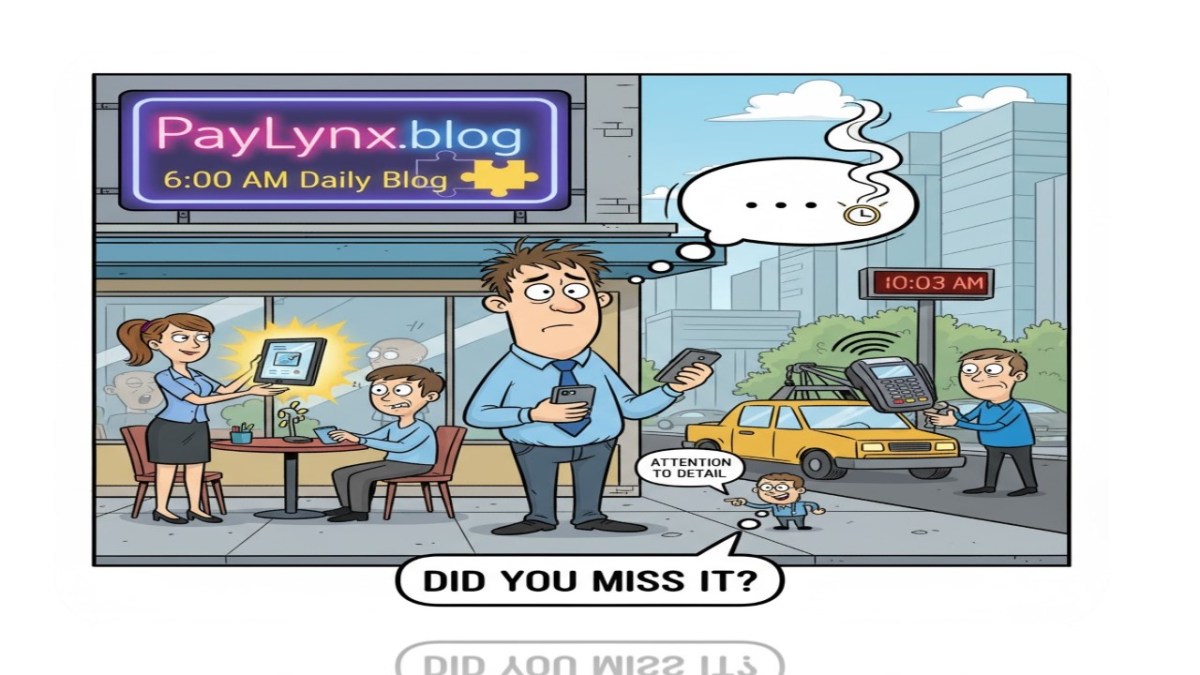
Did You Miss It? The Cost of Missing the Details in Merchant Services Sales

The Experiment: The Missing Post

Today, I ran a little experiment. I intentionally did not send the blog post out at the usual time.

Why? To see who would notice, and more importantly, how long it would take.

As of 10:03 AM Central, I’ve received:

  • 1 phone call
  • 2 text messages

That’s only three people out of our entire list who recognized a deviation from the established routine and reached out to ask about it.

WWYD Scenario: What Are You Missing?

Normally, Wednesdays are reserved for our “What Would You Do” (WWYD) scenarios. Today’s scenario is less about a tough close and more about a fundamental principle that applies to everything we do: Attention to Detail.

This blog post is silly, yes, but the work we do out in the field is anything but. It’s important. It requires us to be expert intelligence gatherers.

Missing the small details can cost us big money. Let’s look at the kinds of details we should be tracking:

In Your Portfolio & Pipeline

  • Are Your Merchants Still Processing? I make it a point to track this every other Monday or on Sunday evenings. Don’t wait until the residual check hits (or doesn’t) to notice they’ve gone dark.
  • When was the last time you checked in? A lack of processing volume is a warning sign that your competitor may be in the building.

In the Wild (Everyday Observation)

When you are out and about, are you actively scouting?

  • POS System Check: When you’re out to dinner, do you clock what POS system is being used? I do. It’s become a running joke with my wife—she’ll ask, “What system are they using?” before we even sit down or get back in the car. It’s almost unconscious now. This should be you!
  • Service Flow: Do you notice if the waitstaff is using a modern tablet, or walking back and forth to a terminal?
  • Kitchen Setup: Do you notice a missing kitchen printer? Is everything handwritten?
  • Body Language: Do you pay attention to your prospects’ body language during a pitch? Are they leaning in? Checking their watch?

Specialized Observation

  • Mobile Services: How are specialized businesses taking payments?
    • How do wrecker services take your card?
    • Are they calling the payment in?
    • Are they using a clunky, old-school wireless terminal?

The Takeaway

The same lack of detail that kept you from noticing a missing 6:00 AM email is the same lack of detail that will cause you to:

  1. Miss a critical red flag on a merchant’s statement.
  2. Overlook a key operational pain point that your solution could fix.
  3. Fail to notice a competitor’s new terminal being installed in your top restaurant account.
  4. Drive right past a prime prospecting opportunity that has a terrible, outdated POS system.

Our success is in the minutiae. Train yourself to see the details, not just the big picture. Start with your inbox, and then apply that razor-sharp focus to the field.

Pay attention. It pays.

Happy Selling,

David

Interchange Rates Are… Going Down? Big News From Visa & Mastercard

I’ve seen several posts on this on LinkedIn , Facebook groups already in the last couple of days, and I admit after reading this my brain felt like a squirrel trying to do calculus.

It’s a massive SEC filing, and it’s dense. But after digging i, (also letting an attorney friend read and explain it to me) I realized this isn’t just noise—it’s a seismic shock to our industry, and it’s almost entirely in the merchant’s favor.

We all know the common objections. “Rates only ever go up.” “I’m tired of complex rules.” “I feel like I have no control.”

Well, this settlement gives you a direct answer to every single one of them. It’s a powerful new story for you to tell.

So, How Did We Get Here? (The Backstory)

This didn’t just happen overnight. This is the result of a legal battle that has been raging for decades.

  • The Fight Started in 2005: The first class-action complaint was filed way back on June 22, 2005.
  • It Became a Massive Lawsuit: That case was eventually consolidated with several others into a giant case in New York, which you’ve probably heard of: In re Payment Card Interchange Fee and Merchant Discount Antitrust Litigation.
  • There Was an Earlier Settlement: You might even remember a big settlement that was reached back in 2012. However, that one was thrown out by an appeals court in 2016, and the fight started all over again.
  • This Is the “Rules” Part: This specific settlement is the result of years of negotiations, mediations, and the prospect of even more litigation. It specifically settles the merchants’ claims for “injunctive relief”—which is just a fancy legal term for changing the rules of card acceptance, rather than just getting a cash payout.

Now, after all that fighting, here’s what the merchants finally won.

What’s in the Settlement? (The “What”)

This SEC filing outlines a massive class-action settlement between Visa/Mastercard and a class of merchants. While it’s not final until the court approves it (which the document expects in late 2026 or early 2027), these are the changes coming to our industry:

  1. Interchange Rate Reduction: You read that right. The networks have agreed to a 10 basis point (0.10%) reduction in the average systemwide effective interchange rate on U.S.-issued consumer and commercial credit transactions.
  2. A Five-Year Rate Cap: That interchange reduction will be locked in and serve as a cap for five years.
  3. Simplified Surcharging: The complex, scary rules around surcharging are being replaced with a “simplified approach” that gives merchants “more optionality”. This includes the ability to surcharge at either the “Brand Level” (e.g., all Visa cards) or the “Product Level” (e.g., just Visa Signature cards).
  4. More Acceptance Flexibility: The old “Honor All Cards” rule is being relaxed. Merchants will get new flexibility to independently choose whether to accept consumer credit vs. commercial credit cards, and even “standard” vs. “premium” rewards consumer cards.

How This Benefits Our Merchants

This is the “what’s in it for me” that our clients want to know. This settlement hands them direct, tangible value. (If, and when it happens)

  • Direct, Hard-Dollar Savings: The 10-basis-point drop is a direct reduction in their underlying cost, straight from the card brands themselves.
  • Unprecedented Predictability: The 5-year rate cap is huge. For the first time, merchants can actually budget for their processing costs without fearing the constant, creeping interchange hikes from Visa and Mastercard. I’m sure ISO’s will find creative ways to get this money back.
  • Surcharging/ Dual pricing is No Longer a Headache: For every merchant who has been too intimidated to start a surcharge/ dual pricing program, this is your opener. “The rules are about to get much simpler, allowing you to easily offset your processing costs. Let me show you how to prepare for it.” I know it sounds much the same as we say now but If it works Don’t try and fix it.
  • They Finally Get Control: While most merchants have no clue they pay more for commercial or rewards card they are no longer forced to accept a high-cost commercial or premium rewards card just to accept a regular card. They get to decide if that high-cost card is worth the sale.

How This Affects You and me.

This is where we shine. These changes move us from being “rate sellers” to “expert consultants,” which is exactly where we want to be.

  • We Are Now the Experts: Merchants may be confused by this. The salesperson who can confidently and simply explain these new rules for surcharging and card acceptance is the one who will earn their trust—and their business.
  • Surcharging/ dual pricing is a Massive Door-Opener: This is your new icebreaker. “Are you aware of the new, simplified surcharging rules coming from Visa and Mastercard? Let’s do a free analysis to see how much you could save by implementing a program.”
  • Destroy the “Rates Only Go Up” Objection: This is your silver bullet. When a merchant says all processors are the same and fees just keep climbing, you can say: “Actually, we’re entering a new era. Visa and Mastercard are set to reduce interchange rates and cap them for five years. My job is to make sure you’re set up to get every cent of those savings.”
  • The “Cost Control” Pitch: Your new pitch isn’t just about a low rate; it’s about cost control. You can now offer them a multi-pronged strategy:
    1. We’ll ensure you get the full benefit of the coming interchange reduction.
    2. We’ll analyze your transactions to see if it makes sense to use the new “acceptance flexibility” rules to decline costly card types.
    3. We’ll walk you through the new simple dual pricing or surcharging rules to help you offset your remaining costs.

This isn’t just an update; it’s a whole new playbook. Start familiarizing yourself with these changes now. The salespeople who master this message first will be the ones who dominate the market when these rules go live.

Source Document: You can read the full, (very) confusing SEC filing here: Source Document:

You can read the full SEC filing here: CLICK

Let’s get ready.

Happy Selling,

David

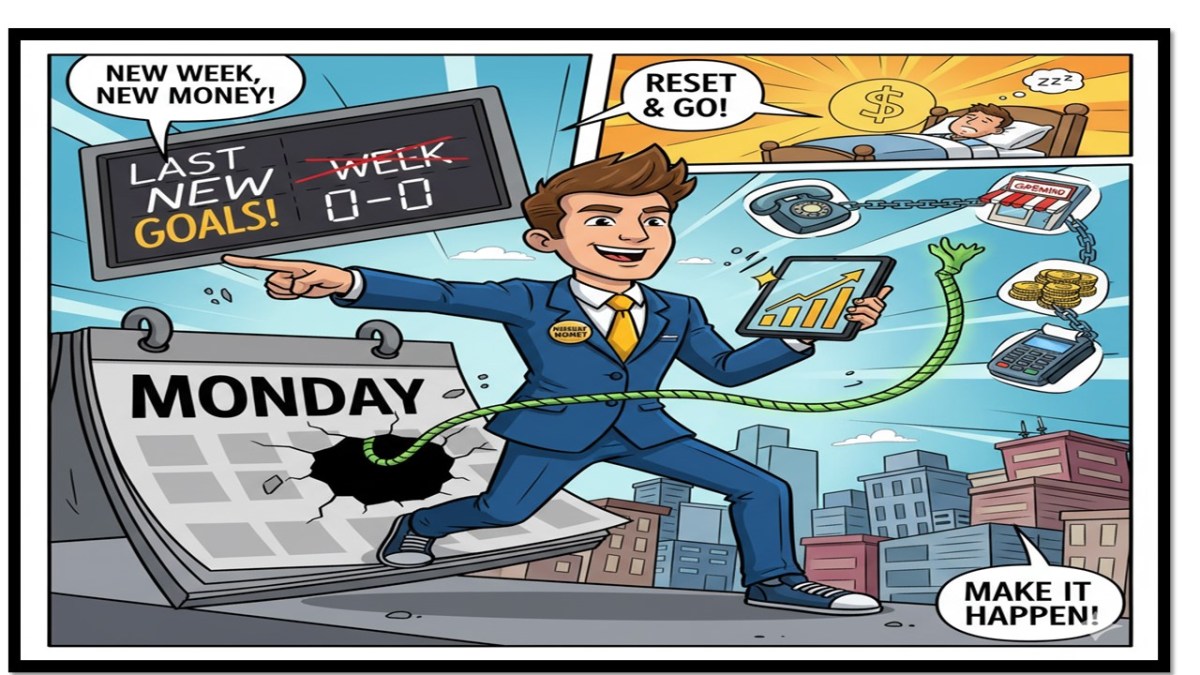
Mondays Aren’t For Moaning. They’re For Making Money

The alarm goes off. It’s Monday. For most of the world, this is a signal to groan, roll over, and mourn the end of the weekend. But you’re not most people. You’re a sales professional. And in our world, Monday isn’t the end of something; it’s the beginning of everything.

Monday is the clean slate. It’s the fresh start. It’s the day you set the tone for the entire week and decide whether you’ll be chasing your tail or closing your next big deal.

The difference between a top performer and an average rep is how they treat the first 3 hours of their Monday. So, grab your coffee, and let’s talk about how we’re going to win this week. It comes down to three things: Goals, Action, and Money.

1. The Goal: Reset Your Scoreboard

Whatever happened last week—good or bad—is in the past. A monster week doesn’t guarantee future success, and a tough week doesn’t have to define this one. Today, your scoreboard is reset to zero. This is your chance to set clear, aggressive, and achievable goals for the next five days.

Don’t just think about your monthly quota. Break it down. What do you need to accomplish by Friday to be on track?

  • Be Specific: Instead of “I want to make more sales,” define it. “I will get 10 new qualified leads,” “I will run 5 POS demos,” or “I will get 3 signed applications in the pipeline by EOD Friday.”
  • Write It Down: Put your weekly goals on a sticky note and stick it to your monitor. Write it on a whiteboard. Put it somewhere you can’t ignore it. A goal that isn’t written down is just a wish.
  • Identify Your Key Target: What’s the one deal in your pipeline that, if you closed it this week, would be a game-changer? Make that your #1 priority.

Monday is for strategy. It’s the moment you look at the map before you start driving. A few minutes of planning now will save you hours of wasted effort later.

2. The First Step: Ignite Your Momentum

Goals are worthless without immediate action. The biggest mistake reps make on Monday is easing into the week. They spend an hour on internal emails, shuffle papers, and “get organized.” That’s a losing strategy.

Your first 90 minutes on Monday morning are sacred. This is your “Power Hour.” It’s when your energy is highest and your focus should be sharpest. Use this time exclusively for revenue-generating activities.

  • Pick Up the Phone: Don’t warm up with emails. Your first action of the week should be prospecting. Make 10 cold calls before you do anything else. Get a “NO” out of the way. Get a conversation started. The hardest call is always the first one.
  • Follow Up on Last Week’s Heat: Did a merchant say “Call me next week”? Guess what? It’s next week. Your first call should be to that warm lead you cultivated last Thursday. Show them you’re punctual, professional, and hungry.
  • Get Out the Door: Pull the door handle and get out in the field. Make your first stop of the week at that new business park you’ve been meaning to hit, or the restaurant that just had its grand opening. Be the first face they see this week.

Momentum is everything in sales. A small win on Monday morning—a scheduled appointment, a great conversation, a request for a statement analysis—creates a ripple effect that will carry you through the entire week.

3. The Money: Connect Every Action to Your Commission

Let’s be honest. We’re in this business to help merchants, but we’re also here to build a great life for ourselves. Every dial, every door we open, and every meeting is a step towards your next commission check.

Your Monday mindset should be wired directly to your wallet.

Think about it:

  • That extra hour of prospecting you do today could uncover the deal that pays for your next vacation.
  • The disciplined follow-up you execute on a lukewarm lead could turn into the sale that hits your goal you’ve been shooting for.
  • The positive attitude you bring into the office sets a standard and creates an environment where success is inevitable.

Every Monday, you have a choice. You can let the week happen to you, or you can happen to the week. You can be reactive, or you can be proactive.

So, the choice is yours. Are you going to treat today like just another Monday? Or are you going to treat it like the first step toward your most profitable week of the year?

The scoreboard is clean. Your pipeline is waiting.

Now, go make it happen.

Happy selling,

David