Friday’s Top 10 Movie Quotes for Merchant Sales people

Let’s be honest: In the merchant services industry, December isn’t just about eggnog and mistletoe. It’s about retailers panicking over downtime, rushing to get new POS systems installed before the holiday rush, and you trying to close out the year with a portfolio boost.

Whether you are cold calling on Main Street or battling with underwriting on a high-risk file, you need a little holiday spirit to keep the grind going, so,

From the Home Office in Santa Claus, Indiana,

Here are the top 10 Christmas movie quotes, re-interpreted for the life of a payments professional.

10. Die Hard (1988)

The Quote: “Now I have a machine gun. Ho-Ho-Ho.”

The Merchant Sales Take: This is the energy you bring when you finally walk into a pitch equipped with a statement analysis that shows you can save them $800 a month and upgrade them to a smart terminal for free. You aren’t just walking in with a business card anymore; you’re walking in with leverage.

9. The Santa Clause (1994)

The Quote: “Seeing isn’t believing. Believing is seeing.”

The Merchant Sales Take: This is essentially the pitch for Next-Day Funding. The merchant doesn’t believe the money will actually hit their account the next morning because their current processor takes 48 hours. You have to make them believe in the efficiency of your ISO before they can see the cash flow difference.

8. National Lampoon’s Christmas Vacation (1989)

The Quote: “We’re gonna press on, and we’re gonna have the hap, hap, happiest Christmas since Bing Crosby tap-danced with Danny Kaye.”

The Merchant Sales Take: This is you talking to your operations team when Underwriting flags a file for the third time on December 23rd. The merchant is screaming for equipment, the bank is asking for tax returns from 1995, and you are holding it all together with a smile that is slightly too wide.

7. Love Actually (2003)

The Quote: “To me, you are perfect.”

The Merchant Sales Take: What every agent thinks when they find a merchant doing $100k/month in volume, with 80% debit transactions, zero chargebacks, and a willingness to sign a three-year agreement. That isn’t just a lead; that is true love.

6. A Christmas Story (1983)

The Quote: “You’ll shoot your eye out!”

The Merchant Sales Take: The warning you desperately want to give a merchant when they tell you they are thinking about signing a lease for a terminal at $129/month for 48 months. You know it’s a bad idea, they know it’s a bad idea, but sometimes you just have to watch them learn the hard way before you can come in and save them.

5. Home Alone (1990)

The Quote: “Merry Christmas, ya filthy animal.”

The Merchant Sales Take: What you silently say to the competing sales agent who tried to poach your best account by lying about “hidden fees,” only for the merchant to call you and stay loyal because you provide actual customer service. Keep the change!

4. Miracle on 34th Street (1947)

The Quote: “Christmas isn’t just a day, it’s a frame of mind.”

The Merchant Sales Take: Replace “Christmas” with “Customer Service.” In this industry, rates are a commodity. Everyone can lower the basis points. The “Miracle” happens when you realize that picking up your phone at 7 PM on a Friday when a terminal goes down is the only reason you keep the portfolio. Service is a frame of mind.

3. Elf (2003)

The Quote:

“The best way to spread Christmas cheer is singing loud for all to hear.”

The Merchant Sales Take: Substitute “Singing Loud” with “Cold Calling.” It’s awkward, people might stare at you, and doors might get slammed in your face. But if you want to spread your brand and build that residual pipeline, you have to get out there and make some noise. Be a Buddy in a world of Scrooges.

2. How the Grinch Stole Christmas (1966 / 2000)

The Quote: “Maybe Christmas, he thought, doesn’t come from a store. Maybe Christmas… perhaps… means a little bit more!”

The Merchant Sales Take: The moment a merchant realizes that the “Big Box Bank” processor doesn’t care about their small business. They aren’t just buying payment processing “from a store”; they are buying a partnership with you. Value selling beats price selling every single time.

And the # 1 Top 10 Movie Quote for Merchant Sales people is ….

1. It’s a Wonderful Life (1946)

The Quote: “Look, Daddy. Teacher says, every time a bell rings, an angel gets his wings.”

The Merchant Sales Take: Every time a terminal beeps and prints a receipt… an agent gets their residuals. It is the sweetest sound in the world. It’s the reminder that the hard work you put in back in January is still paying off in December. That recurring revenue is what makes this the most wonderful life (and industry) to be in.

Have a great weekend,

David

A Few Sales Lessons from Holiday Classics

I’ve been watching a lot of these old holiday classics this month—the stop-motion, the hand-drawn, the heart-warming tales we grew up with. You might think Frosty the Snowman has nothing to teach a high-performing merchant services rep, but trust me, these 1960s TV specials are packed with surprisingly relevant sales wisdom.

Let’s look at how the biggest names in the North Pole faced their own “challenging markets” and closed the deal.

Rudolph the Red-Nosed Reindeer: Embrace Your Value Proposition

Rudolph’s story is the ultimate lesson in finding your unique selling proposition (USP).

  • The Problem: Rudolph was an outcast because of his bright, glowing nose. It was viewed as a flaw, a disqualifier.
  • The Market: Santa was facing the toughest night of the year—a blinding fog. His current tools (the other reindeer) couldn’t solve the problem.
  • The Close: When Santa realized the one “flaw” could be the one thing that saves Christmas, Rudolph became the most valuable asset in the fleet.

❄️ The Sales Takeaway: Are you just quoting a low rate? Or are you selling the Rudolph Value? Don’t let your clients focus on the perceived “cost” (a slightly higher rate than a competitor). Instead, highlight the unique things your service offers: next-day funding, top-tier security, 24/7 personalized support, or an industry-specific gateway feature. That unique value will guide your client through their own “foggy” business challenges.

2. Santa Claus Is Comin’ to Town: Overcoming Regulation and Objections

In this special, the oppressive Burgermeister Meisterburger literally outlawed toys. This is the equivalent of a client telling you, “My current provider told me it’s impossible to integrate with my ancient POS system.”

  • The Challenge: The market (Winter Warlock, kids in Sombertown) was skeptical, cold, and heavily regulated.
  • Kris Kringle’s Strategy: He didn’t quit. He found creative ways to get his “product” (toys) to the people who needed it most, adapting his process (climbing down chimneys) and working through partners (the forest animals). He chipped away at the regulation until it collapsed.

🎄 The Sales Takeaway: Every objection is just a Burgermeister Meisterburger rule. Don’t take “no” or “it’s against policy” as gospel. Ask discovery questions to understand the root cause of the objection. Can’t get next-day funding? Offer same-day deposit options through a different method. Think like Kris Kringle: Be resourceful, be persistent, and adapt your delivery method until you get the deal done.

3. A Charlie Brown Christmas: Focus on What Matters Most

This special teaches us about transparency and integrity—the foundation of lasting client relationships.

  • The Distraction: Charlie Brown was bombarded by commercialism, loud arguments, and flashy aluminum trees. He lost sight of the core purpose.
  • The Moment of Clarity: Linus steps up and explains the true meaning of Christmas, pointing away from the superficial to the genuine. He provides the simple, honest truth.

🎁 The Sales Takeaway: Don’t get bogged down in rate sheet wars or trying to sell every add-on under the sun. Your client wants a simple, honest solution that helps them process payments reliably and securely. Be Linus. Cut through the noise of complex fee structures and confusing contracts. Offer a transparent, tailored solution. Sell with integrity, and you’ll build clients who stay with you for years.

4. Frosty the Snowman: Time Kills All Deals

This is a stark, time-sensitive tale. If the temperature rises, the deal melts.

  • The Deadline: Frosty needs to get to the North Pole before the heat takes him out. The clock is ticking, and the antagonist (Professor Hinkle) is trying to delay the process.
  • The Urgency: The characters move with extreme purpose because they know that inaction has an immediate, negative consequence.

☃️ The Sales Takeaway: In sales, inactivity is melting ice. If you have a client on the fence, they are facing heat from competitors, the frustration of their current processor, or their own internal inertia. You need to create a sense of urgency.

  • Example Urgency: “I know your current contract is up at the end of the year. Let’s get this paperwork finalized this week so we can get your new terminal provisioned and installed before the massive holiday rush hits your business.”

Don’t let the deal melt away!

The marketplace is foggy and distractions are everywhere. This holiday season, remember these lessons. Be the Rudolph who solves the unique problem, the Kris Kringle who overcomes every objection, the Linus who sells with integrity, and the rep who closes the deal before Frosty melts.

Now, go out there and lead the sleigh!

Happy Selling,

David

Santa Claus: The Best Salesman Ever!

I know that Wednesdays have been reserved for our “What Would You Do” scenarios, and we will be getting back to those in January. But today I’d like to assert that Santa Claus is the greatest salesman who ever lived, and I want to look at his operation through the lens of a merchant services sales processional.

To start, Santa’s North Pole operation boasts two metrics we’d all kill for:

  1. Hundreds of Years of Stable Operation: He’s successfully run the same family business since forever. That kind of long-term stability and business continuity is unmatched, especially in a rapidly changing payments landscape.
  2. Ever-Expanding Client Base: His customer count grows every year, completely immune to the global economy, recessions, or shifts in consumer spending.

Can our portfolios make those two claims?

But here’s the kicker: I believe Santa is the greatest salesman not because of his business model, but in spite of its glaring inefficiencies. In our world of high-tech payment solutions, Santa’s operation has some major red flags:

Santa’s Inefficient Model

  • Technology & POS System: He doesn’t even have a Point-of-Sale (POS) system! He relies on handwritten paper orders (letters!) and a painful manual fulfillment process. Imagine the interchange fees if he accepted cards… oh wait, he doesn’t! No modern business can survive without leveraging seamless, integrated payment processing.
  • Delivery System & Logistics: His “One Day Delivery” is literally that—one day a year. In the payment world, merchants demand real-time deposits, 24/7 funding, and instant settlement. A sleigh and reindeer? That’s the equivalent of a dial-up terminal when everyone else has wireless, NFC, and mobile processing. His solution is slow, antiquated, and lacks redundancy.
  • Manufacturing & Automation: “Elves” are a deeply labor-intensive, high-cost solution. In merchant services, this means manual underwriting, paper applications, and lengthy onboarding. We know that automation and streamlined digital processes are the only way to compete with high-volume giants.
  • Profit Margin & Overhead: He may give the product away, but his operating costs (elves’ housing, healthcare, workers’ comp!) are massive.

So, how does Santa pull it off? Why is he so successful in spite of his terrible technology and inefficient operations?

6 Ways Santa Delivers World-Class Merchant Service

In business, if you continuously attract new clients and retain your current ones, you’re doing something right. Here are the core strategies he nails:

  1. He Loves His Job (Culture Matters): Could you manage high-stress clients, troubleshoot terminal issues, and deal with chargebacks day after day and remain jolly? “Ho, Ho, Ho” is his corporate culture. When we are genuinely upbeat and passionate, it translates into trust and retention.
  2. He Genuinely Cares for His Customers (Relationship Selling): His sole goal is to meet everyone’s needs, and all he seeks is joy in return. Do you get joy from solving a merchant’s cash flow problem or saving them thousands on processing fees?
  3. He Gets Personal (Be Visible): He doesn’t expect clients to come to him. During his absolute busiest time (the holiday rush!), he’s visible everywhere, talking to his customers. How often do you initiate contact with your clients, even when it’s just to check in, not just when a rate review or equipment upgrade is needed?
  4. He Creates an Experience (Value Proposition): A toy is just a toy, but when it’s from Santa, it’s magical. It creates anticipation. We aren’t just selling a credit card processing; we’re selling peace of mind, reduced headaches, and optimized cash flow. Do you make the experience of switching processors feel like an upgrade?
  5. He Adds Value (Beyond the Rate): People often think “free” means “cheap.” Yet, we value Santa’s gifts because they come from him. Our value isn’t just a free terminal ; it’s our reliable service, our next-day funding, our expertise in compliance. Do your customers see you adding value beyond the monthly statement?
  6. He Delivers on His Promise (Reliability is Everything): Santa does what he says. Always on time, no excuses, no extra charge. This is crucial in merchant services. Can your customer rely on you to deliver consistent uptime, accurate reporting, and the support you promised?

The most important takeaway? Everything Santa does is 100% within our power to do with our merchants.

We don’t need magic reindeer or elves. We just need to bring passion, value, and reliability to every merchant interaction. And, thankfully, we don’t have to wear a silly red uniform… unless we want to.

Happy Selling,

David

Your Most Valuable Asset is…

You’re an entrepreneur. You don’t have a W2, a company car, or a guaranteed salary. You’re 1099. You live the “eat what you kill” life every single day. The pressure to close—to get that upfront bonus, add to your growing residuals and add another dot on the map—is intense.

It’s just you, your hustle, and a portfolio you’re building from scratch.

We often get so caught up in chasing that success—trying to earn more, sign more, and be more—that we forget to ask ourselves why we’re doing it.

Of course, the “why” is freedom. It’s building an asset. It’s the residual stream. But in the daily grind of cold-calling and “rate smashing” competitors, it’s easy to forget what builds a portfolio that lasts.

It’s tempting to just win on price. It’s tempting to be a transaction hunter, get the signature, and move on.

But that’s a short-term game. And as an independent agent, you’re not in this for the short term.

The Real Foundation of Your Portfolio

At the end of the day, it’s not just about how much money you’ve made, what your job title is, or who you’ve become.

What really matters is the relationships you’ve built, the trust you’ve earned, and the integrity you’ve upheld.

For a sales rep at a giant corporation, “brand” is the logo on their business card.

For you and I, Our brand is our name.

Our reputation in our community is our single greatest asset. We don’t have a multi-million dollar marketing budget or a big, fancy headquarters to fall back on. All we have is our word.

When we build our business on that foundation, everything changes.

Churn is Your Enemy. Trust is Your Shield.

There’s nothing wrong with wanting nice things or a big residual check. But there should be something deeper driving us. For me, it all comes down to the people. It’s about creating genuine connections based on trust, respect, and honesty.”

Let’s get practical. Why is “trust” more important than a “low rate”?

Because a merchant you sign on a razor-thin, “transactional” deal will leave you the second another rep walks in and offers a rate (usually a lie) that’s two basis points lower. You won the transactional, but you lost the relationship.

And in the independent agent world, churn is the silent killer of our portfolios.

The merchant who stays with you for 10 years isn’t the one you saved 0.1% for. It’s the one you:

  • Called back when they had a batch issue at 8 PM on a Friday.
  • Were honest with about PCI compliance before they saw the fee on their statement.
  • Admitted to when you didn’t know the answer to a complex POS integration question, but then found the person who did.
  • Fought for when they had an unfair chargeback.

That’s integrity. It’s doing the right thing, even when no one is watching. That merchant isn’t just a number in your portfolio; they are an annuity. They are a referral source. They are the foundation of your long-term wealth. They are friends. You shop, eat and do business with them as that are doing with us.

Your Authenticity is Your Competitive Advantage

You are competing against massive, faceless corporations and slick-talking competitors. You will not win by trying to be them. You win by being you. In the end, success isn’t just about being right; it’s about being authentic.

Stop selling processors. Start being the local expert. Be the one person in your town that every business owner knows they can call for an honest answer about payments, even if they’re not your client. That’s the business that endures.

A transaction gets you a bonus. A relationship builds your residuals.

The choice is yours. Are you building a business that’s just a stack of transactions, or are you building a legacy built on relationships?

One is a house of cards. The other is a fortress.

Happy Selling,

David

Enduring Gift of Kindness

We’ve all seen it – those heartwarming messages that pop up when we least expect them, reminding us of the simple power of human connection. The image of a chalkboard sign, boldly declaring,

“SOME STRANGER SOMEWHERE REMEMBERS YOU BECAUSE YOU WERE KIND TO THEM”

really hits home, doesn’t it? especially this time of year.

As merchant services sales professionals, we’re constantly striving to meet targets, close deals, and expand our portfolios. But especially now, as Christmas lights begin to twinkle and the spirit of goodwill fills the air, it’s a powerful reminder that our interactions go far beyond just processing payments.

The “Kindness ROI” in Merchant Services

Think about it: in a competitive landscape, what truly sets you apart? While product features and pricing are important, the experience you provide can be the most memorable and impactful differentiator.

  1. First Impressions Last: Just like that stranger remembering your kindness, merchants remember how you made them feel during your initial approach. Was it rushed and transactional, or empathetic and genuinely helpful?
  2. Listening with Empathy: During your pitch, are you truly listening to their pain points, their hopes for growth, and their concerns? Taking the time to understand their unique business needs, rather than pushing a generic solution, is an act of kindness.
  3. Patience and Persistence (with a Smile): The sales cycle isn’t always quick. There will be follow-ups, objections, and moments where you need to reiterate value. Maintaining a positive, patient, and kind demeanor throughout this process builds trust and goodwill.
  4. Exceptional Follow-Up and Support: The sale isn’t the end; it’s the beginning. Being responsive, proactive, and genuinely helpful after a merchant signs on is perhaps the greatest act of kindness. It shows you care about their long-term success, not just your commission. This kind of post-sale support can turn a client into a raving fan – someone who remembers you and is eager to refer others.

Christmas: A Season for Connection and Compassion

This time of year amplifies the importance of these connections. Small businesses are often bustling, sometimes stressed, and deeply invested in making the holiday season successful for their customers. As a merchant services professional, you have the opportunity to be a source of calm, clarity, and genuine assistance.

  • Are you checking in to see if their holiday processing is smooth?
  • Are you offering solutions for increased seasonal traffic or online sales?
  • Are you simply wishing them a merry Christmas and thanking them for their business?

These seemingly small gestures of kindness can leave a lasting impression, creating loyalty that no competitor can easily break. They remember the sales rep who was more than just a salesperson; they remember the person who cared.

So, as you go about your calls, meetings, and follow-ups this Christmas season, remember the message on that sign. Every interaction is an opportunity to leave a positive mark. Be the reason “some stranger somewhere remembers you because you were kind to them.” Not only is it the right thing to do, but it’s also incredibly good for business.

Happy Selling,

David

FRIDAY’S TOP 10 Strategic Moves for December

We just survived the first week of December. The “holiday rush” is no longer coming—it is here. Here is how top-tier merchant sales reps are pivoting their strategy today. The adrenaline of Black Friday and Cyber Monday (BFCM) has worn off, and now your merchants are staring down three weeks of sustained, high-volume chaos.

If you spent this week trying to cold-call with a standard “let me lower your rates” script, you likely hit a wall.(Seriously, never lead with price) Business owners are in operational survival mode, not administrative optimization mode.

However, today is a pivotal day. It is the day you shift from being a “vendor” to a “strategic partner.” You aren’t just selling processing; you are selling stability for the rest of the month.

Here is the professional Top 10 countdown for merchant sales reps looking to close out the week of December 5th with momentum.

From the Home office in Ridgeland, Mississippi, Here are

The 10 Strategic Moves for December

10. The “Equipment Stress Test” Check-In

Systems fail under pressure. Equipment that worked fine in October often glitches when transaction volume triples in December. The Strategy: Call your existing clients or warm leads today. Ask one question: “Now that the dust has settled from last week, did any of your terminals lag or freeze?” If the answer is yes, you have an immediate opening to upgrade them to newer, faster hardware before the Christmas rush peaks.

9. The Gift Card Inventory Audit

It sounds basic, but it is a revenue killer for merchants. Many businesses burned through their physical gift card stock last weekend and forgot to reorder. The Strategy: Remind them to check their inventory. If they are out, offer a digital e-gift card solution that can be spun up immediately. It’s a small sale, but it saves their holiday revenue, building massive trust.

8. The “Line-Buster” Assessment

Walk into your target accounts today. Don’t pitch; just observe the queue. Did they lose sales last week because the line was too long? The Strategy: If you saw long lines, pitch a mobile solution (MPOS) or a secondary terminal strictly as a “line-buster” for the next three weeks. Position it as a temporary necessity that pays for itself in saved sales.

7. The Capital Conversation (Inventory Restock)

Merchants often sell out of top-performing items during the first week of December and need cash now to restock for the final push. Banks won’t move fast enough. The Strategy: If you offer Merchant Cash Advances (MCA) or working capital, today is the day to bring it up. “Do you have the liquidity to restock your bestsellers by Monday?” is a powerful closing question right now.

6. The Fraud & Chargeback Warning

The weeks following Black Friday are notorious for chargebacks and friendly fraud. The Strategy: Send an email to your prospects titled “Protecting Your December Revenue.” Offer a quick 5-minute consult on configuring their AVS (Address Verification Service) and CVV settings to prevent fraud during the rush. It’s value-first selling.

5. The “November Statement” Seed

November statements are hitting mailboxes right now. They are likely high-volume and high-fee. The Strategy: Don’t ask to review it today—they are too busy. Instead, say: “I know you’re slammed. Put your November statement in a folder for me. I want to stop by January 5th to show you how much we could have saved you on that specific volume.” You are booking the appointment for Q1 right now.

4. Acknowledge the “Gatekeeper”

The front-desk staff and store managers are exhausted. They have been yelled at by customers all week. The Strategy: If you are canvassing today, treat the staff better than the owner. Bring value to them. Acknowledging their hard work builds the internal champion you will need when you try to reach the owner in January.

3. Pivot to Service, Not Price

Price sensitivity drops in December; reliability sensitivity skyrockets. No one cares about saving 0.05% if the system goes down on a Saturday. The Strategy: Change your pitch from “I can save you money” to “I offer 24/7 local support so you never face a silent phone line during a rush.” Security sells better than savings right now.

2. Clean Your CRM (The Friday Reset)

You likely gathered business cards, scraps of paper, and vague “call me later” promises this week. The Strategy: Do not go into the weekend with a messy desk. Log every interaction from this week into your CRM today. Set precise follow-up dates for mid-January. If you don’t organize the data today, you will forget the context by the New Year.

And the # 1 Strategic Move for December is ….

1. The Mental Shift: “Planting vs. Harvesting”

Realize where you are in the cycle. For most reps, December 5th marks the end of the aggressive “harvest.” The Strategy: Accept that deals signed today might not install until January. That is okay. Use today to fill the pipeline for a massive Q1 kickoff. A “maybe” today is a “yes” in January—but only if you nurture the relationship respectfully right now.

The Bottom Line

The first week is down. The “Sprint” is over, and the “Marathon” has begun.

Business owners are tired, but they are also seeing exactly where their current systems are failing them. Keep your eyes open for those failures, offer specific solutions to fix them, and position yourself as the partner who makes their life easier, not the salesperson who wastes their time.

Finish strong today.

Have a great weekend,

David

The 5 Emotional Stages of Selling Merchant Services & a jingle

Let’s be honest. If you tell a stranger at a cocktail party that you sell merchant services, you get one of two reactions:

  1. Their eyes glaze over like a Krispy Kreme donut.
  2. They immediately clutch their wallet and whisper, “Are you the reason my AMEX fees are so high?”

We are the unsung heroes of commerce. We are the people who know that “Interchange Plus” isn’t a highway exit. But the life of a payment processor rep is an emotional rollercoaster.

Here are the five stages we all go through every single month.

1. The “Wolf of Wall Street” Morning

You wake up. You’ve had your coffee. You put on your headset. You are pumped. You are going to close 2-3 deals today, a hat trick. You are going to save local businesses thousands of dollars!

You look at your lead list and think, “I am not just a salesperson. I am a liberator of hidden fees. I am the residuals king or queen!”

2. The Gatekeeper Gauntlet

Then, you make the first call. “Hi there! Is the owner around? I have a quick question about—” Gatekeeper (The 19-year-old host named Clyde): “He’s not here. He’s never here. He actually doesn’t exist. He is a concept. Also, he said to tell you we love paying 4.5% flat rate.” [Click]

You stare at the phone. You respect Clyde’s lying ability, but it hurts.

3. The “Statement Analysis” Forensics

Finally, you get a live one! A business owner agrees to send you a statement. You open the PDF, ready to find the savings.

But this isn’t a statement. It’s a hieroglyphic puzzle designed by a sadistic mathematician. There are “Non-Qualified Surcharges,” “Mid-Qualified Tiers,” and a line item just labeled “BECAUSE WE CAN – $49.95.”

You spend two hours decoding it, only to realize the previous rep locked them into a 48-month lease on a terminal that is technically a calculator from 1998 glued to a phone line.

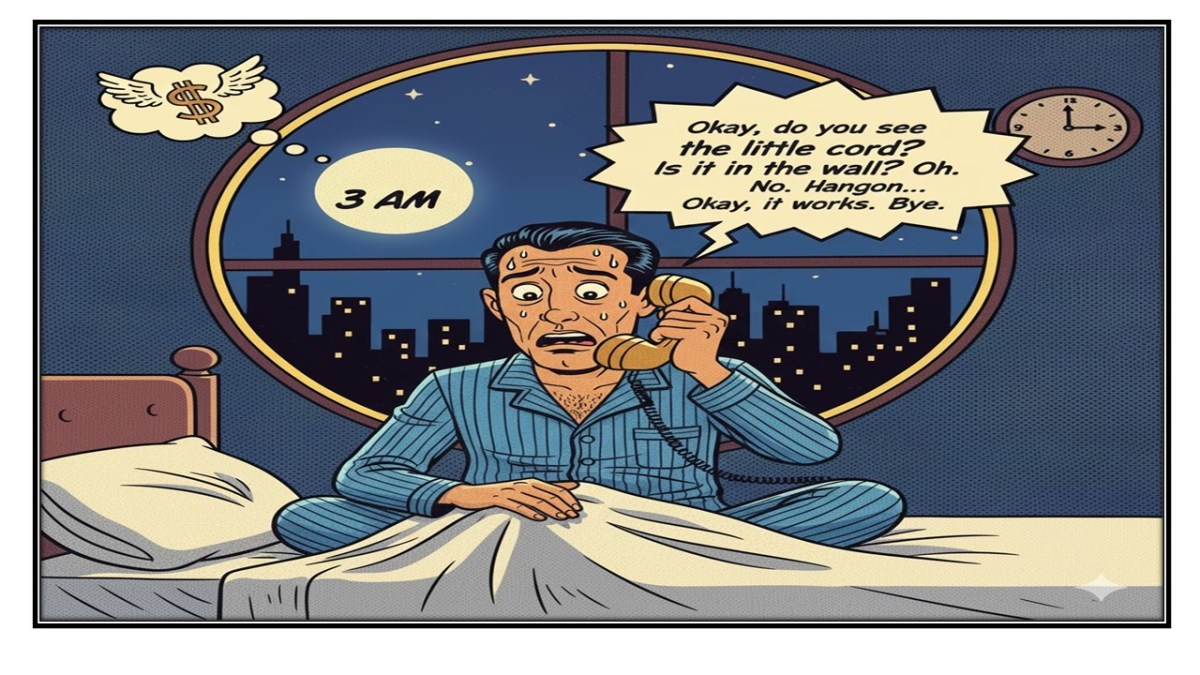
4. The “It’s Not Plugged In” Tech Support

You closed the deal! The equipment arrived! And then your phone rings at 7:00 PM on a Friday.

The machine is broken. I’m losing millions. Fix it.

“Okay, do you see the little cord? Is it in the wall?”

“Oh. No. Hang on… Okay, it works. Bye.”

5. The Residual Nirvana

Then comes the 20th of the month. The deposit hits. The portfolio grew. You see that passive income tick up just enough to cover our car payment.

Suddenly, the hang-ups, the PCI compliance nightmares, and the demanding pain of clients fade away. You smile. You love this job. You are a payments god.

Time to do it all again. Please see the first Jingle of the 2025 season.


The Merchant Services Jingle

(To the tune of “It’s Beginning to Look a Lot Like Christmas”)

“It’s Beginning to Look Like Residuals”

It’s beginning to look like residuals, Everywhere I go, There’s a terminal in the store, By the entrance and the door, And the interchange is getting mighty low!

It’s beginning to look like residuals, Leads are on the floor, But the prettiest sight to see, Is the lack of a monthly fee, On your own front door!

A pair of Sky Tab stations is a POS that’s blazing, Is the wish of Barney and Ben, Devices that talk and a Wi-Fi that walks, And a batch that closes out by ten!

And Mom and Dad can hardly wait, To see that brand new processing rate!

It’s beginning to look like residuals, Everywhere I go, There’s a merchant who wants to switch, Without a single glitch, With the cash flow with dual pricing the money flows, let it flow, let it flow!


And that, my friends, is the cycle. From “Residuals Royalty” back to “Gatekeeper Guy,” we start again each and every day. We know the pain, the triumph, and the soul-crushing terror of a high-risk application.

But seriously, who else gets paid to argue about basis points with a donut shop owner? We’re truly blessed.

Now if you’ll excuse me, I think I just got a notification that a terminal is unplugged at the hibachi restaurant . Wish me luck.

Happy Selling,

David

WWYD Wednesday: Don’t Get Laundered

This week on WWYD Wednesday, we’re diving into a scenario that hits close to home for anyone in the merchant services industry: the tough choice between preserving a long-standing client relationship and maintaining a sustainable business model.

The Scenario

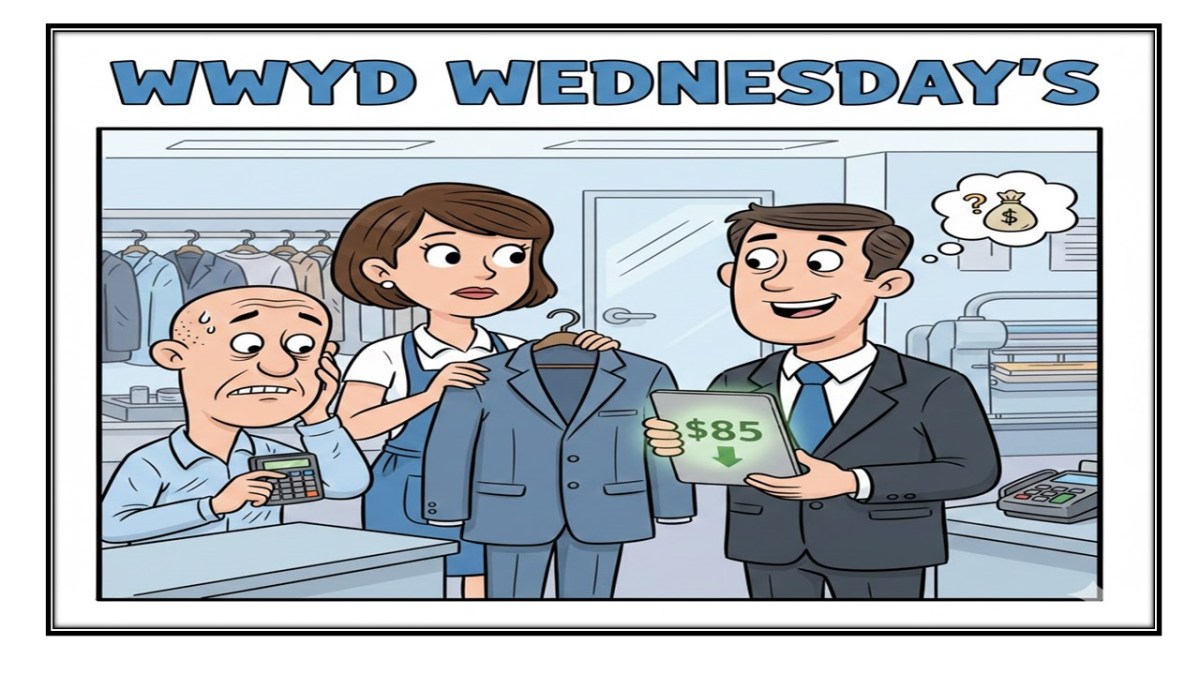
You have a dry cleaning business that has been a loyal client for four years. Their processing has been steady, and their account is currently priced competitively at:

  • Basis Points (BP): 0.25%
  • Per-Transaction Fee: $0.10
  • Your Monthly Residual: Approximately $90

Suddenly, you get a call. The owner is asking for a price reduction, stating that she may switch to a competitor—a new merchant services agent who is the husband of one of her regular dry cleaning customers.

The Competitor’s Promise: He claims he can save her approximately $85 per month.

The Internal Conflict

You instantly run the numbers in your head. With a $90 residual, there is simply no legitimate way for a competitor to provide $85 in savings without either:

  1. Massively undercutting the already thin margin (leaving almost no residual).
  2. Misrepresenting the true costs or future fee structures (a common tactic).

The Reality Check: The existing margin is so tight, that any significant reduction would virtually wipe out your residual and the profit on the account.

What Would You Do? (WWYD)

Here’s where the rubber meets the road. Do you prioritize the long-term relationship, or do you stand your ground on the current fair pricing?

  • Option A: Counter-Offer and Educate. You know the competitor’s claim is mathematically impossible without sacrificing your profit or hiding future fees. You decide to meet with the client, show her the true cost analysis, and offer a small, symbolic reduction.
  • Option B: Stand Your Ground. You politely but firmly explain that the current rate is already a four-year loyalty rate and that the savings promised are unrealistic and likely unsustainable. You wish her well if she chooses to leave.
  • Option C: Match the “Savings.” You reluctantly drop the price to the point where your $90 residual is virtually zero (or even negative) just to keep the client, hoping to make it up later or banking on the competitor’s deal falling through.
  • Option D: The Delay Tactic. You offer to “look into the rates and see what adjustments can be made” and promise to get back to her. Your hope is that by being agreeable and slow-walking the process, the urgency passes and she forgets about the competitor’s offer.

In this situation, the best approach is to re-engage the client, offer value, and educate her on the reality of the merchant services game.

Steps to Take:

  1. Acknowledge and Validate: Start by thanking her for her loyalty and for bringing this to your attention. Acknowledge that saving $85 is attractive.“I completely understand why you’d look into that offer. $85 a month is significant, especially for a small business.”
  2. Request the Proposal: Politely ask her to share the competitor’s written proposal. This is your key to exposing the inevitable hidden costs.“I’m happy to look at your current statement and their new proposal side-by-side. I know your rates are already excellent, and I want to make sure you’re not missing a hidden fee that might pop up later.”
  3. The Loyalty Offer (Small Reduction): Knowing your $90 residual, you can’t give an $85 reduction. But you can offer a small, tangible concession to show goodwill.
    • Reduce the BP to 0.20% and the transaction fee to $0.08. This small tweak retains most of your residual while giving the client a genuine, loyalty-based cut.
    • Value Proposition: Reiterate the four years of dependable service, your direct availability, and the lack of surprise fees.
  4. The Hidden Fee Trap: Focus on the other costs the new agent is likely using to inflate the “savings”:
    • Annual Fees/PCI Fees: Are they waived or lowered in your current contract?
    • Equipment Leases/Fees: Is the new agent locking her into an expensive lease?
    • Interchange Padding: Are they simply hiding the true cost in a tiered or non-clear structure?

Your Takeaway Action

A loyal, long-time client is worth fighting for, but not at the expense of your business. Use this moment to re-establish your value as a transparent partner, not just a rate provider. Show her that the guaranteed, reliable service you provide is worth far more than a likely impossible-to-deliver promise from a brand new agent.

I would like to thank Jim Sauceda for proving this scenario.

So, What do you think? Drop your advice in the comments below!

Happy Selling,

David

The “December Freeze” is in Your Head

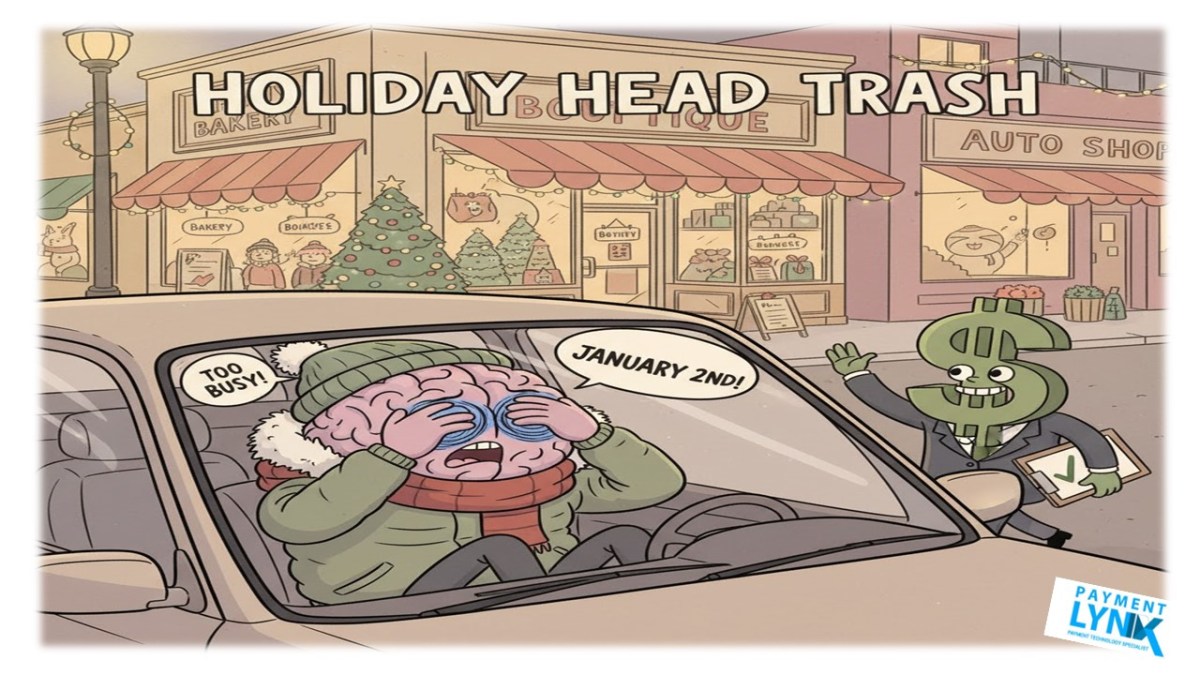
We’ve all been there. It’s the first week of December. You pull into the parking lot of a retail strip center. You look at the bakery, the boutique, and the auto shop.

Then, the voice in your head starts talking:

  • “Look at that line. They are way too busy to talk to me.”
  • “They’re stressed out. If I pitch right now, they’ll kick me out.”
  • “Nobody switches processors in December. I should just wait until January 2nd.”

As sales professionals, we are masters at talking ourselves out of a sale before we even unbuckle our seatbelts. I call this the “Holiday Head Trash.”

The truth? While you are sitting in your car rationalizing why you shouldn’t go in, another agent is walking out with a signed application. Here is how to get out of your head and crush it during the holidays.

1. Flip the Script: High Volume = High Pain

The biggest lie we tell ourselves is that merchants don’t care about processing fees in December because they are focused on sales.

The Reality: Merchants probably care more about fees in December than any other month.

Why? Because this is their highest volume month. If a merchant is running $50,000 in December compared to their usual $20,000, and they are overpaying by 50 basis points, they are literally bleeding cash right now.

When you walk in, you aren’t a distraction; you are a solution to their biggest end-of-year expense.

Mental Shift: You aren’t interrupting their busy season; you are there to ensure they keep more of their profit from it.

2. The “January 1st” Close

The fear of “switching” is what stops merchants (and salespeople) during the holidays. Business owners are terrified that if they switch terminals or POS systems now, something will break, and they can’t process cards during the Christmas rush.

The Solution: Don’t sell the “Now.” Sell the “New Year.”

When you approach a merchant, remove the pressure immediately.

  • Don’t say: “I want to switch you over today.”
  • Do say: “I know you are slammed. I don’t want to touch your equipment right now. Let’s get the paperwork approved and the equipment ordered so that on January 2nd, you start the new year keeping an extra $500 a month. Let’s set you up for 2024.”

This relieves their anxiety about downtime while locking in the deal for you.

3. Gatekeepers are in the Holiday Spirit

Throughout the year, gatekeepers (managers, front desk staff) are trained to block solicitors. However, the dynamic changes during the holidays.

  1. The Decision Maker is Present: In retail and hospitality, the owner is often “on the floor” helping out because it’s so busy. You have direct access you usually don’t have.
  2. The Atmosphere is Lighter: If you walk in with a smile and perhaps a small token (donuts, holiday cards), the resistance is lower.
  3. B2B is Slow: While retail is busy, your B2B clients (wholesalers, manufacturers, professional services) are often winding down. They have more time to talk now than they will in Q1.

4. Use the “Tax Deduction” Angle

This is a massive tool for merchant services sales that gets overlooked.

If you sell equipment (POS systems, terminals) rather than placing them for free, remind the merchant that buying before December 31st allows them to write it off for this tax year.

  • The Pitch: “If you’ve been thinking about upgrading that old POS, let’s do it before the 31st so you can lower your taxable income for this year.”

Summary: Your Daily Holiday Checklist

To keep your head in the game, follow this simple daily protocol:

  • Check your assumptions: Are you assuming they are busy, or do you know they are busy?
  • Lead with empathy: Acknowledge the chaos, then offer the solution for after the chaos.
  • Look for the pain: High volume amplifies the pain of high rates. Point that out.
  • Focus on B2B: If retail is truly inaccessible, pivot to auto repair, dentists, or B2B services where the lobby is empty.

Don’t let the calendar dictate your residuals. The only “freeze” in December is the one you create in our minds. Get out of the car, walk through the door, and help these business owners start the New Year profitable.

Happy Selling,

David

It’s December 1st. The 2026 Countdown Starts NOW.

Happy Monday, and Happy December!

Go ahead and look at the calendar. That’s right—it’s December 1st. The final chapter of the year is officially open, and the countdown has begun.

For many in sales, this day marks the beginning of the “holiday slowdown.” They see a month of distractions, out-of-office replies, and “call me next year” excuses. They ease off the throttle, start thinking about holiday parties, and mentally check out, ready to “hit it hard” on January 2nd.

But for us? This is where we separate ourselves.

This isn’t a slowdown. This is a launchpad.

What you do in the next 31 days doesn’t just determine how you finish 2025—it determines how you start 2026. And the best part? The phone lines are wide open for the most positive conversation you can have all year.

The Power of the “2026 Plan”

This month, we aren’t just selling merchant services. We are selling a stronger 2026 for our merchants.

Think about every single business owner on your prospect list. What are they doing right now, today, on December 1st?

They aren’t just managing holiday inventory. They are sitting at their desks, looking at their 2025 Profit & Loss statements, and asking one critical question: “How do we make more money in 2026?”

They are actively planning. They are setting budgets. They are looking for any and every competitive advantage they can find to make next year better than this one.

And that is precisely why your call isn’t an interruption—it’s an answer.

Make the Calls: You’re Not Selling, You’re Aligning

The “they’re too busy” mindset is a trap. Let’s flip the script.

  • Weak Pitch: “Hi, I know you’re busy, but do you have 15 minutes to review your processing statement?” (Translation: “Please let me interrupt you.”)
  • Strong Pitch: “Hi [Prospect’s Name], it’s [Your Name]. As you’re heads-down building your budgets for 2026, I’m calling to schedule a 15-minute ‘2026 Kick-off’ call. My goal is to show you a plan to add $X,XXX back to your bottom line before Q1 even starts. When do you have time next week or the first week of January?”

See the difference? You’re not asking for their time now. You’re aligning with their number one priority: planning for a profitable new year.

You are the first, most positive step in their 2026 strategy.

Your December Mission: Build the “January Jumpstart”

This month is about a powerful, positive, two-track mission:

  1. Finish 2025 Strong: Re-engage every proposal still on the table. Create urgency by positioning it as a year-end win. “Let’s get this approved before the 31st so you can start 2026 with a fresh, clean P&L and new savings already locked in.”
  2. Build Your 2026 Pipeline: This is the real prize. Every call you make today is a seed planted for January. While your competition is slowly waking up from their holiday break on January 2nd, you’ll be walking into a calendar already full of qualified appointments. You won’t be starting your year; you’ll be launching it.

Your Monday Action Plan

The countdown is on, and the energy is high. Let’s make it happen.

  • Block Your “Power Hours.” The next 31 days are precious. Protect your call time. From 9:00 AM to 11:00 AM, your only goal is to connect with business owners about their 2026 plan.
  • Lead with Positivity. Every call is an opportunity. You have good news to share. You are here to help them start their new year better.
  • Call Your “Fans” First. Call your best existing clients. Thank them for their business in 2025. Ask them, “What is your biggest goal for 2026?” Listen. Then ask how you can help them get there (and who they know that you should be helping, too).

This is it. The final month. The final push. The grand finale.

Every call you make, every meeting you set, every connection you build this month is a deposit in your 2026 bank account.

Let’s get on the phones and build a fantastic new year, starting today.

Have a powerful December 1st.

David