

I was reading an article on sales statistics the other day, and some of the numbers were so compelling I knew I had to share them. It’s easy to get stuck in our routines, but the data provides a clear roadmap of what actually works in today’s competitive market.
So for this week’s Top 10 list, I’ve pulled together the most mind-blowing stats I found that are directly relevant to every merchant services professional.
From the home office in Flowood, Mississippi, here is Friday’s Top 10 countdown of mind-blowing stats that will change the way you sell.
10. 78% of salespeople using social media outsell their peers. (LinkedIn) Social media isn’t just for sharing photos; it’s a powerful prospecting tool. A well-crafted LinkedIn profile showcasing your expertise in payment processing can attract inbound leads and help you connect with local business owners in a way that a cold call simply can’t.
- The Takeaway for us: Connect with local restaurant owners, retailers, and service providers on LinkedIn. Don’t just pitch—share valuable content about cash flow, chargebacks, or new POS technology to establish yourself as an expert.
9. The average sales voicemail response rate is 4.8%. (Sales Insights Lab) That number might seem small, but it’s not zero. While many reps skip the voicemail, leaving a concise, compelling, and personalized message can be a key differentiator, setting you apart from the 95% of competitors who just hang up.
- The Takeaway for us: Don’t just say, “I can save you money.” Leave a message like, “Hi Jane, this is Andy. I have a specific idea on how [Her Business Name] can reduce its chargeback ratio. I’ll send you a quick email about it.” It’s specific and creates intrigue.
8. 42% of buyers are more willing to make a purchase if the sales rep calls back at an agreed-upon time. (Gartner) This seems simple, but it’s a massive trust signal. When you tell a busy merchant, “I’ll call you back on Tuesday at 2 PM,” and you do it exactly on time, you prove you are reliable and respect their schedule—a critical foundation for a long-term business relationship.
- The Takeaway for us: Treat every scheduled follow-up like a guaranteed appointment. Punctuality demonstrates professionalism before you ever talk about rates.
7. 60% of customers say “no” four times before saying “yes.” (Invespcro) Rejection is part of the game, but most salespeople give up too early. The first few “no’s” from a merchant are often reflexive. Persistent, polite, and value-driven follow-up is what separates the average rep from the top earner.
- The Takeaway for us: Don’t get discouraged by the initial “I’m not interested.” Reframe each follow-up as an opportunity to provide new value—share an industry article, a tip about PCI compliance, or a success story from a similar business.
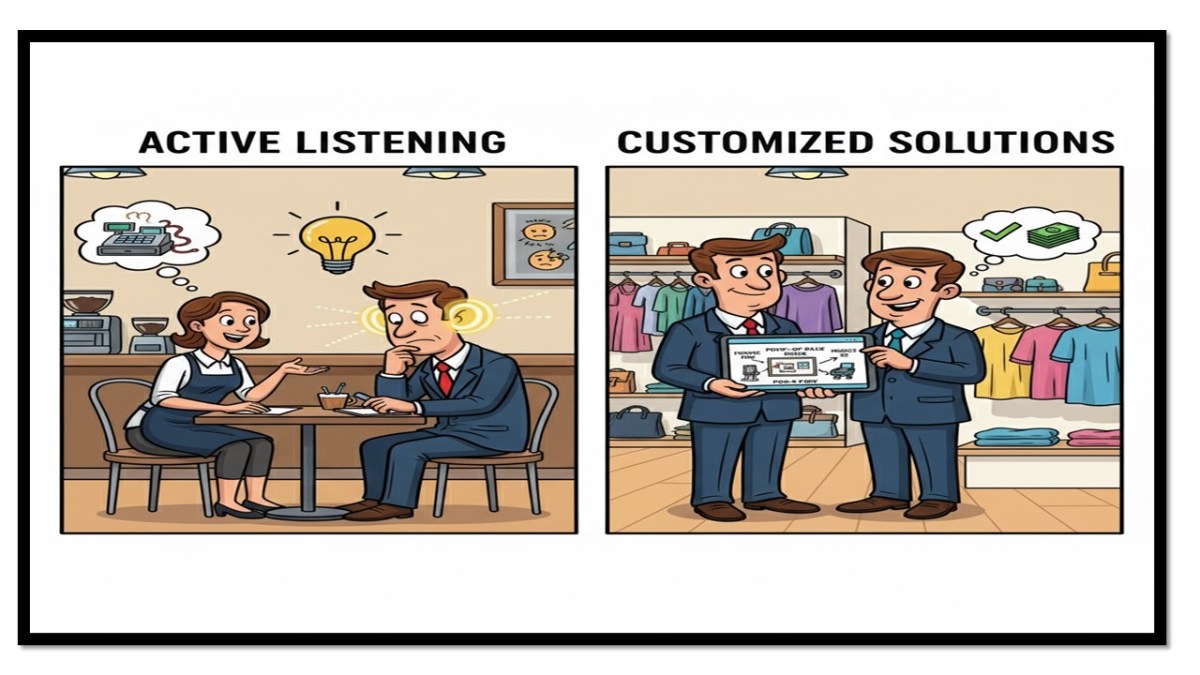
6. The best-performing salespeople have a talk-to-listen ratio of 43:57. (Gong.io) Top closers listen more than they talk. They use questions to uncover a merchant’s true pain points. Are they frustrated with their current provider’s customer service? Is their POS system outdated? You can’t solve their problem if you don’t listen long enough to understand it.
- The Takeaway for us: Your discovery questions are your most powerful tool. Stop leading with your rates and start asking about their business operations. You’ll find the real reasons they need to switch.
5. 80% of sales require five follow-up calls after the initial meeting. (The Brevet Group) The fortune is in the follow-up. A merchant is busy running their business; your proposal is rarely their top priority. A structured, professional follow-up system ensures you stay top-of-mind and guide the prospect through the decision-making process without being pushy.
- The Takeaway for us: Create a follow-up cadence. An email summary after the meeting, a check-in call three days later, a value-add email the next week. Be persistent without being a pest.
4. Nurtured leads make 47% larger purchases than non-nurtured leads. (HubSpot) A merchant who isn’t ready to buy today might be ready in six months. Instead of discarding the lead, put them on a “nurture” sequence. Send them a helpful monthly email or connect on LinkedIn. When the time is right, you’ll be the first person they think of.
- The Takeaway for us: A “no for now” is not a “no forever.” Build a simple system to keep in touch with prospects over the long term. This is how you build a pipeline that pays off for years.
3. 92% of consumers trust referrals from people they know. (Nielsen) One warm referral from a happy client is worth more than 100 cold calls. A referral immediately transfers the trust your current client has in you to the new prospect, shortening the sales cycle and dramatically increasing your closing ratio.
- The Takeaway for us: Make asking for referrals a systematic part of your process. After a client has been successfully processing for 60 days, call them and ask, “Who do you know that could benefit from the same level of service you’re receiving?”
2. Increasing customer retention by just 5% can increase profits by 25% to 95%. (Bain & Company / Harvard Business School) This is the heart of the residual model. The real money in merchant services isn’t just in the new sale; it’s in keeping that merchant happy for years. Exceptional service isn’t a cost—it’s the most profitable activity you can engage in.
- The Takeaway for us: Your job isn’t done when the paperwork is signed. Proactively check in with your clients. Help them with service issues. Be their advocate. This is how you build a secure, long-term residual income stream.
And the #1 Most Mind-Blowing Stat is…
1. 50% of qualified leads are not ready to buy immediately. (Gleanster Research) This means that half of the business owners you talk to who are a perfect fit for your service will not buy on the first, second, or even third conversation. Sales is a game of timing. Success is determined by the salesperson who has the patience and the process to be there when the timing is right.
- The Takeaway for us: Your pipeline is your lifeline. Stop focusing only on this month’s sales and start building relationships that will close next quarter and next year. The rep who masters the art of the long-term follow-up will dominate the market.
The data tells a clear story: Today’s sales landscape rewards persistence, personalization, and genuine consultation. In an industry like ours, where every competitor can talk about rates, these statistics offer a different playbook for success.
They show that the real advantage is found in the follow-up, in listening more than you speak, and in treating every merchant relationship as a long-term asset, not a one-time transaction. This is how you build a bulletproof book of business founded on trust and sustained by residual income.
Our challenge to you is to pick just one of these stats and make it your focus. Which statistic resonated most with you, and what’s one small change you can make today to put it into practice?
Let us know in the comments below.
Have a great weekend,
David




 Payment Lynx Daily