
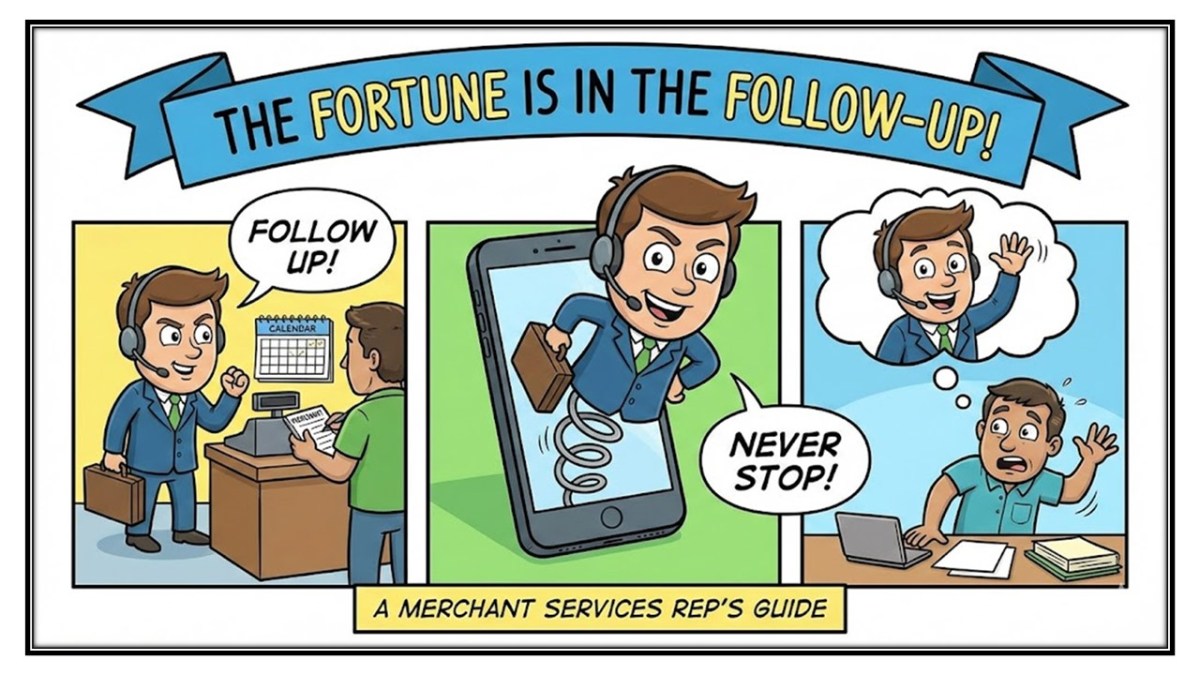
I recently saw a thread in a Facebook group for ISOs and agents where the “Never Stop” mentality was on full display. When someone posted and ask, asked, how often to follow up and when to quit, and the veterans didn’t hold back.
Here are just a few of their responses. Michael Nardy noted: “I stop when the owner has died or sold the company. Then I start with the new owner or his next of kin. This is sales!”
The F.U. Money/the Fortune is in the Follow-Up
Steven Morris hit the nail on the head in that same thread. He reminded us that this isn’t just about being annoying—it’s about the fundamental math of success: “Never stop following up—The fortune is ALWAYS in the follow-up. Consistency breeds discipline and discipline breeds results. I have merchants that have taken me years to sign up.”
The Rite of Passage: The Story of “NO”
Every single veteran in this industry has a story. We’ve all been told “NO” time and time again. We’ve been hung up on, walked out on, and ignored for months. If you’re feeling discouraged because a prospect shot you down, remember: you’re in good company.
The difference between the top producers and the ones who wash out in six months isn’t the number of “Yeses” they get—it’s how they handle the “Nos.” In merchant services, a “No” is rarely a final destination; it’s just a hurdle on the track.
When “No” Doesn’t Mean “No”
We’ve all dealt with the “tough” prospects. You know the ones—the merchants who act like you’re ruining their day just by existing. One agent in the group shared just how far persistence can go: “You keep following up and asking different questions until they tell you to stop. But I have had people literally tell me that they would rather eat their own sh*t—and I’ve switched them. You just have to do what everybody else isn’t.”
This is the reality of the street. Merchants are bombarded by reps. They use hostility as a defense mechanism to see who is serious and who will fold. When you keep showing up with value and a professional attitude despite their resistance, you earn a level of respect that a “one-and-done” rep will never touch.
The Follow-Up Cadence: How to Stay Disciplined
To do “what everybody else isn’t,” you need a system. Here is how to maintain that discipline without burning out.
1. The “Hot” Phase (Days 1–10)
If you just dropped off a proposal, the clock is ticking.
- Day 1: Immediate “Thank you” email/text.
- Day 3: Follow-up call to see if they’ve reviewed the numbers.
- Day 7: Send a case study or a testimonial from a similar business.
2. The “Nurture” Phase (Months 1–6)
If they haven’t signed yet, stay top-of-mind.
- Frequency: Every 3 to 4 weeks.
- The Strategy: Don’t just ask “Are you ready?” Send them something useful, like a news clip about new surcharge laws or local business trends.
3. The “Long Game” (Year 1 and Beyond)
This is where the Steven Morris “years to sign” philosophy pays off.
- Frequency: Every quarter.
- The Strategy: Standard check-ins. Merchant contracts end, rates creep up, and bad customer service from their current provider will eventually happen. You need to be the person standing there when they finally snap.
The Golden Rule – Answer the Phone!
Persistence is useless if you aren’t reachable. The final piece of the “Never Stop” puzzle is being the most reliable person in their contact list.
As the thread pointed out: “When they call, you have to answer!” Most reps are great at the hunt but terrible at the service. If a merchant finally decides to switch after two years of you chasing them, and you don’t pick up that call, you’ve just handed that “fortune” to someone else.
the “No” you get today isn’t a “No” forever—it’s just a “Not right now.” The rep who wins is rarely the one with the lowest rate; it’s the one who was still standing there when the merchant was finally ready to switch.
Stay persistent. Stay disciplined. And never, ever stop.
Happy Selling,
David

 Payment Lynx Daily