
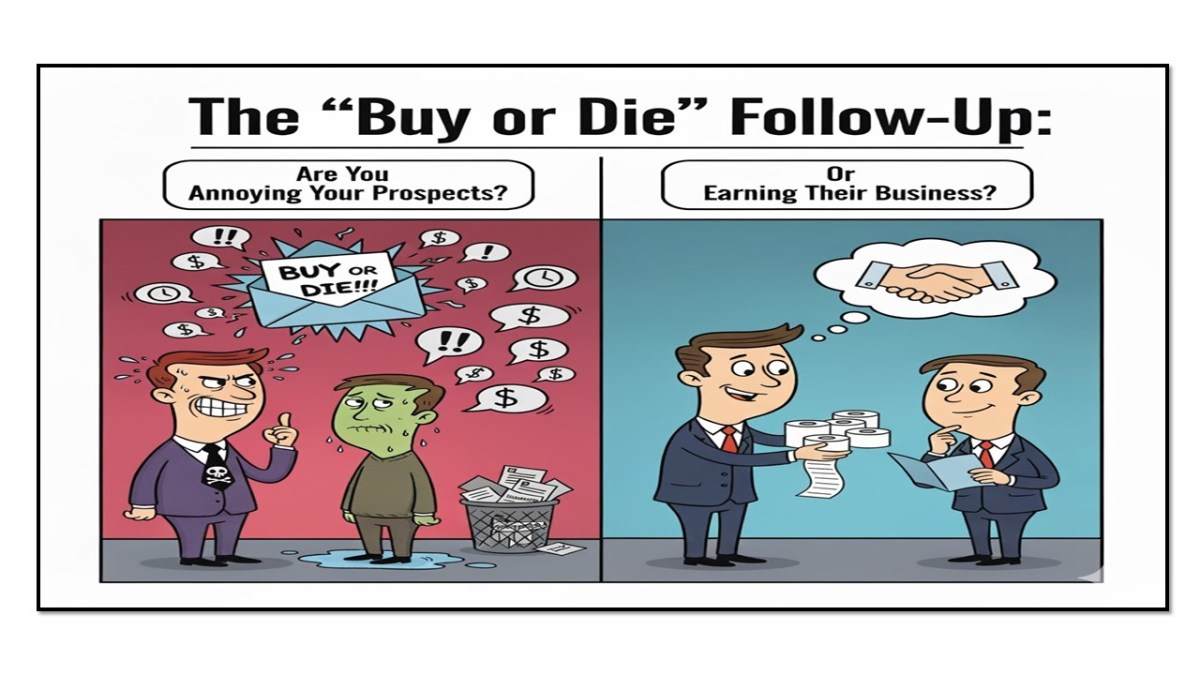
We’ve all heard the old-school sales adage from a grizzled veteran manager: “How many times do you follow up? You follow up until they buy or die!”
It sounds intense, maybe even a little crazy. But there’s a core truth to it that separates the top 1% from everyone else. The data doesn’t lie: something like 80% of sales require at least five follow-ups, yet nearly half of all salespeople quit after just one.
The problem is, nobody tells you how to follow up five, eight, or twelve times without becoming that person the business owner ducks in the back to avoid.
If you feel like most of your day is spent chasing ghosts and sending “just checking in” emails that go straight to the trash, you’re not alone. But what if we could reframe the follow-up? What if, instead of being a pest, you became a valuable resource they were happy to see?
The Fatal Flaw of “Just Checking In”
Let’s be honest. “Just checking in” is the weakest phrase in sales. It’s a passive, zero-value statement that screams, “I have nothing useful to say, but I want to remind you to give me money.”
Business owners are drowning in tasks. They’re managing inventory, scheduling staff, putting out fires, and trying to turn a profit. They don’t have the time or mental energy for a conversation that doesn’t solve a problem for them. Your follow-up needs a purpose beyond simply reminding them you exist.
The Game-Changer: A Follow-Up with a Trojan Horse
I’ve discovered one tactic that has converted more accounts for me than anything else. It’s simple, it’s brilliant, and it works.
I pivot the conversation right when I feel the owner losing interest in my processing pitch. As I’m getting ready to leave, I’ll say:
“One more thing before I go, where do you get your terminal/POS paper from?”
They’ll usually name a big box store or their current provider. Then I hit them with the offer:
“If I can sell you the paper and bring it to you for cheaper than you’re getting it now, would you be willing to give that a try?”
About 80% of the time, the answer is “Yes.” It’s a no-brainer for them—they need the product, and I’m offering it for less, with free delivery. I keep a small case of the most common paper sizes in my truck, so I can walk right back in with 4-5 rolls on the spot. I’ve just made them a customer, solved a minor annoyance, saved them money, and, most importantly, I get their cell phone number for the receipt and future orders.
Why is this so effective?
- It Changes the Dynamic: You’re no longer just a “merchant services guy.” You are now a helpful vendor who is already saving them money. You’ve provided tangible value.
- It Builds Micro-Trust: You did what you said you would do (save them money), which is a small-scale proof of concept for your larger promise of saving them money on processing.
- It Buys You a Reason to Return: The next follow-up isn’t a cold check-in. It’s a warm, “Hey Joe, just wanted to see if you needed any more paper rolls this week?” You have a legitimate, service-oriented reason to talk to them again.
More Value-Driven Follow-Up Ideas to Close the Deal
That paper-roll trick is my ace in the hole, but the principle behind it can be applied in many ways. Always have a reason to contact a prospect that benefits them, not you.
Here are a few more ideas to add to your arsenal:
- The Industry Intel Drop: Keep an eye on news relevant to your prospect’s industry. Did a new law about credit card surcharging pass? Is there a new security standard they should know about? Stop by or send a text with a link and a note: “Hey Mike, saw this article about chargebacks in the auto repair industry and thought of you. Just wanted to make sure you were aware.” This positions you as a consultant.
- The Social Media Assist: Follow your top prospects on social media. When they post about a special or an event, share it on your own page. Better yet, stop in and buy the special, take a picture, and post a glowing review tagging their business. A text that says, “That new lunch combo is incredible! Was happy to share it with my network.” builds a genuine relationship money can’t buy.
- The Technology Tip: Notice they’re using an older terminal that can’t accept contactless payments? Find a short article or video on the benefits of Tap-to-Pay (speed, security, customer preference) and email it over. “Hi Mike, I noticed you guys were super busy at lunch today and thought this might be interesting. Tap-to-Pay can really speed up your line.”
- The Competitor Observation: Be observant and helpful, not sneaky. If you see a non-competing business nearby doing something innovative, share it. “Was just at the bakery down the street and saw they’re using QR codes on tables for easy re-ordering. Really clever idea. Is that something you’ve ever considered for your patio?”
- The Connector: You meet a ton of business owners. Use that network! Introduce your restaurant prospect to a local print shop owner you work with. “Hey Jim, I was just talking to Hailey over at The Print Shop and she was looking for a place to host their company party. I told her she had to check you guys out.” Being a source of new business for them is the ultimate value-add.
Final Thoughts: Serve Until They Sign
So, how many times do you follow up?
You follow up for as long as you can provide value.
Shift your mindset from “Buy or Die” to “Serve Until They Sign.” Your job isn’t to relentlessly hound a prospect. It’s to relentlessly and creatively demonstrate your value. When you consistently show up to help, the conversation about switching their processing becomes the next logical step in an already profitable relationship.
The sale isn’t made in the first meeting. It’s earned in the follow-up.
Happy Selling,
David

 Payment Lynx Daily