
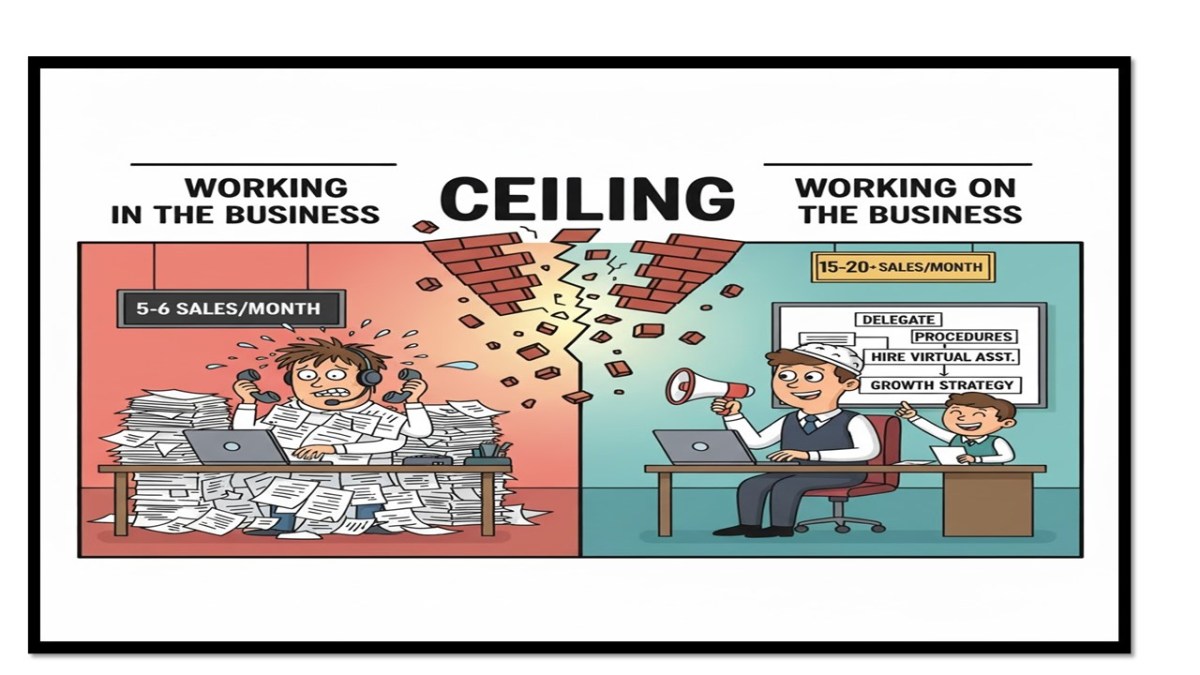
We’ve all been there. You’re in a rhythm. You’re prospecting, running appointments, closing deals, and putting out fires. You’re consistently hitting a number—maybe it’s 10, 16, or 20 deals a month. You’re making good money, but you’ve hit a ceiling. No matter how hard you grind, you can’t seem to break through that plateau.
The problem isn’t your work ethic. The problem is that you’re the most valuable employee in your own business. To scale, you have to start thinking like the CEO.
This requires understanding one crucial concept: the difference between working IN your business and working ON your business.
Working IN Your Business: The Daily Grind
Working IN your business is the core of what you do every day. It’s the “job” part of being an independent sales professional.
- Prospecting and cold calling
- Running discovery meetings
- Analyzing merchant statements
- Closing deals and getting signatures
- Submitting paperwork
- Handling terminal installations and customer service calls
These tasks pay the bills. They are essential. But by themselves, they will only take you so far. There are only so many hours in a day, and you can’t clone yourself… or can you?
Working ON Your Business: The CEO Mindset
Working ON your business is stepping back from the day-to-day grind to build a system—a machine that can operate even when you’re not personally turning every gear. This is where you put on your manager hat and architect your growth. It involves asking strategic questions:
- How can I streamline my process?
- What tasks can I delegate?
- How can I create repeatable procedures for success?
- What is the long-term structure of my business?
If you’re stuck at that 5-6 deal ceiling, it’s because you’re spending 100% of your time working IN the business. The path to 10, 15, or more deals a month isn’t working harder; it’s working smarter.
Your 30-Minute Growth Strategy
You don’t need to stop selling. Keep closing those those 5-6 deals. But it’s time to reclaim a small piece of your day for CEO-level thinking.
The Challenge: For the next month, block off the first 30-60 minutes of your workday to work ON your business. Do it when your mind is fresh, before the daily chaos begins. The mundane tasks of prospecting and paperwork can be done on autopilot later. Use this golden hour to think.
Ask yourself:
- What tasks could I pay someone $15/hour to do? (Think list building, data entry, scheduling installations, follow-up “thank you” calls).
- Can I create a procedure for this? What are the exact steps for onboarding a new client, from signed app to a happy, processing merchant? Write them down.
- What could I delegate to free up my selling time? Imagine offloading the 5-10 hours a week you spend on paperwork and administrative tasks. What could you do with that extra time?
This is what working ON your business looks like. It’s the foundation for your first hire.
Navigating the Pitfalls of Your First Hire
Hiring your first assistant (virtual or in-person, using services like Upwork or Fiverr) is terrifying and exhilarating. Here’s what to expect and how to handle it.
1. They WILL Make Mistakes. Let’s get this out of the way: your first hire will make every mistake you can imagine, and some you can’t. They will mess up paperwork. They will call the wrong person. It’s going to happen. Embrace it. Mistakes are the price of growth and learning. Don’t let the fear of imperfection keep you trapped doing everything yourself.
2. Delegate Wisely. Your core skill is closing deals. DO NOT delegate closing to a new, inexperienced hire. That’s like a surgeon asking a rookie to perform the main operation. Instead, have them handle the tasks around the sale:
- Pre-Sale: Building lead lists, scrubbing data, some initial appointment setting (with a script).
- Post-Sale: Completing application paperwork after you get the signature, scheduling the installation, making the first follow-up call to ensure the merchant is happy.
You want to hire someone you can train and mold. Pay a fair wage ($25k-$35k to start) and increase their compensation as they become more valuable to your operation.
3. The Resentment Trap. You will inevitably feel a flash of resentment. You’ll think, “Why am I spending two hours teaching them how to do something I could do in 15 minutes?” This is a lie your brain tells you to keep you “safe” in your comfort zone.
Reframe your thinking: You are not losing two hours; you are investing two hours to buy back hundreds of hours in the future. Once you train someone to handle that task, you never have to do it again. Create a procedure (a simple document or a quick screen-recording video) during the training, and delegating to the next person becomes even easier.
4. Communication is Oxygen. Lack of communication will kill your growth faster than anything else. Your business cannot rise above your leadership. Without clear, consistent communication, you haven’t hired a team member; you’ve created a new, expensive problem. Set up regular check-ins, provide clear instructions, and create a culture where they feel comfortable asking questions.
Your Path Forward
Leverage your “laziness”—that desire to not do the repetitive, boring tasks anymore. Convert that feeling into fuel. Use 30 minutes each day to build the systems that will free you.
Continue to wear your employee hat and be the best salesperson in your company. But also put on your manager hat and become its best leader. That is how you break the plateau and build a true merchant services business, not just a job.
Happy Selling,
David

 Payment Lynx Daily