
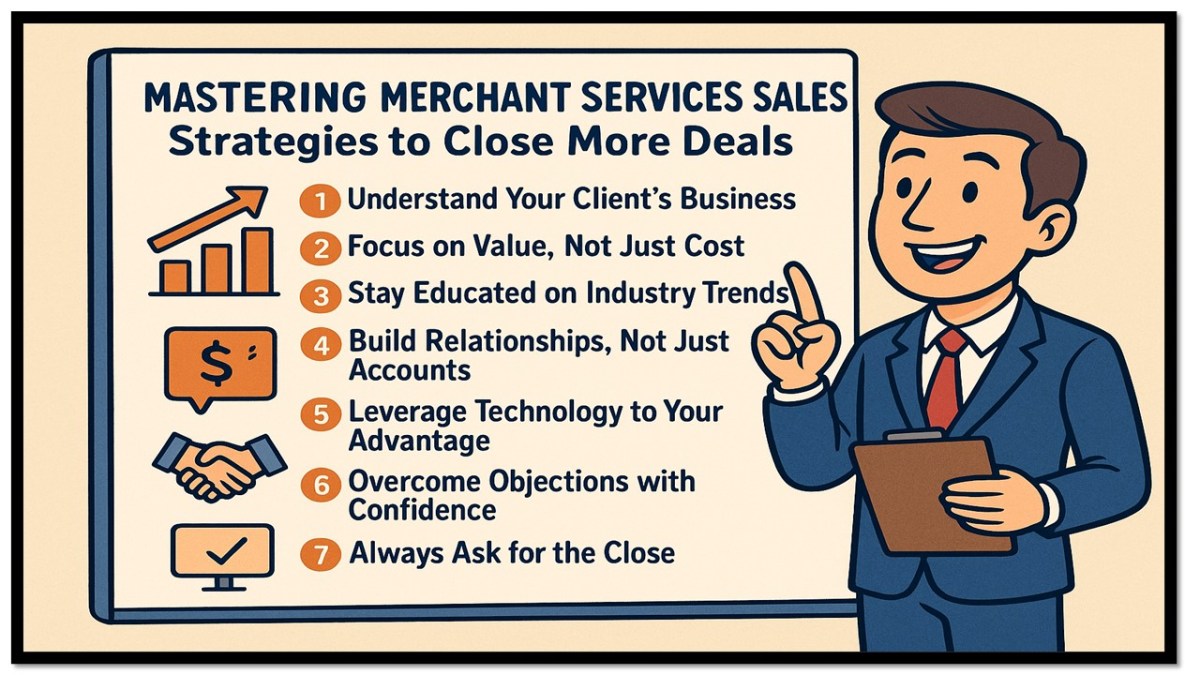
If you’re in the merchant services industry, you already know that selling isn’t just about products—it’s about solving problems. Every business you approach has unique payment processing needs, and the more you understand those needs, the more successful you’ll be. Here’s how top merchant services salespeople consistently close deals and build long-term client relationships.
1. Understand Your Client’s Business
It’s tempting to pitch the latest technology or dual pricing right away, but the most successful salespeople start by listening. Learn about your prospect’s industry, customer base, and pain points. Are they struggling with high processing fees? Complicated POS systems? When you understand the challenges your client faces, you can tailor your solution to directly meet their needs.
2. Focus on Value, Not Just Cost
Many businesses compare payment processors solely on fees, but value goes far beyond the bottom line. Can your solution simplify reporting, provide next-day or same-day funding, or improve customer experience? Demonstrating how your services save time, reduce headaches, and increase revenue will position you as a trusted advisor rather than just another salesperson.
3. Stay Educated on Industry Trends
The payments industry moves fast. From working with ISVs to contactless payments and cash discount programs, staying informed will make your conversations with clients more credible and compelling. Attend webinars, read industry blogs, and follow thought leaders—knowledge is a competitive advantage.
4. Build Relationships, Not Just Accounts
Merchant services is a long-term game. The businesses you work with today could refer others tomorrow if you provide excellent service. Check in regularly, offer tips, and be available when they have questions. A strong relationship today can lead to repeat business and referrals down the line.
5. Leverage Technology to Your Advantage
Sales tools, CRM systems, and automated marketing platforms can streamline your workflow and help you follow up more effectively. Track your interactions, schedule reminders, and maintain a pipeline that ensures no prospect falls through the cracks. Technology can free you to focus on what really matters: connecting with clients and closing deals.
6. Overcome Objections with Confidence
Objections are opportunities in disguise. Whether it’s concerns about cost, agreements, or switching providers, the key is to listen, empathize, and respond with solutions. Anticipate common objections and prepare answers that highlight the benefits of your services while addressing their concerns.
7. Always Ask for the Close
Many salespeople hesitate to ask for the sale, but confidence is crucial. After presenting the benefits and addressing objections, ask for the client’s business clearly and confidently. If they’re ready, make the onboarding process simple and seamless.
Selling merchant services is more than just moving agreements—it’s about providing value, building trust, and creating long-term partnerships. By understanding your client, staying informed, and using the right tools, you can not only hit your sales goals but exceed them.
Remember: the businesses you serve rely on you to make payments simple, fast, and efficient. When you focus on helping them succeed, your own success will follow.
Happy Selling,
David

 Payment Lynx Daily