
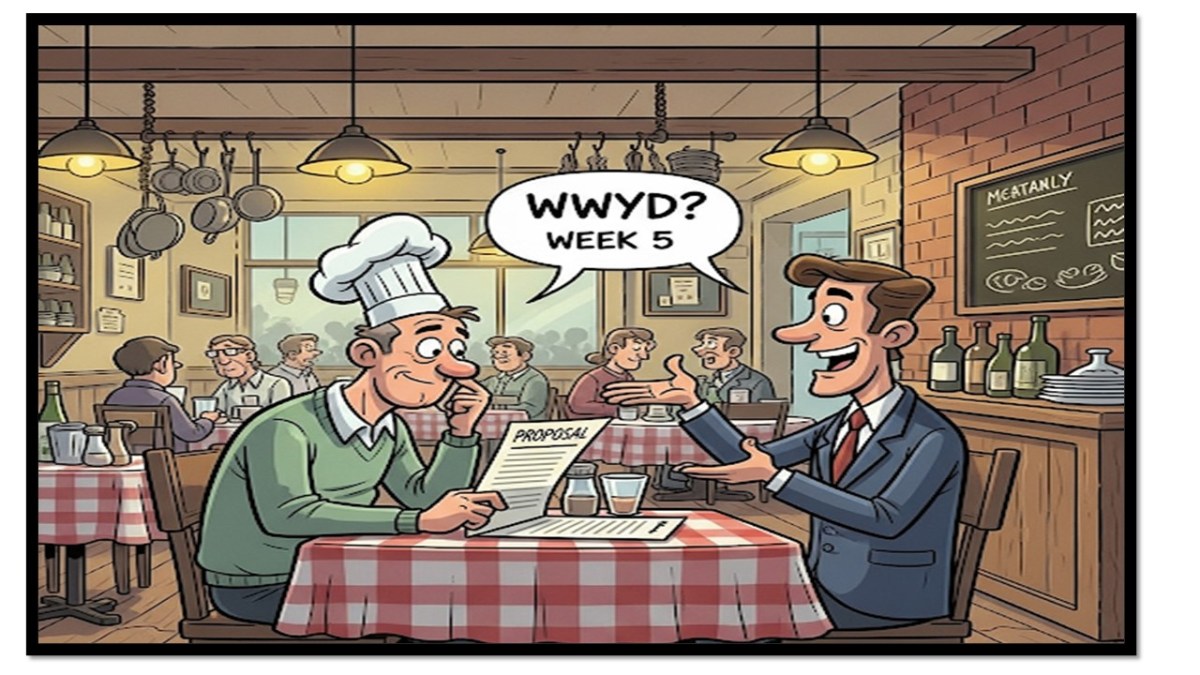
It’s Wednesday and time for another WWYD scenario. Let’s set the scene. You’re sitting across from the owner of a local restaurant. You spent hours meticulously combing through their merchant statements, decoding the junk fees and Interchange downgrades.
The moment of truth arrives. You slide the proposal across the table. It’s clean, it’s transparent, and the bottom line is undeniable: you’re going to save them $600 a month. That’s over $7,200 a year that goes straight back into their business.
You’ve got this in the bag.
And then you hear the five words that make every top producer’s stomach drop:
“My rep is a friend.”
The owner leans back, a conflicted look on their face. “Wow, that’s… a lot more than I thought we could save,” they admit. “But look, my current guy, Andy… he’s my son’s Little League coach. We golf together. I can’t just fire my friend.”
The emotional brick wall. Logic and numbers seem to bounce right off it. This isn’t a sales objection; it’s a relationship dilemma. So, what would you do?
The Wrong Moves That Kill the Deal
At this moment, your reaction is critical. A knee-jerk response will not only lose you the deal but also burn the bridge for any future opportunities. Avoid these common mistakes:
- Attacking the “Friend”: Saying, “Well, your ‘friend’ Andy is charging you $7,200 a year for that friendship!” might be true, but it’s an attack on the owner’s judgment. You make them feel foolish and they will immediately become defensive.
- Aggressively Hammering the Numbers: Pushing back with “But it’s seven thousand dollars! How can you say no to that?” shows you’re not listening. You’re dismissing their stated value (loyalty) in favor of your own (money), which creates a disconnect.
- Giving Up Too Easily: Simply packing up your bag and saying, “Okay, I understand. Here’s my card if you change your mind,” is a waste of all the hard work you just did. This objection isn’t a “no”—it’s a cry for a better way to handle a difficult situation.
The Pro Move: Turn the Objection into Your Ultimate Closing Tool
A seasoned pro doesn’t see this as a dead end. They see it as an opportunity to become a trusted consultant. The goal is to shift from being a salesperson to being a problem-solver.
Here’s the play-by-play.
Step 1: Validate and Empathize
First, disarm them. Lean in and agree with them. Let them know you are on their side.
Say this: “I completely understand, and I respect that. Business is built on relationships, and it sounds like you have a good one with Andy. I would never ask you to damage a friendship over this.”
You’ve just moved from the other side of the table to their side. You’re not the enemy; you’re a peer who gets it.
Step 2: Reframe the Decision
Now, you need to pivot. This isn’t about you vs. Andy. It’s about the health of their business. You are going to empower them to use your proposal for their own good.
Say this: “You know, you’re in a tough spot. Let me suggest a way you can handle this without any conflict. Take my proposal to Andy.“ … Pause for a beat and let that sink in.
Step 3: Provide the Path Forward
This is where you give them the script and outline a no-lose scenario for their business.
Continue with: “As your friend, Andy should have one of two reactions. He’ll either be grateful you brought this to him and immediately match the offer. If he does that, you win! You get to keep your friend as your rep and still save $7,200 a year.
Or, he’ll look at it and say he can’t match it. In that case, as a true friend, he should understand that you have to make a smart business decision. A good friend wouldn’t expect you to light $600 on fire every month for their benefit.”
Why This Works:
This strategy is powerful because it transforms the entire dynamic:
- You’re No Longer the Antagonist: The “conflict” is no longer between you and the owner. It’s between the service ole’ Andy is providing and the documented proof that it could be better.
- You Become a Consultant: You’ve provided a clear, professional, and respectful way for the owner to handle an awkward conversation. You just gave them a solution to their relationship problem, not just their pricing problem.
- It Puts the Onus on the Competitor: You force the “golf buddy” to justify his high prices. If he’s a true professional, he’ll compete. If he gets defensive or makes excuses, he reveals that the relationship may be more valuable to him than it is to the client.
The next time you’re faced with the “friendship” objection, don’t retreat. See it for what it is: a test of your ability to solve a human problem, not just a financial one. Validate their loyalty, empower them with a plan, and you’ll be surprised how often you either win the deal or get a call a month later after their friend fails to deliver.
So what would you do? Would you choose one of my options? Let me know.
Happy Selling,
David

 Payment Lynx Daily