
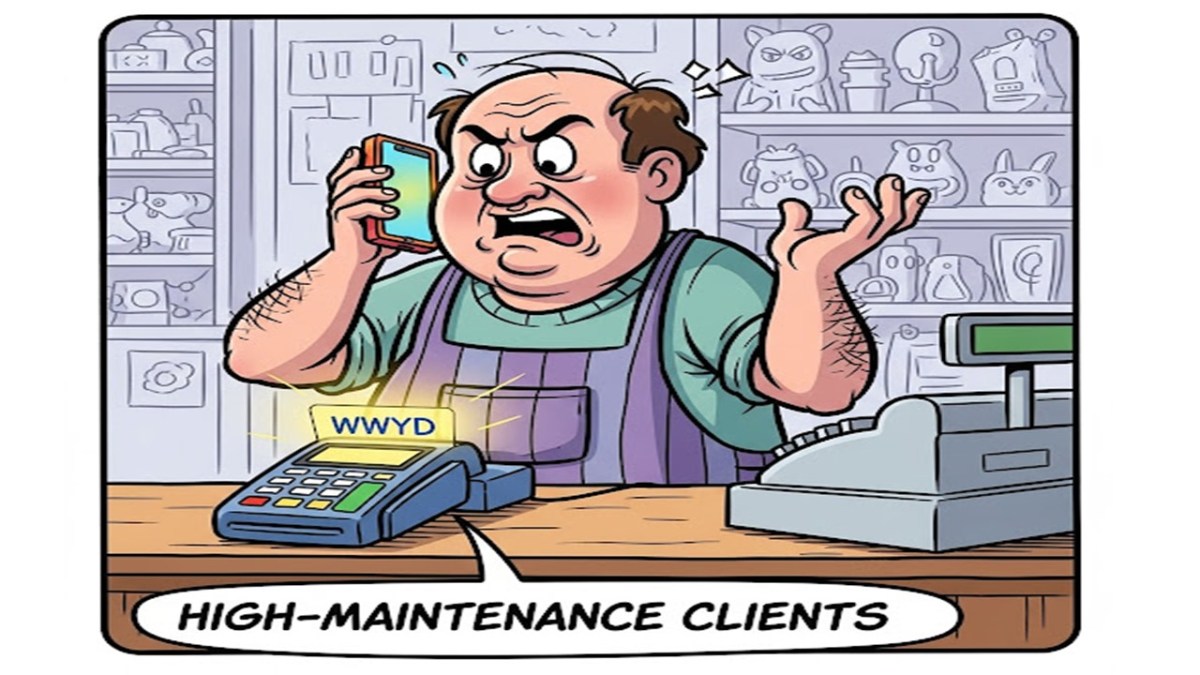
The phone rings, and your stomach sinks. You see the caller ID: it’s that client. The restaurant owner. Before you even say hello, you’re bracing yourself. Is their internet down? Did a server forget to adjust a tip before batching out? Is the printer ribbon running low?
Whatever it is, you know one thing for certain: somehow, it’s going to be your fault.
If this scenario sounds familiar, you’re not alone. Every service provider, whether you’re in payment processing, IT support, or marketing, has encountered a “demanding” or “nit-picking” client. They consume a disproportionate amount of your time and emotional energy, blurring the lines of your responsibilities and leaving you feeling drained.
But you don’t have to be at their mercy. Managing these relationships is a skill, and by shifting your approach from reactive to proactive, you can regain control of your time and your sanity.
Step 1: Understand the “Why” Behind the “What”
First, take a breath and try to see things from their perspective. A difficult client is rarely being difficult for the sake of it. Their behavior often stems from a few key places:
- Stress and Pressure: A restaurant owner, for example, operates in a high-stress, low-margin industry. When technology fails, it directly impacts their ability to serve customers and make money. Their panic gets directed at the first person they think can help.
- Lack of Technical Knowledge: To them, the credit card terminal, the POS system, the Wi-Fi, and the computer are all part of one big, mysterious “tech” box. You are their “tech person,” so in their mind, you are responsible for the entire box.
- A Need for Control: When things go wrong, they feel a loss of control over their own business. Nit-picking and frequent calls are sometimes a way to re-assert that control.
Understanding this doesn’t excuse their behavior, but it does help you depersonalize the situation. Their frustration isn’t about you; it’s about their own operational stress.
Step 2: Set Boundaries with Fences, Not Walls
You can’t build a wall around yourself, but you absolutely can and should build strong fences. This is about clearly and professionally defining the scope of your services.
- Clarify Your Role (and What It Isn’t): Your contract or Service Level Agreement (SLA) is your best friend. It’s time to review it. Does it clearly state what you support? If not, it’s time for an addendum or a clarifying conversation.
- Example Script: “Hi Joe, I want to make sure I’m giving you the best possible service. To do that, I think it would be helpful to clarify which issues I can resolve directly. My services cover the payment processing terminal and software. For issues like your internet service being down, your best and fastest point of contact is your Internet Service Provider. Here is their support number, I’d recommend keeping it handy.”
- Define Communication Channels: Is every little question a phone call? Redirect them. Let them know the best way to get support.
- Example Script: “To ensure I can track and resolve your issues efficiently, the best way to reach me for non-emergency questions is by emailing support@mycompany.com. This creates a ticket and ensures nothing gets missed. For system-down emergencies, of course, continue to call my direct line.”
Step 3: Educate and Empower
A client who calls for everything often does so because they don’t know what else to do. By empowering them and their staff, you can deflect a huge number of these calls.
- Create a “First-Aid” Troubleshooting Guide: Draft a simple, one-page laminated document they can keep near the terminal.
- Problem: Internet is down. First Step: Reboot the router (show a picture). Second Step: Call your Internet Provider at [Number].
- Problem: Tips not adjusted on a closed batch. Solution: This action must be completed before batching out. Provide a simple end-of-day checklist for their staff.
- Conduct a 15-30 Minute Training Session: Offer a brief training for their manager or key staff on how to handle the top 2-3 most common issues they call you about. Investing a little time in training now will save you countless hours later.
Step 4: The Proactive Check-In
Instead of waiting for their next frantic call, beat them to the punch. Schedule a regular visit once a week or every other week to see how things are going.
This accomplishes two things:
- It gives them time to bring up all their “little” issues at once, preventing a dozen random calls.
- It makes them feel valued and heard, changing the dynamic from “You only call me when there’s a problem” to “You are a proactive partner in my business.”
When Is It Time to Walk Away?
Sometimes, despite your best efforts, a client is simply not worth the cost. Calculate the true cost of the relationship: the hours you spend on support, the emotional stress, and the opportunity cost of not being able to serve your great clients.
If a client is abusive, constantly disregards your boundaries, or is simply unprofitable, it’s okay to professionally end the relationship. Give them a fair notice period to find a new provider and assist in a smooth transition. Your business, and your mental health, will be better for it.
What Would You Do? Share Your Wisdom!
These strategies provide a framework for managing difficult client relationships, but we know the real wisdom often lies in shared experience. The community of business owners and service providers reading this has a wealth of knowledge.
- Have you faced a similar situation with a high-maintenance client? How did you resolve it?
- What’s one tactic or phrase you’ve used that successfully reset expectations with a demanding customer?
- When did you know it was time to “fire” a client?
Ultimately, dealing with a demanding merchant is a test of your own processes and professionalism. By setting clear boundaries, educating your client, and managing the relationship proactively, you can transform a source of stress into a manageable—and still profitable—partnership.
Share your story in the comments below! Your experience could be the exact solution another professional needs to hear.
Happy Selling,
David

 Payment Lynx Daily