
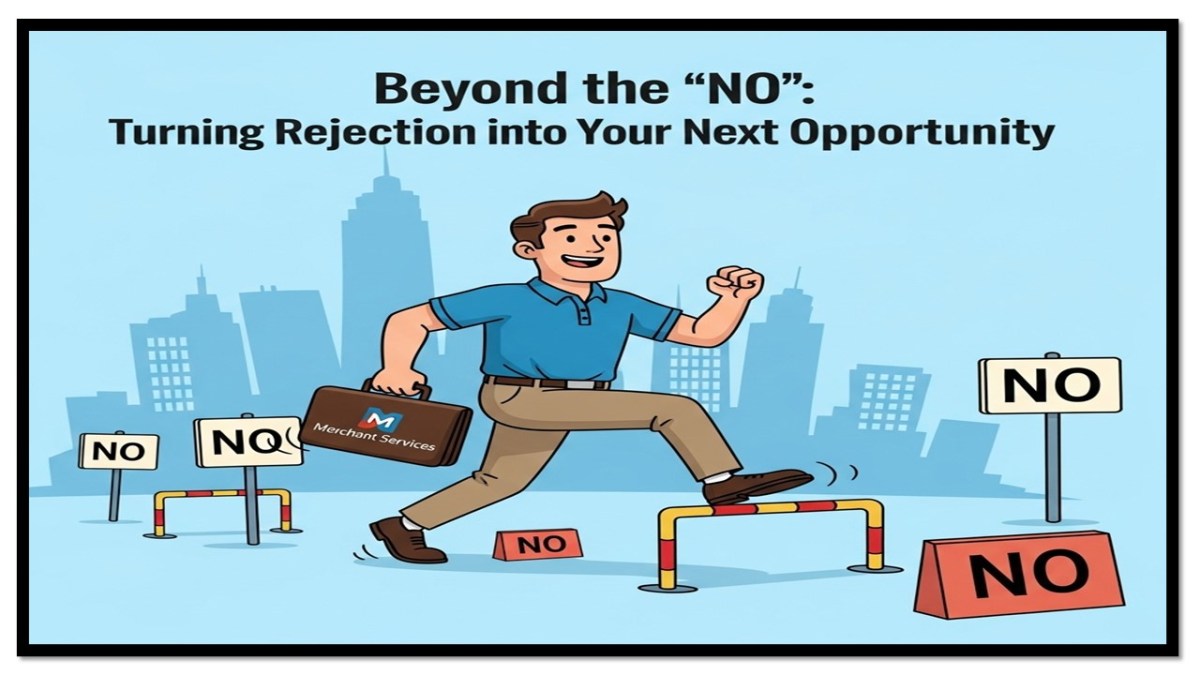
Let’s be honest. In merchant services sales, you hear “NO” a lot. Maybe it’s a polite “not interested,” a firm “we’re happy with our current provider,” or even a frustrating “call me back later” that never materializes. Rejection is an undeniable part of the game.
But what if every “NO” wasn’t a dead end, but a stepping stone? What if each dismissal held a hidden lesson, a tweak for your strategy, or even an unlikely path to your next “YES”?
For salespeople, turning rejection into opportunity isn’t just a mindset; it’s a critical skill for long-term success and sustained motivation.
Here’s how to move beyond the sting of rejection and leverage it for your next win:
1. The Immediate Aftermath: Don’t Dwell, Do Debrief
When a “NO” hits, it’s natural to feel a pang of disappointment. Acknowledge it, but don’t let it fester. Instead, treat it like a valuable piece of data.
- Take a Breather (Briefly): Step away for 5 minutes. Grab a drink, stretch, or listen to a quick pump-up song. Clear your head.
- The Rapid Debrief (Self-Reflection): As soon as you’re clear-headed, ask yourself:
- What was the exact objection? (e.g., price, perceived value, timing, loyalty to current provider, lack of perceived need)
- How did I respond? Was it effective?
- What signals did the merchant give? (e.g., engaged, distracted, rushed)
- What did I learn about this merchant or this type of merchant?
2. Analyze & Adjust: The Learning Loop
This is where the magic happens. Every “NO” provides invaluable feedback you didn’t pay for.
- Categorize the “No”: Was it a price objection? A “happy with current provider” objection? An objection about perceived complexity? Understanding the category helps you see patterns.
- Drill Down on Your Approach:
- Was my prospecting accurate? Did I target the right business for this solution?
- Was my opening compelling? Did I immediately convey relevance to their business?
- Did I ask enough discovery questions? Did I truly understand their pain points before pitching?
- Did I clearly articulate value over just features? Did I show them how they’d save money, grow revenue, or improve efficiency?
- How was my objection handling? Did I truly address their concern, or just deflect it?
- Was the timing off? Sometimes, it’s genuinely not the right time for the merchant, which is beyond your control.
- Make One Small Adjustment: Don’t try to overhaul your entire strategy after one “NO.” Pick one thing you could try differently next time. Maybe it’s a new opening line, a different discovery question, or a revised way to present your pricing.
3. Cultivate the “YES” Mindset: The Power of Proximity
Every “NO” truly does bring you closer to a “YES.” How?
- It Refines Your Pitch: Each failed attempt hones your message, making it sharper, more persuasive, and more tailored to genuine needs.
- It Increases Your Batting Average (Eventually): Sales is a numbers game. The more at-bats you get, the more opportunities you have to hit. Each “NO” is an at-bat that builds your experience and improves your technique for the next swing.
- It Builds Resilience: The more you face rejection and bounce back, the tougher and more confident you become. This mental fortitude is invaluable.
- It Uncovers Hidden Opportunities: Sometimes, a “NO” isn’t a final rejection but a “not right now” or a “not for that product.”
- Example: A merchant might say no to a full POS system but be open to a standalone terminal with better rates. Or they might say no because they’re under contract, but you’ve now established a connection for 6 months down the line. Always ask if you can stay in touch for future needs or offer to be a resource.
4. Celebrate the Effort, Learn from the Outcome
Don’t just celebrate the wins; celebrate the courage to pick up the phone, walk into a business, and put yourself out there. Each time you do, you’re growing.
The most successful merchant services salespeople aren’t those who never hear “NO,” but those who hear it, learn from it, and use it as fuel to chase the next “YES” with even greater insight and determination.
So, the next time you get a “NO,” don’t let it stop you. Let it be the data point that launches your next, more successful, sales conversation.
What’s one thing you’ve learned from a recent “NO” that helped you get a “YES” later? Share your insights in the comments below!
Happy Selling,
David

 Payment Lynx Daily